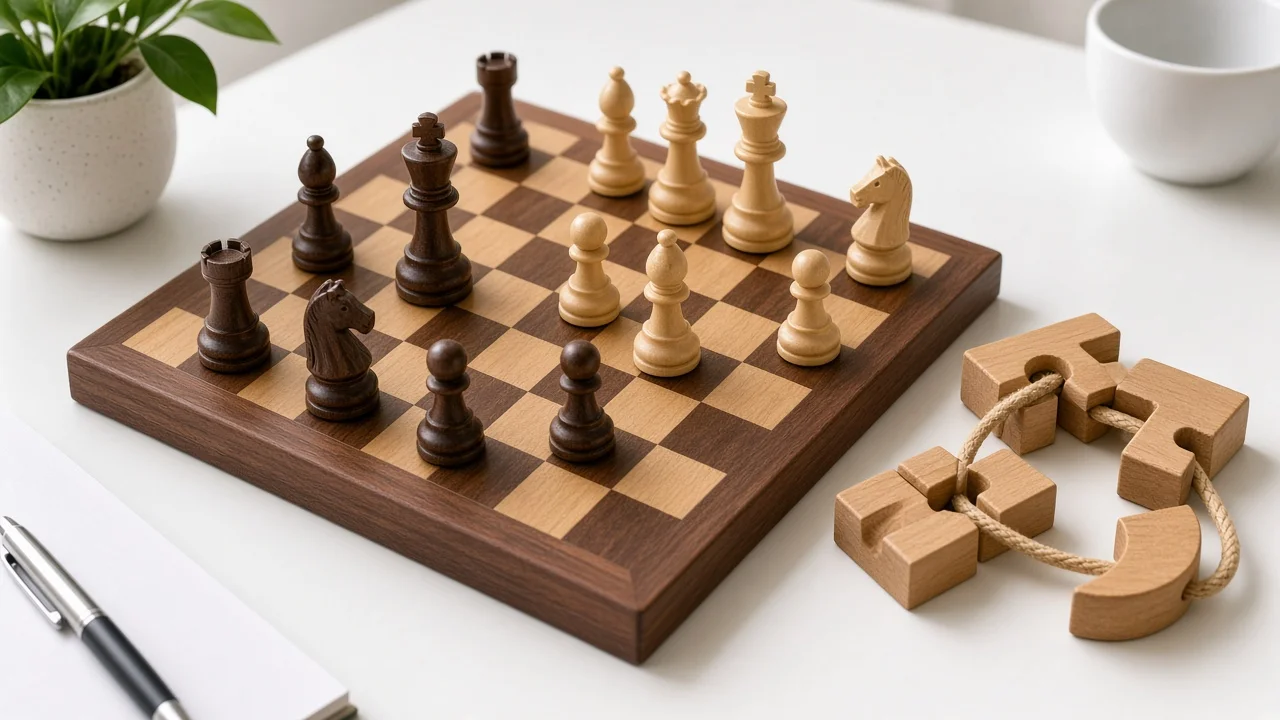
Formal cognitive batteries such as WAIS or WISC measure timed subtests under proctoring with population norms. The Quiz Hub publishes shortened practice quizzes that sample logic domains for curiosity and warm-up. The aptitude test mixes numerical, verbal, spatial, logic, data, and mechanical items in everyday scenarios. The flagship IQ test mixes number sequences, verbal analogies, matrix-style pattern descriptions, spatial rotation prompts, and syllogisms in plain English.
The EQ test maps emotional skill reflection across six domains. The left brain right brain test scores thinking-style metaphors while educating users that hemisphere labels oversimplify neuroscience. The memory test blends in-modal recall drills with everyday memory confidence items. The focus test mixes odd-one-out puzzles with distraction habit ratings. The brain test screens cognitive engagement habits across seven domains with three light puzzles. The am I dumb test maps self-talk about intelligence across six shame and curiosity domains without reporting IQ. None of these replace licensed neuropsychology.
Culture and language bias affect verbal and analogy items. Practice effects mean repeat attempts on similar puzzles can raise scores without new learning. Pair results across sibling tests when you want a wider reflection map, but never treat practice indices as hiring or clinical evidence.