What this ethos pathos logos quiz measures
This quiz does not score AP English Language exams, cannot award debate tournament wins, and cannot prove intelligence rank from one agree screener. It measures how much you agree with rhetoric triangle literacy grouped four ways: ethos credibility about noticing speakers, conflicts of interest, costume trust, and expertise fit; pathos tone about spotting emotional cues, respecting stories tied to facts, slowing outrage skips, and refusing mockery-as-debate; logos evidence about reasons, definitions, statistics with context, logical gaps, fair comparisons, and correlation versus causation; and quiz not AP Lang about unofficial study, refusing College Board trophy myths, and sharing bars as notes not dunk passes. You rate 22 statements from strongly disagree to strongly agree, with reverse-worded myths so agreeing that confidence alone proves medical claims, that all pathos is manipulation, that rhymes equal logos, or that quiz bars mail AP trophies cannot inflate every bar. Your answers also feed a second chart on closeness and trust habits, because argument stress sometimes pushes people toward cruel certainty. The total becomes an index from 0 to 100 where higher means more reported rhetoric literacy on this screener, not exam credentials.
Ethos credibility
Speaker fit, conflicts, costume trust checks.
Pathos tone
Spot emotion; respect stories; skip mockery.
Logos evidence
Reasons, context, fair comparisons, causation care.
Quiz not AP Lang
Study reflection; bars are not exam scores.
How it works
Answer 22 agreement items
Rate each statement from Strongly disagree to Strongly agree. Tap Next after each answer.
Answers sort into four domains
Each answer feeds one of four rhetoric literacy groups, and every item also feeds a closeness and trust layer.
See your index and charts
You get a 0 to 100 index, a band, and two bar charts you can compare after a rhetoric unit.
Take the Ethos Pathos Logos Quiz
Answer 22 short statements to see your rhetoric triangle literacy index, four domain bars, and a closeness and trust chart.
What your result means
Your index is the average of all 22 answers, scaled from 0 to 100, with reverse-worded items flipped first. Higher means more reported rhetoric literacy on this screener. Read pathos with logos bars before you treat a high ethos score as proof a claim is true.
| Band | Index range | Typical reading |
|---|---|---|
| Building rhetoric triangle literacy | 0 to 35 | Fewer agreed facts on ethos, pathos, logos spotting, or quiz-not-AP-Lang limits on this screener. |
| Mixed rhetoric triangle literacy | 36 to 65 | Solid appeal spotting in some domains with confidence-as-proof, pathos-dismissal, or AP-trophy myths in others. |
| Stronger rhetoric triangle literacy | 66 to 100 | Frequent agreement on ethos, pathos, logos spotting and unofficial limits; still not AP exam scores. |
Tips at a glance
A quick takeaway graphic with topic tips (not your personal quiz scores). Start the quiz for your index, bands, and charts.
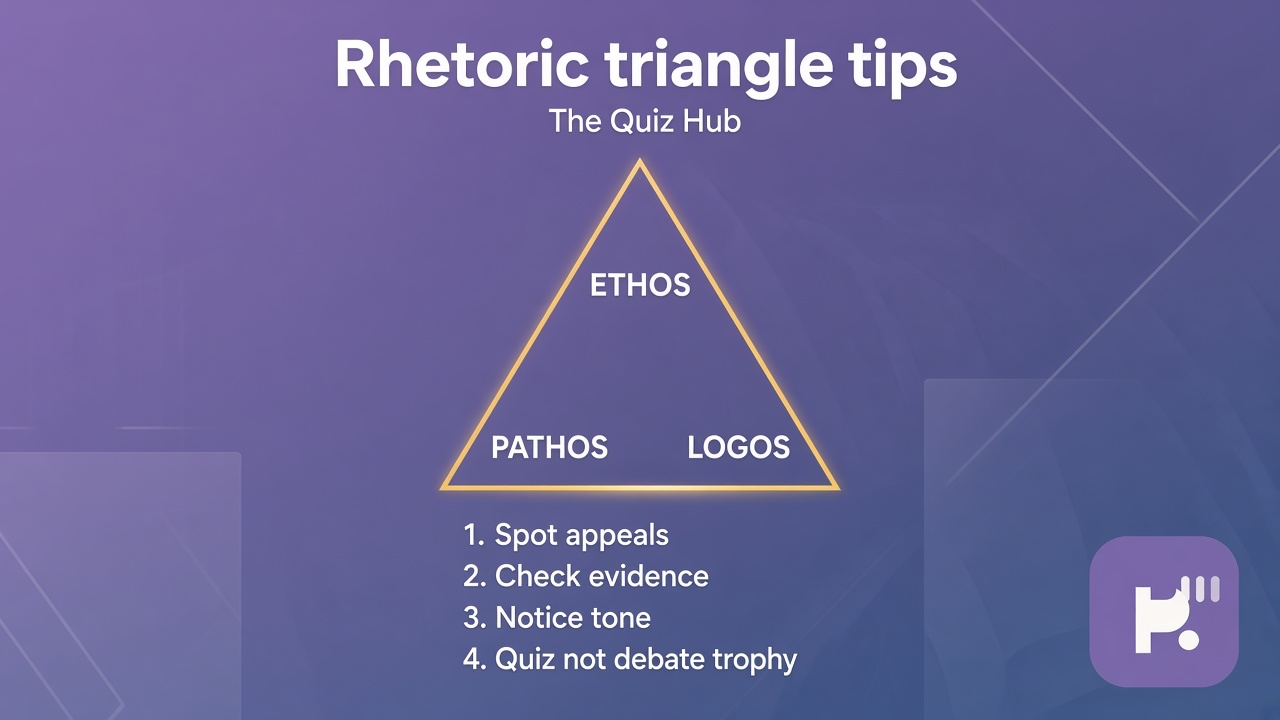
What this quiz can and cannot tell you
Can tell you
- Highlight ethos, pathos, and logos habits worth practicing before sharing ads or speeches
- Separate unofficial study reflection from AP exam scoring in plain language
- Encourage evidence checks without mocking every emotional story
- Spark better questions for teachers, debate coaches, or study groups
Cannot tell you
- Replace AP English Language exams, classroom rubrics, or debate judge sheets
- Prove you won an online argument or outrank classmates morally
- Certify college readiness or IQ from one rhetoric agree screener
- Justify cruel dunking because pathos appeared in someone testimony
Rhetoric triangle study without trophy captions
Students search ethos pathos logos quizzes when ads and political clips mix trust cues, feelings, and stat drops faster than textbooks explain them. The gap online is not lack of memes; it is thin practice naming appeals while still respecting lived experience and checking evidence.
Ethos covers who speaks, relevant expertise, financial conflicts, and costume trust in white coats or uniforms. Pathos covers music, stories, and outrage cues while remembering emotion can support arguments when tied to verifiable facts. Logos covers reasons, definitions, statistics with dates and samples, logical gaps, and fair comparisons.
Quiz not AP Lang covers refusing to treat online bars as College Board scores or debate trophies. Reverse items catch confidence-as-proof, pathos dismissal, rhyming slogans as logic, and certification fantasies from perfect indices.
Pair results with siblings on this hub instead of forcing one argument story. Our persuasive essay quiz sibling emphasizes argument structure when essays need a warm-up. Browse the IQ and cognitive test hub for more study screeners. Retake after you label appeals in three real ads; literacy grows when ethos, pathos, and logos stay linked to kind fact checks.
| Test | Focus |
|---|---|
| Persuasive essay quiz | Essay argument structure rather than ad and speech appeal spotting on this slug |
| IQ and cognitive hub | Broader study screeners rather than rhetoric triangle literacy alone |
Ethos Pathos Logos Quiz FAQ
What does this ethos pathos logos quiz measure?
It measures how much you agree with rhetoric triangle literacy across ethos credibility, pathos tone, logos evidence, and quiz-not-AP-Lang limits. You get an index from 0 to 100 and four bars. It reflects self-reported study habits on this screener, not an AP exam score.
Does a high score mean I will ace AP English Language?
No. AP readers use rubrics and timed essays this page does not grade. Bars describe appeal-spotting habits you reported here.
Is pathos always manipulation?
No. Emotional appeals can be relevant when speakers connect feelings to facts. The quiz teaches spotting tone while still asking for logos support on policy claims.
Why are some statements worded as myths?
Reverse-worded myths catch overconfidence. Agreeing that confidence alone proves medical claims, that all pathos should be ignored, that rhymes equal logos, or that quiz scores mail AP trophies should not inflate your literacy index.
Who reviewed this quiz?
Dr. James Whitfield, PhD reviewed the educational framing, rhetoric literacy limits, and result explanations. See our editorial policy for review standards.
Reviewed by