What the Frog Muscle Anatomy Quiz measures
This quiz does not diagnose human leg injuries, certify surgical skill, or replace your instructor leg practical. It measures how much you agree with frog hindlimb muscle labeling literacy grouped four ways: hindlimb calf muscles about gastrocnemius placement, view checks, distal versus thigh separation, and rejecting same-name myths for sartorius or every posterior bump; thigh and hip flexors about sartorius, gracilis, semitendinosus, manual-aligned names, and rejecting optional-vocabulary or public dunk threads; origin insertion and nerve about attachment language, left-right orientation, sciatic awareness at syllabus depth, manual citations, and rejecting nerve trivia dismissal or human pain counseling from frog photos; and muscle labeling limits about study framing, specimen respect, clinical channel habits, and rejecting imaging-skip surgeon fantasies. You rate 22 statements from strongly disagree to strongly agree, with reverse-worded traps so one lucky guess cannot inflate every bar. Your answers also feed a second chart on closeness and trust habits, because group dissection tasks sometimes spill into relationship stress when muscle scores spike during homework night. The total becomes an index from 0 to 100 where higher means more reported frog muscle labeling literacy on this screener, not proof you should skip class or advise patients.
Hindlimb calf muscles
Gastrocnemius and posterior calf bundles on leg diagrams.
Thigh and hip flexors
Sartorius, gracilis, semitendinosus, and manual-aligned names.
Origin, insertion, nerve
Attachments, left-right checks, and sciatic awareness at syllabus depth.
Muscle labeling limits
Study captions only; surgery and human care live elsewhere.
How it works
Answer 22 agreement items
Rate each statement from Strongly disagree to Strongly agree. Tap Next after each answer.
Answers sort into four domains
Each answer feeds one of four frog muscle labeling groups, and every item also feeds a closeness and trust layer.
See your index and charts
You get a 0 to 100 index, a band, four domain bars, and a second chart for intimacy habits.
Take the Frog Muscle Anatomy Quiz
Answer 22 short statements to see your frog muscle labeling literacy index, four domain bars, and a closeness and trust chart.
What your result means
Your index is the average of all 22 answers, scaled from 0 to 100, with reverse-worded items flipped first. Read labeling-limit bars together with calf and thigh domains before you treat a high gastrocnemius score as surgical proof. Cozy reflection supports kinder study spaces; instructors and clinicians still own official assessment and patient care gates.
| Band | Index range | Typical reading |
|---|---|---|
| Building frog muscle labeling literacy | 0 to 35 | Fewer agreed labels on calf muscles, thigh flexors, origin-insertion habits, or study limits on this screener. |
| Mixed frog muscle labeling literacy | 36 to 65 | Solid names in some domains with calf-thigh swaps, nerve myths, attachment shortcuts, or surgeon fantasy slips. |
| Strong frog muscle labeling literacy | 66 to 100 | Frequent agreement with calf, thigh, attachment, and unofficial limits; still study only. |
Tips at a glance
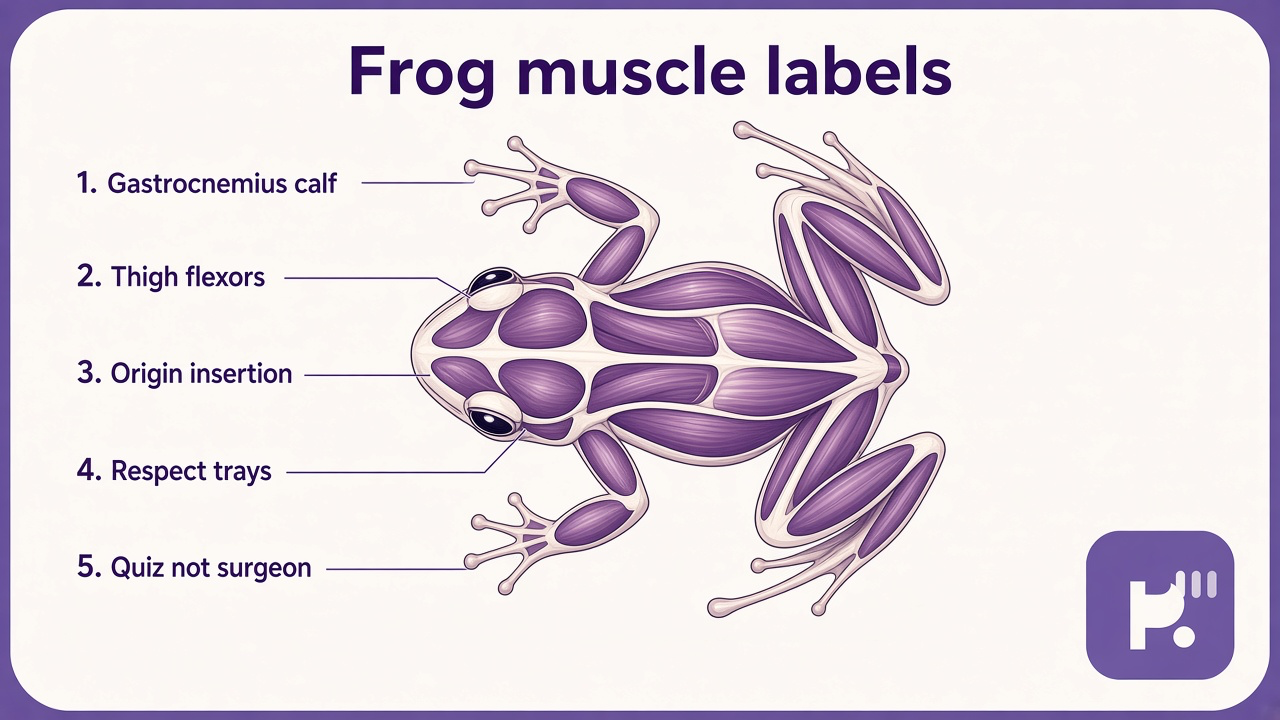
A quick takeaway graphic with topic tips (not your personal quiz scores). Start the quiz for your index, bands, and charts.
What this quiz can and cannot tell you
Can tell you
- Highlight gastrocnemius, sartorius, and gracilis habits worth revisiting before the next leg diagram
- Separate unofficial muscle reflection from surgical hiring or human diagnosis fantasies
- Encourage atlas tracing and gentle vocabulary talk without public shame spirals
- Spark better study questions about origin-insertion lines without claiming clinical authority
Cannot tell you
- Replace instructor leg practicals, anatomy lab grades, or formal health programs
- Prove surgical readiness, PT licensure, or human rehab plans from one couch screener
- Give permission to tease classmates, skip nerve-awareness briefings, or mock peers for one misread bundle
- Predict lifelong clinical skill from muscle trivia bars alone
Why frog muscle quizzes need distinct stems from organ pinning siblings
Search traffic around frog muscle anatomy usually wants a quick check after leg dissection opens, a homework rescue before gastrocnemius labels, or a parent helping with medial thigh vocabulary, not a surgical credential letter or human diagnosis trophy. Those goals help when readers trace calf versus thigh bundles, respect origin-insertion language, and keep study scores away from OR fantasies. They hurt when trivia bars become proof you may tease classmates, or when calf-muscle trivia gets treated as proof you already belong in clinical consult threads. Muscle literacy works best when it names calm atlas habits and unofficial limits together while staying wholly distinct from frog organ quizzes that track heart, liver, and cloaca pinning instead of leg bundles.
Dr. James Whitfield reviews iq cognitive study screeners with a simple split: reward honest hindlimb naming and honest limits on surgical substitution myths at the same time. Hindlimb calf muscles tracks gastrocnemius, view checks, and posterior bundle separation without same-name myths. Thigh and hip flexors tracks sartorius, gracilis, semitendinosus, and manual-aligned vocabulary without optional-label or dunk-thread traps. Origin insertion and nerve tracks attachment language, left-right orientation, and sciatic awareness without nerve trivia dismissal or human pain counseling from specimens. Muscle labeling limits keeps screeners separate from surgeon exams, human imaging skips, and lunch-line muscle police behavior.
Real learners mix bars. You might score high on calf muscles while keeping thigh flexors moderate, which often describes careful gastrocnemius readers who still argue sartorius placement in group time. You might score high literacy with softer labeling-limit items, which can mean you avoid gatekeeping yet still treat quiz totals like clinical consults. Reverse items catch overconfidence: identical gastrocnemius and sartorius labels, optional thigh vocabulary, sciatic dismissal, classmate dunk threads, or imaging skips from perfect bars should not inflate indices meant to track layered muscle manners.
Pair results with siblings on this hub instead of forcing one frog dissection story. Our frog anatomy quiz sibling stays on organ orientation, heart-liver-gut-lung literacy, cloaca basics, and lab kindness with separate stems from every muscle bundle here. Our femur labeling quiz explores thigh bone landmarks when skeletal labels need their own lane beside soft tissue. Our fetal pig anatomy quiz reinforces comparative dissection ethics when your course rotates specimens. Browse the IQ and cognitive test hub for more low stakes study screeners. Caption shares as fun reflection, trace atlases aloud, and skip grading strangers who never asked for a quiz.
Lab schedules and practical rubrics move faster than one laminated leg diagram in a backpack. A thigh flexor bar might dip after one rushed worksheet while calf recall stays high until you retake calmly. When you share results, say unofficial muscle labeling habits. When you borrow tips, credit teachers who taught you gastrocnemius placement and classmates who deserve patience at the pinning tray. Retake after one leg practical week and watch whether labeling-limit bars stay high even if sartorius vocabulary rises, which often means you separated cozy study joy from surgical pressure.
| Test | Focus |
|---|---|
| Frog anatomy quiz | Organ pinning, heart-liver-gut literacy, and cloaca ethics rather than hindlimb muscle bundle labels on this page |
| Femur labeling quiz | Thigh bone landmarks rather than soft-tissue gastrocnemius and sartorius habits here |
| Fetal pig anatomy quiz | Pig specimen orientation and organ compare units rather than frog leg muscle stems on this screener |
Frog Muscle Anatomy Quiz FAQ
What does the Frog Muscle Anatomy Quiz measure?
It measures how much you agree with statements about hindlimb calf muscles, thigh and hip flexors, origin insertion and nerve awareness, and muscle labeling study limits. You get an index from 0 to 100 plus four bars. It reflects self-reported labeling habits on this screener, not lab practical grades, surgical credentials, or human clinical workups.
How is this different from the frog anatomy quiz?
The frog anatomy quiz tracks organ orientation, heart-liver-lung literacy, cloaca basics, and lab kindness with wholly different stems. This quiz tracks leg muscle names, attachments, and labeling manners without organ cavity vocabulary.
Is this a surgical or physical therapy licensing exam?
No. This page focuses on diagram labeling habits aligned with common frog leg dissection units. Licensing boards and clinical programs use separate training and exams.
Why include sciatic nerve and dunk-thread trap items?
Many students still see disrespectful specimen content online. Reverse-worded myths catch shortcuts so bars track respect and syllabus depth, not catchy muscle bingo alone.
Who reviewed this quiz?
Dr. James Whitfield reviewed the unofficial framing, muscle labeling not surgeon separation, calm atlas ethics, and result explanations. See our editorial policy for review standards.
Reviewed by