What the Fire Safety Quiz measures
This quiz does not inspect your apartment, certify your employer, or silence building alarms remotely. It measures how much you agree with introductory everyday fire safety literacy grouped four ways: alarm and detection habits about smoke and carbon monoxide tests, battery chirps, and replacement timelines without remove-the-chirper myths; exit route planning about two ways out, clear paths, meeting places, and calm night practice without social-media-exit fantasies; drill and workplace readiness about evacuation maps, muster points, participating in drills, and reporting blocked doors; and study not inspector about fire department authority, legal compliance limits, evacuation when alarms sound, and refusing to treat quiz bars like compliance signatures. You rate 22 statements from strongly disagree to strongly agree, with reverse-worded traps so one preparedness poster cannot inflate every bar. Your answers also feed a second chart on closeness and trust habits, because safety culture sometimes chases blame instead of honest drill questions. The total becomes an index from 0 to 100 where higher means more reported everyday fire safety literacy on this screener, not proof you may disable alarms or skip evacuation.
Alarm and detection habits
Smoke and CO tests, chirp response, replacement timelines, no silencing myths.
Exit route planning
Two ways out, clear paths, meeting places, flashlight practice without stunt drama.
Drill and workplace readiness
Evacuation maps, muster points, drill participation, reporting blocked doors.
Study not inspector
Code official authority, evacuate on alarms, limits on quiz compliance fantasies.
How it works
Answer 22 agreement items
Rate each statement from Strongly disagree to Strongly agree. Tap Next after each answer.
Answers sort into four domains
Each answer feeds one of four fire safety literacy groups, and every item also feeds a closeness and trust layer.
See your index and charts
You get a 0 to 100 index, a band, four domain bars, and a second chart for intimacy habits.
Take the Fire Safety Quiz
Answer 22 short statements to see your everyday fire safety literacy index, four domain bars, and a closeness and trust chart.
What your result means
Your index is the average of all 22 answers, scaled from 0 to 100, with reverse-worded items flipped first. Higher means more reported alarm, exit, drill, and inspector-limit agreement on this screener. Read study-not-inspector bars with alarm habits before you treat the total as legal clearance.
| Band | Index range | Typical reading |
|---|---|---|
| Building safety literacy | 0 to 35 | Fewer agreed alarm, exit, drill, or inspector-limit items on this screener. |
| Mixed safety literacy | 36 to 65 | Solid alarm or exit recall mixed with chirp-ignore myths or inspector credential fantasies. |
| Strong safety literacy | 66 to 100 | Frequent alarm, exit, drill, and inspector-limit agreement; still not credentialing. |
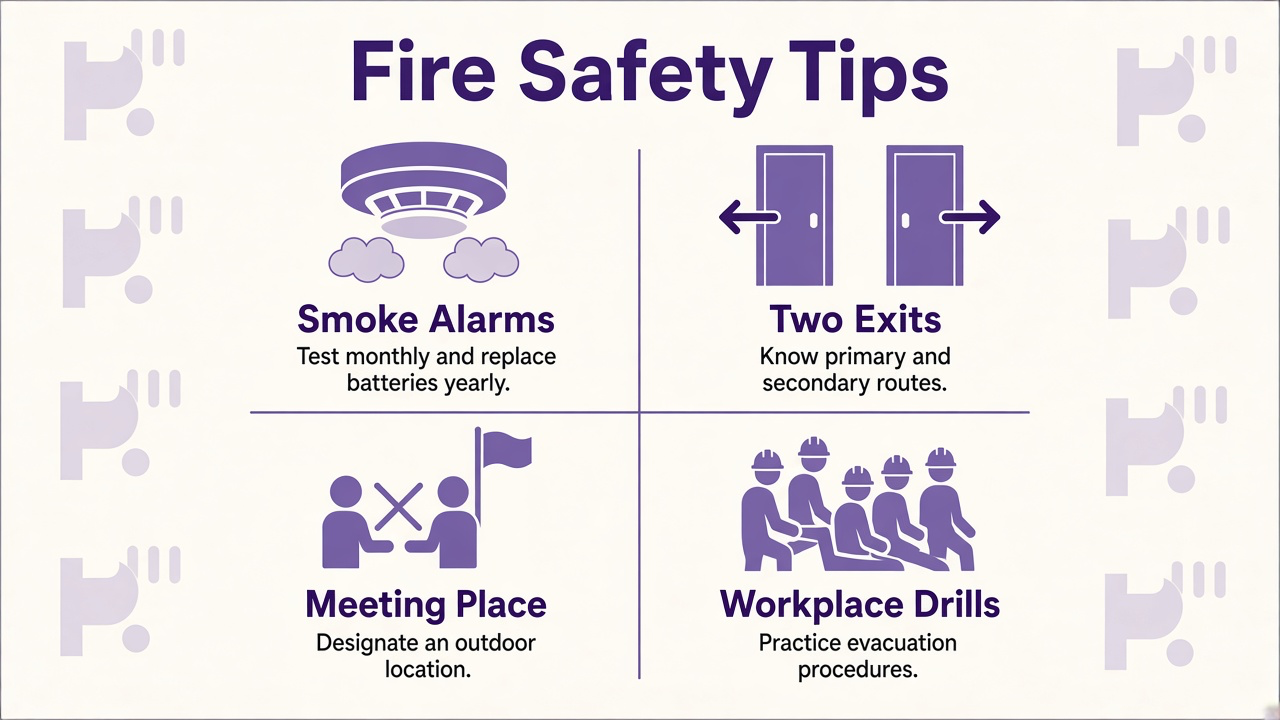
Tips at a glance
A quick takeaway graphic with topic tips (not your personal quiz scores). Start the quiz for your index, bands, and charts.
What this quiz can and cannot tell you
Can tell you
- Clarify smoke alarm testing, CO placement, and meeting-place habits in plain language
- Highlight chirp-ignore and skip-drill myths worth unlearning before lease renewals
- Encourage workplace map reading without shame between orientation seasons
- Spark better questions during tenant or employee safety minutes
Cannot tell you
- Certify municipal fire inspectors, legal occupancy, or employer compliance from one online screener
- Replace local fire department outreach, landlord legal obligations, or campus safety offices
- Tell you to stay inside when alarms sound based on a high score here
- Turn literacy scores into harassment of safety staff or neighbors online
Alarm and exit literacy before inspector shortcuts
Households and offices search fire safety quizzes when chirping detectors, blocked stairwells, and forgotten drill dates stack into guilt. Introductory outreach teaches monthly alarm tests, carbon monoxide awareness near sleeping areas, and two ways out of every bedroom without turning preparedness into fear porn. Meeting places sound corny until someone is missing in a driveway; naming a mailbox or neighbor porch beforehand beats frantic group texts.
Dr. James Whitfield reviews iq cognitive study screeners with a simple split: reward honest agreement with widely taught alarm and exit habits and honest limits on credential hype at the same time. Alarm and detection habits tracks test buttons, end-of-life replacements, CO stories, and responding to chirps without yanking units off ceilings. Exit route planning tracks clear paths, secondary routes, and flashlight practice without pretending social feeds replace stairs. Drill and workplace readiness keeps evacuation maps, muster points, and reporting propped doors visible beside perpetual drill-skipping bravado. Study not inspector keeps fire departments, code officials, and evacuate-when-alarms-sound judgment visible beside quiz compliance signature myths.
Real readers mix bars. You might score high on meeting places while keeping workplace drill bars soft, which often describes remote workers who never saw a posted map. You might score high on alarms with softer exit items, which can mean strong chirp response yet cluttered hall landings. Reverse items catch sloppy answers: silence-by-removal myths, one-detector-for-every-floor fantasies, or high indices like automatic inspector badges should not inflate bars meant to track layered preparedness literacy.
Pair results with siblings on this hub instead of forcing one preparedness story. Our fire extinguisher quiz sibling angles toward PASS and Class A B C K labels with separate wording, not these alarm and exit sentences. Our firearm safety certificate quiz sibling covers California FSC study literacy rather than smoke detector habits here. Browse the IQ and cognitive test hub for more low-stakes screeners. Caption shares as study practice and skip inspector dunking on friends who never asked for code court.
Schedules change faster than one trivia night. Lease turnovers, hybrid work weeks, and new crib placements shift which exits matter at night. When you share results, say sounding alarms beat finishing one more slide deck. When you borrow drill tips, credit safety coordinators who schedule kindly and firefighters who answer real calls. Retake after one alarm test weekend and watch whether inspector-limit bars rise even if meeting-place trivia spikes, which often means you separated performative scoring from actual humility about legal authority.
| Test | Focus |
|---|---|
| Fire extinguisher quiz | PASS and Class A B C K portable units rather than smoke alarm and exit drills |
| Firearm safety certificate quiz | California FSC study literacy rather than home alarm and workplace evacuation maps |
Fire Safety Quiz FAQ
What does the Fire Safety Quiz measure?
It measures how much you agree with statements about alarms and detection, exit planning, workplace drills, and study-not-inspector limits. You get an index from 0 to 100 plus four bars. It describes self-rated preparedness literacy on this screener, not municipal inspections, legal occupancy, or proof you may ignore alarms.
Is this a fire code inspection or compliance certificate?
No. This page builds introductory alarm, exit, and drill literacy for curiosity and study groups. Fire inspectors, landlords, and employer safety programs own legal compliance this screener cannot replace.
My alarm chirps. Should I remove it if I score high here?
No. Chirps usually mean low battery or end-of-life replacement. Test, replace batteries or the unit, and call your landlord or facilities team if problems continue. High quiz bars do not make silencing devices safe.
Why separate home exits from workplace drills?
Fire safety search intent blends apartment life and office return-to-work habits. Split bars keep household meeting-place wins separate from muster-point myths and inspector humility so results stay honest about which lanes you endorse.
Who reviewed this quiz?
Dr. James Whitfield, PhD reviewed the educational framing, YMYL evacuation limits, and result explanations. See our editorial policy for review standards.
Reviewed by