What the First Aid Quiz measures
This quiz does not certify EMTs, diagnose injuries remotely, or replace hands-on manikin training. It measures how much you agree with introductory everyday first aid literacy grouped four ways: CPR and AED basics about call-for-help-first stories, compression-focused adult CPR in intro outreach, AED voice prompts, and refusing online-only credential myths; bleed control about direct pressure, gloves when available, elevation in some teaching examples, and rinsing before pressure without bleach or embedded-object heroics; emergency call judgment about unconsciousness, breathing trouble, severe bleeding, chest pain, stroke teaching signs, and dispatcher-friendly details without embarrassment delays; and study not EMT about licensing limits, instructor-owned skills cards, calling emergency services during crises, and refusing to treat quiz bars like employer competency signatures. You rate 22 statements from strongly disagree to strongly agree, with reverse-worded traps so one viral clip cannot inflate every bar. Your answers also feed a second chart on closeness and trust habits, because emergency fear sometimes chases blame instead of honest training questions. The total becomes an index from 0 to 100 where higher means more reported everyday first aid literacy on this screener, not proof you may skip 911 or accredited classes.
CPR and AED basics
Call for help, compression stories, AED prompts, no online-only cert myths.
Bleed control
Direct pressure, gloves, elevation when taught, no bleach or hero extraction.
Emergency call judgment
Unconsciousness, breathing trouble, severe bleeds, stroke and chest red flags.
Study not EMT
Licensing limits, instructor cards, call 911 first, no quiz competency fantasies.
How it works
Answer 22 agreement items
Rate each statement from Strongly disagree to Strongly agree. Tap Next after each answer.
Answers sort into four domains
Each answer feeds one of four first aid literacy groups, and every item also feeds a closeness and trust layer.
See your index and charts
You get a 0 to 100 index, a band, four domain bars, and a second chart for intimacy habits.
Take the First Aid Quiz
Answer 22 short statements to see your everyday first aid literacy index, four domain bars, and a closeness and trust chart.
What your result means
Your index is the average of all 22 answers, scaled from 0 to 100, with reverse-worded items flipped first. Higher means more reported CPR, bleed, call-911, and study-not-EMT agreement on this screener. Read study-not-EMT bars with emergency-call habits before you treat the total as training clearance.
| Band | Index range | Typical reading |
|---|---|---|
| Building first aid literacy | 0 to 35 | Fewer agreed CPR, bleed, call-911, or study-not-EMT items on this screener. |
| Mixed first aid literacy | 36 to 65 | Solid call-911 recall mixed with mouth-to-mouth myths, bleach traps, or EMT credential fantasies. |
| Strong first aid literacy | 66 to 100 | Frequent CPR, bleed, call-911, and study-not-EMT agreement; still not credentialing. |
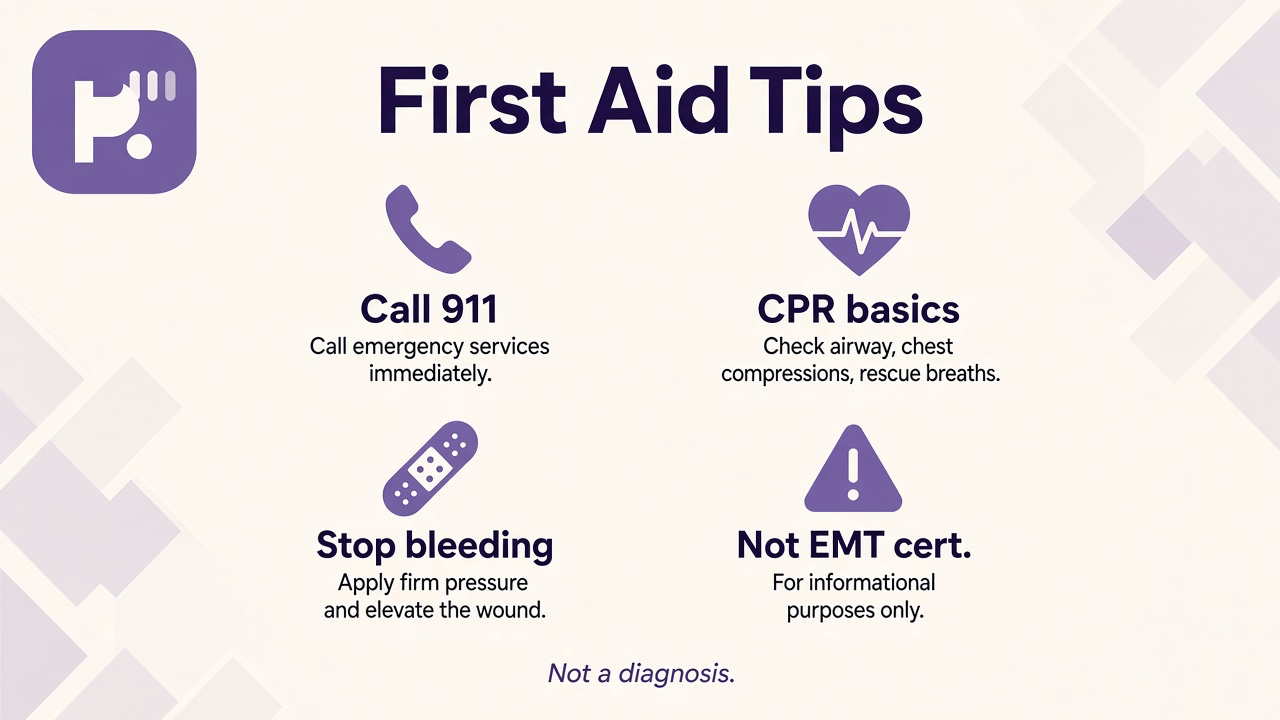
Tips at a glance
A quick takeaway graphic with topic tips (not your personal quiz scores). Start the quiz for your index, bands, and charts.
What this quiz can and cannot tell you
Can tell you
- Clarify call-911 triggers, direct pressure, and AED cabinet habits in plain language
- Highlight mouth-to-mouth myths, bleach wounds, and skip-class traps worth unlearning
- Encourage signing up for accredited CPR classes without shame between renewals
- Spark better questions during school or workplace safety minutes
Cannot tell you
- Certify EMT, paramedic, or workplace first responder credentials from one online screener
- Replace hands-on manikin training, licensing boards, or emergency dispatch judgment
- Tell you to delay 911 when someone is unconscious or bleeding heavily based on a high score here
- Turn literacy scores into harassment of EMS staff or untrained friends online
Bystander literacy before EMT shortcuts
People search first aid quizzes when a coworker faints in a meeting, a child skins a knee, or an AED cabinet makes them nervous. Introductory outreach teaches call-for-help-first, compression-focused adult CPR stories, and turning on AEDs with pads placed as diagrams show without turning every hallway into a med-school exam. Bleed control stays humble: direct pressure, gloves when you can, clean water when available, and knowing when soaking blood belongs on an emergency call.
Dr. James Whitfield reviews iq cognitive study screeners with a simple split: reward honest agreement with widely taught bystander habits and honest limits on credential hype at the same time. CPR and AED basics tracks compression rhythm reminders, dispatcher speakerphone ideas, and AED voice prompts without mouth-to-mouth-always-first myths or online-only cert bravado. Bleed control tracks pressure, glove habits, and elevation teaching stories without bleach sterilization fantasies or pulling embedded objects for clout. Emergency call judgment keeps unconsciousness, breathing trouble, stroke teaching signs, and chest pain on the immediate-dial list beside embarrassment-delay traps. Study not EMT keeps licensing boards, manikin instructors, and call-911-first judgment visible beside quiz competency signature myths.
Real readers mix bars. You might score high on when to call 911 while keeping CPR bars soft, which often describes adults who fear compressions more than dispatchers. You might score high on bleed steps with softer AED items, which can mean kitchen cut confidence yet lobby cabinet hesitation. Reverse items catch sloppy answers: rescue-breath-before-every-compression myths, bleach-on-wounds shortcuts, or high indices like automatic EMT badges should not inflate bars meant to track layered bystander literacy.
Pair results with siblings on this hub instead of forcing one emergency story. Our CPR quiz sibling angles toward compression rhythm and intro class recall with separate wording, not these bleed and call-911 sentences. Our fire safety quiz sibling covers alarms, exits, and workplace drills rather than wound pressure here. Browse the IQ and cognitive test hub for more low-stakes screeners. Caption shares as study practice and skip EMT dunking on friends who never asked for licensing court.
Schedules change faster than one trivia night. New jobs, gym memberships, and school volunteer forms shift which AED maps matter. When you share results, say emergency calls beat finishing one more email. When you borrow class tips, credit instructors who run manikins kindly and dispatchers who answer real calls. Retake after one certified CPR weekend and watch whether study-not-EMT bars rise even if compression trivia spikes, which often means you separated performative scoring from actual humility about accredited training.
| Test | Focus |
|---|---|
| CPR quiz | Compression rhythm and intro CPR class recall rather than bleed control and call-911 stems here |
| Fire safety quiz | Smoke alarms, exits, and workplace drills rather than CPR AED and wound pressure items here |
First Aid Quiz FAQ
What does the First Aid Quiz measure?
It measures how much you agree with statements about CPR and AED basics, bleed control, emergency calling, and study-not-EMT limits. You get an index from 0 to 100 plus four bars. It describes self-rated bystander literacy on this screener, not EMT licensing, hands-on cert cards, or proof you may skip emergency calls.
Is this an EMT certification or workplace first responder exam?
No. This page builds introductory CPR, bleed, and call-911 literacy for curiosity and study groups. Accredited instructors, licensing boards, and employer safety programs own credentialing this screener cannot replace.
Someone collapsed near me. Should I retake the quiz first?
No. Call 911 or your local emergency number immediately, follow dispatcher instructions, and start bystander CPR or AED steps only as you were trained. Online bars do not replace seconds on the phone.
Why separate bleed control from CPR items?
First aid search intent blends compression class memories with kitchen cut panic. Split bars keep pressure-and-glove wins separate from AED pad myths and EMT humility so results stay honest about which lanes you endorse.
Who reviewed this quiz?
Dr. James Whitfield, PhD reviewed the educational framing, YMYL emergency limits, and result explanations. See our editorial policy for review standards.
Reviewed by