What the French Revolution Quiz measures
This quiz does not grade AP World or AP European History exams, proctor timed IB papers, or replace instructor document essays. It measures how much you agree with French Revolution study statements grouped four ways: timeline and actor literacy about 1789 anchors, estate roles, Declaration connections, phase shifts toward terror units, and syllabus name discipline versus film-only lists; primary source habits about pamphlet and newspaper excerpts, citation requirements, eyewitness partiality, translation checks, and pairing visuals with text; context and multiple views about bread prices, debt, rural and Paris threads, bias language in conflicting sources, separating class analysis from modern partisan dunk hashtags, and content warnings on graphic material; and quiz not AP substitute about unofficial warm-up framing, teachers and exam boards owning scored gates, refusing bar-height essay or exam clearance fantasies, and sharing results as study habits not finals proof. You rate 22 statements from strongly disagree to strongly agree, with reverse-worded traps so one lucky guess cannot inflate every bar. Your answers also feed a second chart on closeness and trust habits, because history arguments sometimes spill into relationship stress when exam or meme scores spike. The total becomes an index from 0 to 100 where higher means more reported revolution study literacy on this screener, not proof you should skip the document essay or dunk strangers in guillotine threads.
Timeline and actor literacy
1789 anchors, estates, Declaration ties, phase awareness.
Primary source habits
Pamphlets, citations, eyewitness bias, translation checks.
Context and multiple views
Economic causes, rural threads, bias without modern dunks.
Quiz not AP substitute
Warm-up only; timed exams live with teachers and boards.
How it works
Answer 22 agreement items
Rate each statement from Strongly disagree to Strongly agree. Tap Next after each answer.
Answers sort into four domains
Each answer feeds one of four French Revolution literacy groups, and every item also feeds a closeness and trust layer.
See your index and charts
You get a 0 to 100 index, a band, four domain bars, and a second chart for intimacy habits.
Take the French Revolution Quiz
Answer 22 short statements to see your French Revolution study literacy index, four domain bars, and a closeness and trust chart.
What your result means
Your index is the average of all 22 answers, scaled from 0 to 100, with reverse-worded items flipped first. Read quiz-not-AP bars together with primary source habits before you treat a high score as exam or essay proof. Cozy reflection supports kinder unit discussions; instructors and official exam boards still own scored gates.
| Band | Index range | Typical reading |
|---|---|---|
| Building Revolution study habits | 0 to 35 | Fewer agreed habits on timeline literacy, primary sources, context views, or AP-limit items on this screener. |
| Mixed Revolution study habits | 36 to 65 | Solid timeline habits with source skips, modern dunk slips, meme-date myths, or essay waiver fantasies. |
| Strong Revolution study habits | 66 to 100 | Frequent agreement with timeline, sources, context views, and AP limits; still unofficial warm-up only. |
Tips at a glance
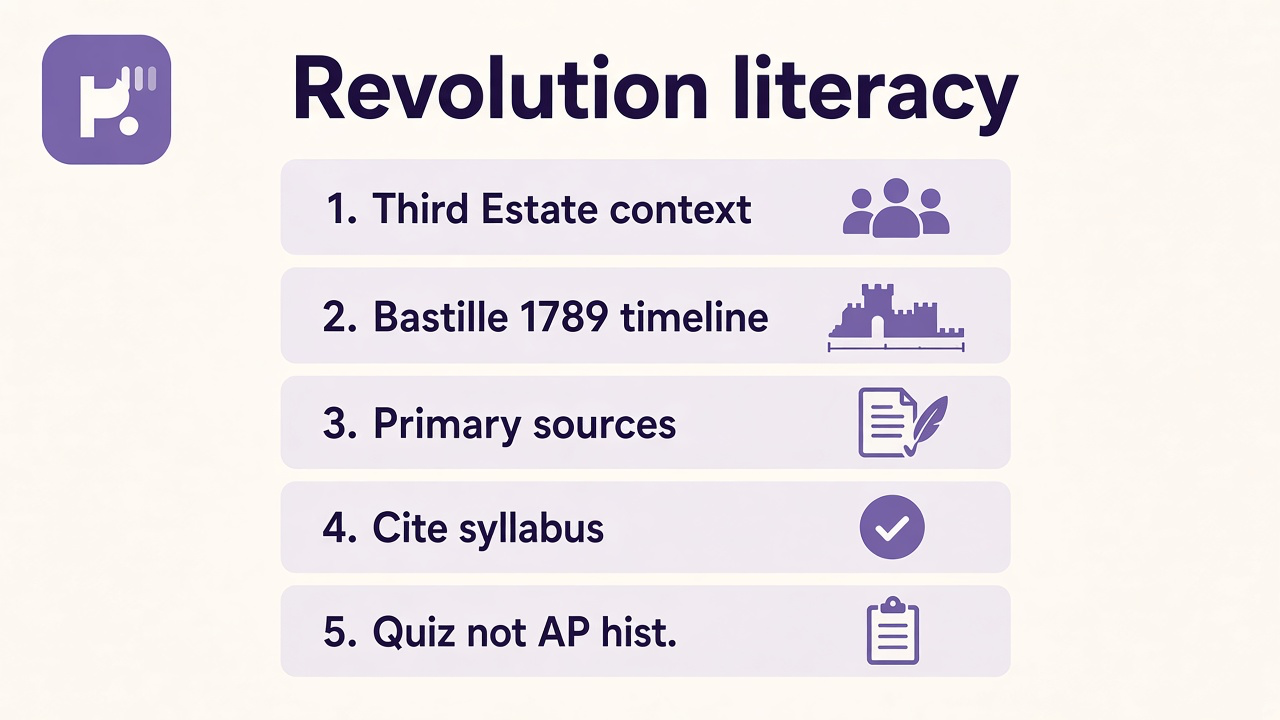
A quick takeaway graphic with topic tips (not your personal quiz scores). Start the quiz for your index, bands, and charts.
What this quiz can and cannot tell you
Can tell you
- Highlight timeline, source, and context habits worth revisiting before the next revolution discussion
- Separate unofficial history reflection from AP, IB, or instructor essay grading
- Encourage document citations and respectful unit chat without public shame spirals
- Spark better questions about 1789 sources without claiming exam authority
Cannot tell you
- Replace AP or IB history exams, proctored finals, or instructor rubrics on document essays
- Prove essay grades, university admission, or history course exemption from one couch screener
- Give permission to map 1789 debates onto modern election fights without syllabus sources
- Substitute for reading assigned primary sources when teachers require annotations or DBQ practice
Why French Revolution quizzes need sources, context, and exam separation
Search traffic around French Revolution quizzes usually wants a playful mirror after the 1789 assignment, not AP clearance or guillotine meme ambushes. Those goals help when readers place Estates-General, Bastille, and early reform decrees on a timeline and cite Declaration excerpts from syllabus packets. They hurt when one afternoon myths replace document reading, or when agree bars get treated as proof someone should skip the Robespierre essay.
Dr. James Whitfield reviews iq-cognitive history screeners with a simple split: reward honest timeline curiosity and honest limits on exam substitution myths at the same time. Timeline and actor literacy tracks 1789 anchors, estate vocabulary, phase shifts, and name discipline tied to handouts. Primary source habits tracks pamphlets, citations, eyewitness partiality, and translation checks. Context and multiple views tracks bread prices, rural grievances, conflicting bias language, and refusing modern partisan dunk theater in class threads. Quiz not AP substitute keeps screeners separate from timed exams, instructor essays, and bar-height clearance fantasies.
Real students mix bars. You might score high on timelines while keeping primary source bars moderate, which often describes careful classmates who still argue causes from podcasts alone. You might score high literacy with softer AP limit items, which can mean you avoid exam boasts yet still treat quiz totals like document grades. Reverse items catch overconfidence: one-afternoon history, optional primary sources, modern team-wins-1789 claims, or essay waiver myths should not inflate bars meant to track layered unit manners.
Pair results with siblings on this hub instead of forcing one genius revolution story. Our American revolution quiz sibling explores Atlantic revolution parallels when syllabi assign separate stem banks. Our world history quiz stays on general study habits when research sources need blurbs beside national units. Our French quiz covers broader French study themes with wholly separate stems from this 1789 screener. Browse the IQ and cognitive test hub for more study screeners. Caption shares as history warm-up, cite documents, and skip grading strangers who never asked for a quiz.
Unit calendars rotate faster than meme threads clear. A source bar might dip after one podcast binge while timeline literacy sleeps until you retake calmly. When you share results, say unofficial revolution study habits. When you borrow tips, credit instructors who taught document packets and classmates who asked for content warnings. Retake after one heated discussion week and watch whether AP limit bars stay high even if estate vocabulary rises, which often means you separated cozy history joy from exam substitution pressure.
| Test | Focus |
|---|---|
| American revolution quiz | Atlantic revolution parallel themes rather than French 1789 source and timeline focus on this page |
| World history quiz | General world history study framing rather than French Revolution primary source habits here |
| French quiz | Broader French study themes rather than 1789 history unit stems on this screener |
French Revolution Quiz FAQ
What does the French Revolution Quiz measure?
It measures how much you agree with statements about timeline literacy, primary source habits, context and multiple views, and quiz-not-AP limits. You get an index from 0 to 100 plus four bars. It reflects self-reported revolution study habits on this screener, not AP exam scores.
Does this quiz cover the entire revolutionary era through Napoleon?
Items stay focused on classroom 1789 anchors, estates, early reforms, and source habits your unit likely assigns first. Terror-phase depth and later wars belong in tagged discussion or instructor packets when your syllabus moves on.
Why include primary source items on a revolution quiz?
Document essays and DBQ-style tasks reward citation habits. Source items nudge learners back toward assigned pamphlets and declarations instead of meme-only recaps.
Can this replace an AP or IB history exam?
No. Instructors and official exam boards own timed history gates. This page is unofficial warm-up reflection only and cannot substitute for scored finals or graded essays.
Who reviewed this quiz?
Dr. James Whitfield reviewed the educational framing, AP separation, source and context language, and result explanations. See our editorial policy for review standards.
Reviewed by