What this reproductive histology screener measures
This quiz does not grade lab practicums, read biopsies, or certify pathologists. It measures how much you agree with study-habit statements grouped four ways: ovary follicle zones about cortex follicle stages, germinal epithelium, tunica albuginea, and corpus luteum teaching language; uterine wall histology about functionalis and basalis, myometrium smooth muscle, and proliferative versus secretory endometrium cues; tubes and cervix micro about ciliated tube mucosa, muscular walls, fimbriae orientation, and columnar versus squamous cervical junction concepts; and repro histology limits about study screeners, citing atlases, refusing tumor guesses from social slides, and separating this bank from organ-function anatomy quizzes. You rate 22 statements from strongly disagree to strongly agree, with reverse-worded myths so one lucky follicle meme cannot inflate every bar. Your answers also feed a second chart on closeness and trust habits, because study scoreboards sometimes chase belonging over honest slide work. The total becomes an index from 0 to 100 where higher means more reported reproductive histology literacy on this screener, not proof you should skip lab or diagnose from photos.
Ovary follicle zones
Cortex follicles, stages, and corpus luteum atlas language.
Uterine wall histology
Endometrium layers, myometrium, and cycle-linked gland cues.
Tubes and cervix micro
Cilia, muscular walls, and junction zone orientation.
Repro histology limits
Cited study only; quizzes not biopsy or lab replacement.
How it works
Answer 22 agreement items
Rate each statement from Strongly disagree to Strongly agree. Tap Next after each answer.
Answers sort into four domains
Each answer feeds one of four reproductive histology groups, and every item also feeds a closeness and trust layer.
See your index and charts
You get a 0 to 100 index, a band, four domain bars, and a second chart for intimacy habits.
Take the Female Reproductive System Histology Quiz
Answer 22 short statements to see your reproductive histology study literacy index, four domain bars, and a closeness and trust chart.
What your result means
Your index is the average of all 22 answers, scaled from 0 to 100, with reverse-worded items flipped first. Read repro histology limit bars with follicle scores before you treat a high type bar as permission to skip slides or guess tumors online. Literacy supports better study talk; instructors still own lab rubrics.
| Band | Index range | Typical reading |
|---|---|---|
| Building reproductive histology literacy | 0 to 35 | Fewer agreed facts on follicle, uterine wall, tube and cervix items, or histology limit habits on this screener. |
| Mixed reproductive histology literacy | 36 to 65 | Solid recall in some domains with follicle-cancer myths, identical-layer traps, uncited slides, or biopsy fantasy items in others. |
| Strong reproductive histology literacy | 66 to 100 | Frequent agreement with follicle, uterine, tube and cervix habits, and humble histology limits; still study practice only. |
Tips at a glance
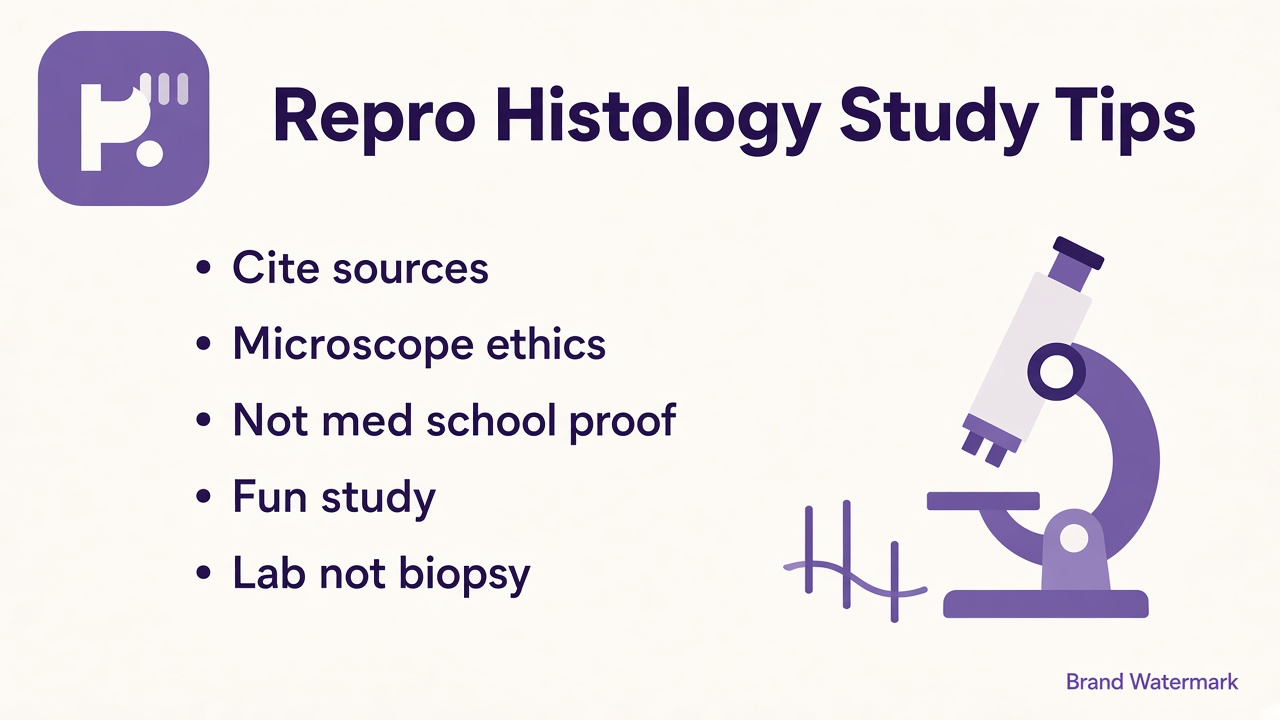
A quick takeaway graphic with topic tips (not your personal quiz scores). Start the quiz for your index, bands, and charts.
What this quiz can and cannot tell you
Can tell you
- Highlight follicle, uterine, tube, and cervix habits worth revisiting before histology practicals
- Separate unofficial study reflection from biopsy cosplay or uncited micrograph spam
- Encourage atlas citations and microscope time without dunking struggling classmates
- Spark honest study-group questions without claiming med school readiness
Cannot tell you
- Diagnose endometriosis, cancer, or infertility from one agree screener
- Replace microscope lab, pathology courses, or licensed clinical evaluation
- Certify med school admission or licensure from bar height
- Turn histology scores into pile-ons on peers who are still learning stains
Reproductive slides before biopsy myths
Students search female reproductive histology when follicle stages blur, when endometrial layers look alike on scans, or when tube cilia only make sense after lab. Those goals help when readers treat bars as a study map, cite atlases, and keep microscope time primary. They hurt when cropped social slides become fake biopsy proof, or when quiz scores replace cadaver and staining practice. Histology literacy works best when it names slide landmarks and humble limits together.
Dr. James Whitfield reviews IQ and cognitive study screeners with a simple split: reward accurate tissue landmarks and honest limits on pathology fantasy at the same time. Ovary follicle zones track cortex stages without calling every follicle malignant online. Uterine wall histology tracks functionalis, basalis, and myometrium without interchangeable-layer myths. Tubes and cervix micro track cilia, muscular walls, and junction zones without one-slide-fits-all patient stories. Repro histology limits keep screeners, cited sources, and clinicians separate from bar height.
Real students mix bars. You might score high on follicle trivia while keeping cervix junction items moderate, which often describes strong cortex memory before transformation zone week. You might score high on limits with softer uterine bars, which can mean careful sharing yet still rushed atlas citations. Reverse items catch overconfidence: follicles always malignant, endometrium equals myometrium, cervix never changing, diagnosing from cropped photos, or replacing cadaver lab from quiz scores should not inflate charts meant to track layered histology literacy.
Pair results with siblings on this hub instead of forcing one reproductive story. Our female reproductive system quiz focuses on organ function and cycle kindness language with zero stem overlap here. Our epithelial tissue quiz leans general epithelial shapes and glands when broader tissue week precedes reproductive units. Our female anatomy quiz stays on respectful gross anatomy literacy rather than microscope follicle staging on this page. Browse the IQ and cognitive test hub for more study screeners. Caption shares as class practice and skip tumor dunking on friends who never asked for a diagnosis.
Syllabi rotate faster than one lab block. When you share results, say cited slides beat scoreboard. When you borrow study tips, credit lab partners who label micrographs and instructors who separate cycle histology from disease panic. Retake after reproductive practicals and watch whether limit bars stay high even if follicle trivia rises, which often means you separated performative micrograph posts from actual atlas habits.
| Test | Focus |
|---|---|
| Female reproductive system quiz | Organ function and clinician-limit kindness rather than microscope follicle and endometrium stems here |
| Epithelial tissue quiz | General epithelial shapes and glands rather than reproductive follicle and junction zone depth on this page |
| Female anatomy quiz | Respectful gross anatomy literacy rather than reproductive histology slide staging drills here |
Female Reproductive System Histology Quiz FAQ
What does Female Reproductive System Histology Quiz measure?
It measures how much you agree with statements about ovarian follicle zones, uterine wall histology, tube and cervix micro landmarks, and repro histology limits. You get an index from 0 to 100 plus four bars. It describes self-rated slide study literacy on this screener, not lab grades or clinical skills.
How is this different from the female reproductive system quiz?
This sibling focuses on microscope landmarks and histology teaching language. The organ-function quiz focuses on anatomy roles, cycle kindness, and when to see clinicians with a separate question bank and zero stem overlap.
Can I diagnose conditions from my score?
No. Limit items explicitly reject tumor and disease guesses from photos. Bars guide study priorities; licensed clinicians interpret symptoms and biopsies.
Do I need cadaver lab to use this page?
No, but limit items stress that online screeners never replace microscope lab, cited atlases, or instructor checklists. Use results as a review map alongside your course materials.
Who reviewed this quiz?
Dr. James Whitfield reviewed the educational framing, citation and microscope ethics tone, and separation from pathology or licensure claims. See our editorial policy for review standards.
Reviewed by