What the Financial Planning Quiz measures
This quiz does not register RIAs, draft wills, or project your retirement income. It measures how much you agree with unofficial financial planning literacy grouped four ways: goal setting basics about named targets, timelines, tradeoffs, milestones, and revisiting values; retirement basics study about long horizons, employer match language, tax-advantaged account labels, estimate humility, and when to ask fiduciaries; estate humility about beneficiary overrides, attorney-drafted documents, life-event updates, powers of attorney, and meme limits; and study not fiduciary about self-study framing, kind encouragement, licensed professionals owning advice, and refusing bar-height RIA fantasies. You rate 22 statements from strongly disagree to strongly agree, with reverse-worded items so meme math cannot inflate every line. Your answers also feed a second chart on closeness and trust habits, because planning talk sometimes chases credential dunking instead of support. The total becomes an index from 0 to 100 where higher means more reported financial planning literacy and humble limits on this screener, not proof regulators registered your firm.
Goal setting basics
Named targets, timelines, tradeoffs, milestones, and revisiting values after life shifts.
Retirement basics study
Horizons, employer match, account labels, estimate humility, and fiduciary questions.
Estate humility
Beneficiary updates, attorney drafts, directives, and no will cosplay from bars.
Study not fiduciary
Self-study reflection, kind shares, and no personalized advice from online indexes.
How it works
Answer 22 agreement items
Rate each statement from Strongly disagree to Strongly agree. Tap Next after each answer.
Answers sort into four domains
Each answer feeds one of four financial planning groups, and every item also feeds a closeness and trust layer.
See your index and charts
You get a 0 to 100 index, a band, four domain bars, and a second chart for intimacy habits.
Take the Financial Planning Quiz
Answer 22 short statements to see your financial planning literacy index, four domain bars, and a closeness and trust chart.
What your result means
Your index is the average of all 22 answers, scaled from 0 to 100, with reverse-worded items flipped first. Higher means more reported financial planning literacy and kind study limits on this screener. Read retirement study and estate humility bars together before you treat the total as fiduciary certification.
| Band | Index range | Typical reading |
|---|---|---|
| Building planning study habits | 0 to 35 | Fewer agreed goal, retirement study, estate humility, or study-not-fiduciary items on this screener. |
| Mixed planning literacy | 36 to 65 | Some goal and retirement facts mixed with estate guesses or advice-limit slips. |
| Source-aware planning study | 66 to 100 | Frequent goal, retirement study, estate humility, and study-not-fiduciary agreement with kind sharing habits. |
Tips at a glance
A quick takeaway graphic with topic tips (not your personal quiz scores). Start the quiz for your index, bands, and charts.
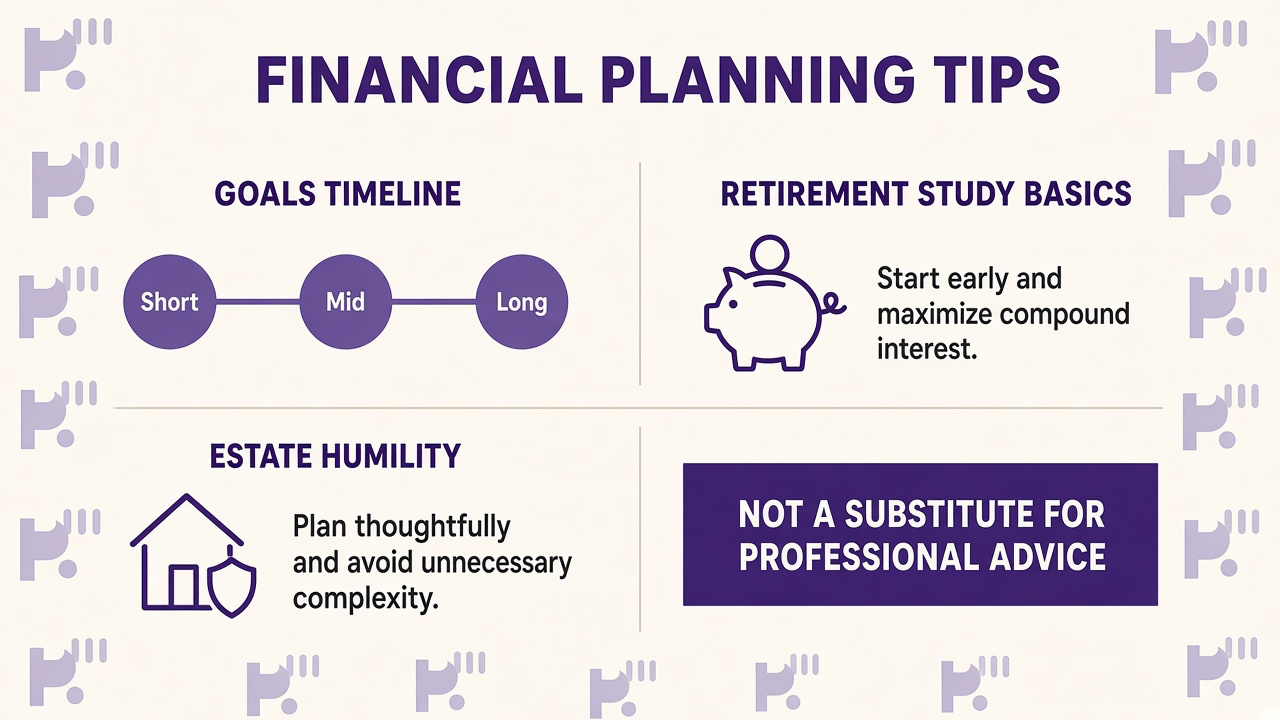
What this quiz can and cannot tell you
Can tell you
- Spot whether you treat meme projections as personalized withdrawal plans
- Encourage named goals and beneficiary reviews without shaming late starters
- Separate self-study reflection from fiduciary and estate attorney work
- Give a playful baseline to retake after one employer plan read-through
Cannot tell you
- Prove Series licenses, RIA registration, or estate attorney bar admission
- Replace fiduciary suitability review, tax projections, or signed legal documents
- Certify affiliation with any brokerage, robo-adviser, or estate software vendor
- Tell someone which funds, rollovers, or will clauses they must choose
Financial planning literacy without fiduciary cosplay
People land on financial planning quizzes because compound graphs go viral while employer plan PDFs stay unopened. Named goals with rough deadlines clarify tradeoffs between today’s spending and tomorrow’s targets. Competing goals need honest priority talks, not pretend-everything-max memes. Sacred first drafts that never update after marriage or caregiving are a trap this screener flags so readers revisit values.
Retirement study is horizon thinking, not one screenshot. Tiny early contributions still matter pedagogically. Employer match lines describe money you might forfeit if you skip enrollment. Tax-advantaged labels signal different rules worth learning before rollovers. App projections stay estimates until fiduciaries model your full picture; forum guesses are not withdrawal plans.
Estate humility prevents beneficiary accidents. Retirement beneficiary forms can override stale wills. Attorneys who know state rules draft enforceable plans; group-chat templates do not. High screener bars do not grant malpractice coverage to neighbor will drafting. Updates after divorce, marriage, or births belong on calendars even when paperwork feels heavy.
Study limits keep the page honest. This screener is self-study reflection, not fiduciary advice or Series exam prep. Kind encouragement beats dunking on late retirement starters. Advisers and estate lawyers own suitability and legal drafts; online bars do not replace them or justify self-issued RIA registration.
Use your index as a nudge toward one document read, not a credential. Pair this with our financial health quiz when you want separate stems on cushions and debt awareness rather than retirement match study here, the financial management quiz for household bill calendars with its own item bank, or the IQ and cognitive test hub for more low-stakes screeners. Retake after you underline one match line and check one beneficiary without mixing in fiduciary license claims; planning grows when professionals stay labeled, not when you win the meme thread.
| Test | Focus |
|---|---|
| Financial health quiz | Emergency fund and insurance humility stems, not retirement match study items here |
| Financial management quiz | Budget maps and bill calendars, not estate beneficiary humility stems here |
Financial Planning Quiz FAQ
What does the Financial Planning Quiz measure?
It measures how much you agree with financial planning literacy across goal setting basics, retirement basics study, estate humility, and study-not-fiduciary limits. You get an index from 0 to 100 and four bars. It reflects self-reported study habits on this screener, not portfolio performance.
Can I use this quiz instead of hiring a fiduciary adviser?
No. Fiduciaries, estate attorneys, and tax professionals own suitability, legal drafts, and personalized projections. This screener is habit reflection only and cannot replace regulated advice or signed documents.
Why does this quiz avoid budgeting sentences used elsewhere?
Household budgeting and bill calendars live on the financial management quiz with a separate stem bank. Planning focuses goals, retirement study, and estate humility so items stay distinct across the wave.
Why are some items worded negatively?
Reverse-worded statements balance optimism. Agreeing that goals never change after life events, that memes replace fiduciary review, that high scores let you draft neighbors’ wills, or that perfect bars register your RIA should not inflate literacy.
Who reviewed this quiz?
Dr. James Whitfield reviewed the educational framing, study-not-fiduciary limits, and result explanations. See our editorial policy for review standards.
Reviewed by