
What this quiz measures
This quiz does not measure IQ, certify you for graduate seminars, or grade your essays. It measures how much you agree with introductory English literature study literacy grouped four ways: author and context about era, setting, biography cues, and footnotes without replacing the text; quotes and evidence about page numbers, fair paraphrase, ellipsis use, and rejecting meme dialogue; theme not moral about recurring ideas, complex villains, symbols, narrator tension, and open endings without forcing preachy morals; and study not essay about diverse anthology voices, instructor-owned grading, office hours, and leaving publishing paths to real editors. You answer 22 statements from strongly disagree to strongly agree, with reverse-worded myths so agreeing with every shortcut cannot inflate every bar. Your answers also feed a second chart on closeness and trust habits, because academic stress sometimes pushes people toward harsh self-rankings or spoiler cruelty. The total becomes an index from 0 to 100 where higher means more reported literature study literacy on this screener, not proof you should skip revision when the next paper lacks citations.
Author and context
Era, setting, biography cues, footnotes, and why publication history shapes meaning.
Quotes and evidence
Page-backed citations, fair paraphrase, ellipsis discipline, and rereading surrounding paragraphs.
Theme not moral lecture
Recurring ideas, symbols, narrator tension, and resisting one-slogan morals.
Study not essay
Diverse voices in anthologies, instructor rubrics, and online warm-ups not replacing graded writing.
How it works
Answer 22 agreement items
Rate each statement from Strongly disagree to Strongly agree. Tap Next after each answer.
Answers sort into four domains
Each answer feeds one of four literature study groups, and every item also feeds a closeness and trust layer.
See your index and charts
You get a 0 to 100 index, a band, and two bar charts you can use before a lit unit essay or exam.
Take the English Literature Quiz
Answer 22 short statements to see your English literature study literacy index, four domain bars, and a closeness and trust chart.
What your result means
Your index is the average of all 22 answers, scaled from 0 to 100, with reverse-worded items flipped first. Higher means more reported literature study literacy on this screener. Read study-not-essay bars together with quote evidence before you treat the total as seminar immunity.
| Band | Index range | Typical reading |
|---|---|---|
| Building literature study literacy | 0 to 35 | Fewer agreed facts on author context, quote habits, theme language, or study humility on this screener. |
| Mixed literature study literacy | 36 to 65 | Solid facts in some domains with myths about timeless sameness, meme quotes, or trivia replacing essays. |
| Strong literature study literacy | 66 to 100 | Frequent agreement with accurate literature study trivia and healthy essay limits. |
Tips at a glance
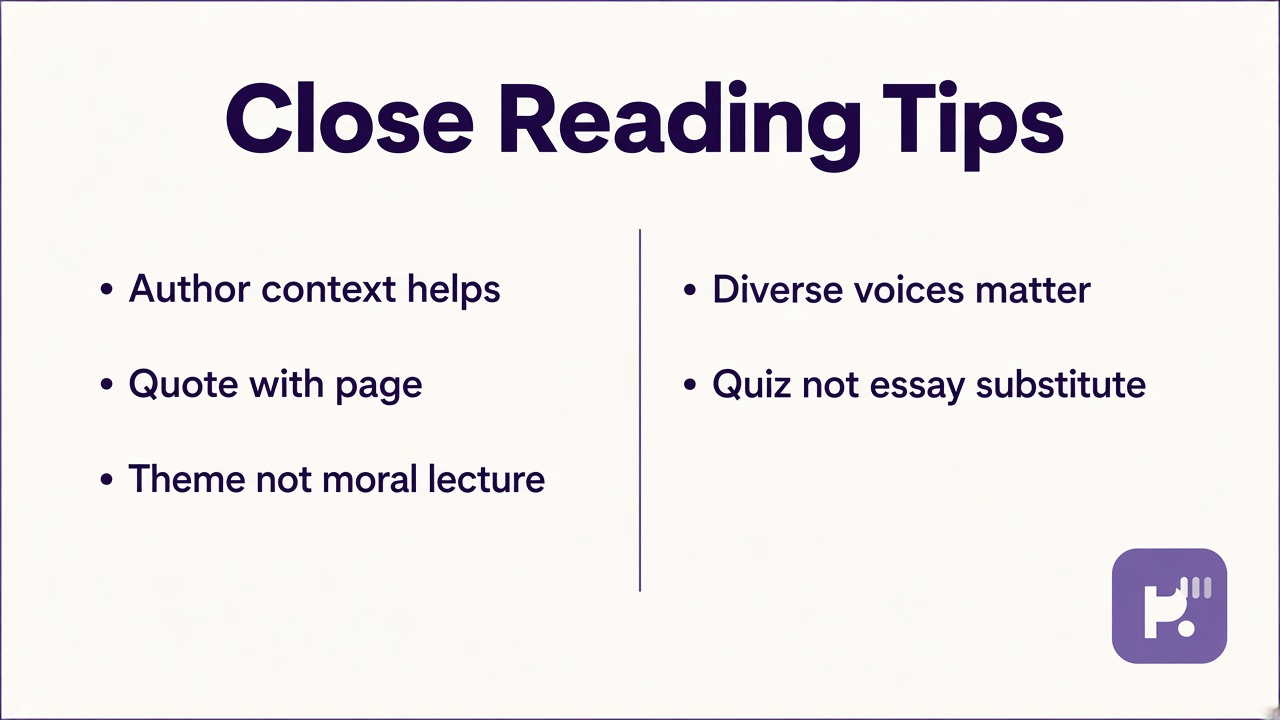
A quick takeaway graphic with topic tips (not your personal quiz scores). Start the quiz for your index, bands, and charts.
What this quiz can and cannot tell you
Can tell you
- Clarify author context, citation, and theme vocabulary in plain language
- Highlight common lit study myths worth unlearning before essay drafts
- Encourage page-backed quotes and spoiler-aware sharing without shame
- Spark better questions during seminars or book clubs
Cannot tell you
- Replace instructors, annotated editions, libraries, or graded essay rubrics
- Prove intelligence rank or predict publishing success from one screener
- License spoiling assigned novels for classmates who have not finished reading
- Justify skipping revision because trivia bars look high
English literature study beyond spoiler memes and moral slogans
Students search English literature quizzes when syllabus authors blur together and every essay draft lacks page numbers. Author context helps: knowing when and where a work appeared clarifies dialect, law, war, and science references footnotes explain. Treating every text as identical in every century is a trap screeners flag so learners remember history shapes reading.
Evidence habits separate warm discussion from strong essays. Short quotes with page or line numbers anchor claims. Paraphrase must stay faithful; meme captions are not proof a hero spoke a line your paperback never contained. Rereading the surrounding paragraph keeps one pretty sentence from becoming a fake whole-theme shortcut.
Theme tracks recurring ideas and tensions like exile, pride, or loyalty across scenes. Complex villains and ambiguous endings can carry theme without you forcing a preachy moral the final page refuses. Symbols matter when the text repeats them with care, not when you attach random objects because they sounded deep in a group chat.
Study limits are the fourth domain because trivia tempts overconfidence. Anthologies with diverse voices widen what count as English literature beyond one narrow canon list. This screener is warm-up, not a graded essay or publishing pass. Pair it with our classic literature quiz for canon depth, or the literature quiz for broader title recall. Browse the IQ and cognitive test hub for more study games. Retake after one cited paragraph lands in your draft; literacy grows when context, quotes, and theme language stay in order.
| Test | Focus |
|---|---|
| Classic literature quiz | Canon title and author recall rather than citation and theme study habits on one page |
| Literature quiz | Broader literature trivia rather than essay-ready quote and theme framing |
English Literature Quiz FAQ
What does this quiz measure?
It measures how much you agree with introductory English literature study literacy across author context, quotes, theme language, and study limits. You get an index from 0 to 100 and four bars. It reflects self-reported study habits on this screener, not a graded essay or IQ score.
Does a high score mean my essays will automatically earn top marks?
No. It is study trivia and habit framing. Instructor rubrics, draft feedback, and formal exams stay separate from any online screener, no matter how high the bars look.
Why are some statements worded as myths?
Reverse-worded myths catch overconfidence. Agreeing that dates never matter, that meme captions count as quotes, that theme always equals author sermon, or that trivia replaces essays should not inflate the literacy index.
Does this quiz spoil every book it mentions?
Items focus on study habits and general literacy language rather than plot spoilers for specific assigned novels. Still use spoiler tags when you discuss live reading with friends.
Who reviewed this quiz?
Dr. James Whitfield reviewed the educational framing, literature study limits, and result explanations. See our editorial policy for review standards.
Reviewed by
