What the Hyphen Quiz measures
This quiz does not certify AP English credit, hire you as a copyeditor, or license public grammar dunk threads from bar height. It measures how much you agree with unofficial hyphen literacy statements grouped four ways: compound modifier hyphens about before-noun units without over-hyphenating after the noun; line-break and prefix hyphens about splits and common prefixes with style-guide humility; numbers dates and clarity habits about fractions, ages, and readable ranges without petty dunk cosplay; and quiz-not-grammar-police limits about humble captions and refusal to treat hobby bars as exam authority. You rate 22 statements from strongly disagree to strongly agree, with reverse-worded items flipped first. Your answers also feed a second chart on closeness and trust habits, because grammar shame sometimes blocks asking for kind edits. The total becomes an index from 0 to 100 where higher means more reported study humility on this screener, not proof you should correct strangers in every thread.
Compound modifier hyphens
Before-noun units without over-hyphenating.
Line-break and prefix hyphens
Clean breaks with guide humility.
Numbers, dates, and clarity
Readable lines without petty dunks.
Quiz not grammar police
Warm-up; not AP credentials.
How it works
Answer 22 agreement items
Rate each statement from Strongly disagree to Strongly agree. Tap Next after each answer.
Answers sort into four domains
Each answer feeds one of four hyphen literacy groups, and every item also feeds a closeness and trust layer.
See your index and charts
You get a 0 to 100 index, a band, four domain bars, and a second chart for intimacy habits.
Take the Hyphen Quiz
Answer 22 short statements to see your hyphen usage literacy index, four domain bars, and a closeness and trust chart.
What your result means
Your index is the average of all 22 answers, scaled from 0 to 100, with reverse-worded items flipped first. Read compound and clarity bars together with grammar-police limit scores before you treat a high total as editor authority. Workplace style sheets and compassionate feedback norms still own formal edits when stakes are real.
| Band | Index range | Typical reading |
|---|---|---|
| Building hyphen literacy | 0 to 35 | Fewer agreed habits on compound modifiers, line-break hyphens, number-date clarity, or unofficial grammar-police limits on this screener. |
| Mixed hyphen literacy | 36 to 65 | Solid recall in some domains with petty dunk memes, en-dash swap traps, exam cosplay, or bar-height verdict corners. |
| Strong hyphen literacy | 66 to 100 | Frequent agreement with hyphen, clarity, and kindness habits plus unofficial limits; still unofficial study reflection only. |
Tips at a glance
A quick takeaway graphic with topic tips (not your personal quiz scores). Start the quiz for your index, bands, and charts.
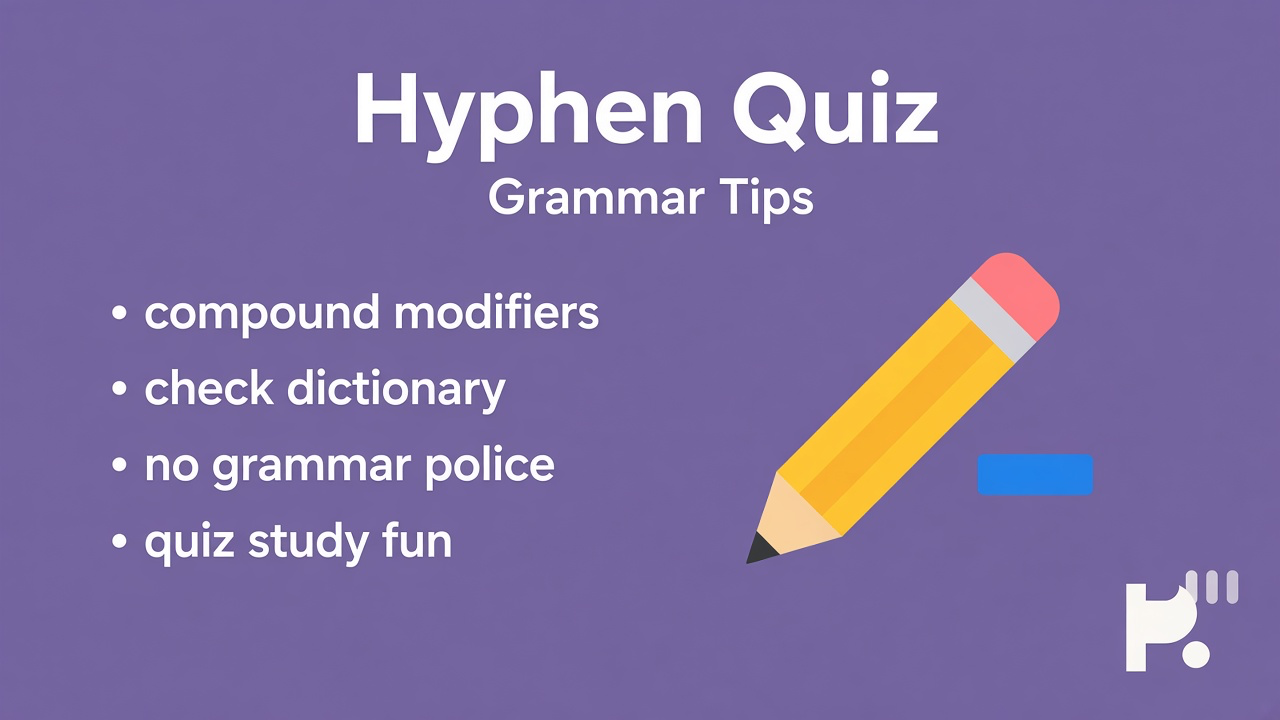
What this quiz can and cannot tell you
Can tell you
- Highlight compound modifier and line-break habits worth revisiting before publishing
- Separate study reflection from AP cosplay and public writer dunk spirals
- Encourage opt-in edit questions without stranger correction threads
- Spark better style guide reading without claiming copyeditor authority
Cannot tell you
- Prove AP English credit or copyeditor certification from couch scores
- Replace workplace editors, instructors, or official style councils
- License public writer dunk or dialect shame threads from bar height
- Override organization style sheets from agree totals alone
Why hyphen memes need compound rules, line breaks, and grammar-police limits
Search traffic around hyphen quizzes usually wants quick compound-modifier reminders after drafts, ESL units, or social posts that confuse hyphens with en dashes. Those goals help when readers underline before-noun units, check prefix lists, and keep agree bars away from dunk threads. They hurt when couch scores become proof you may mock cousins who code-switch, or when meme clips skip manners because a humility bar looked tall. Hyphen study reflection works best when it names dialect respect and unofficial limits together while staying distinct from comma-semicolon siblings.
Dr. James Whitfield reviews IQ and cognitive study screeners with a split between honest punctuation recall and refusal of grammar-police cosplay. Compound items track before-noun units. Line-break items track splits and prefixes without en-dash confusion wars. Clarity items track numbers and dates without petty performance. Quiz-not-grammar-police limits track unofficial framing and private reflection.
Real writers mix bars. You might score high on compound rules while en-dash habits stay moderate early in coursework. Reverse items catch over-hyphenating for drama, public writer rankings, and bar-height AP proof.
Pair results with siblings instead of forcing one punctuation story. Our comma and semicolon quiz explores clause punctuation with separate stems rather than hyphen focus here. Our grammar quiz widens general syntax habits rather than compound-modifier lanes on this page. Our i vs me quiz stays on pronoun case habits rather than hyphen etiquette here. Browse the IQ and cognitive hub for more study screeners. Caption shares unofficial, ask consent before edits, and skip bait threads on friends who never opted in.
| Test | Focus |
|---|---|
| Comma and semicolon quiz | Clause punctuation rather than compound-modifier hyphen habits on this screener |
| Grammar quiz | General syntax habits rather than hyphen-specific unofficial limits here |
| I vs me quiz | Pronoun case habits rather than hyphen line-break etiquette on this page |
Hyphen Quiz FAQ
What does the Hyphen Quiz measure?
It measures self-reported hyphen and compound modifier habits across modifier placement, line-break and prefix use, number-date clarity, and unofficial grammar-police limit items, plus a parallel fear-of-intimacy stack chart.
Is a hyphen the same as an en dash?
No. Literacy items touch both tools at intro depth. En dashes often fit ranges; hyphens often join compounds. Follow your style guide when stakes are formal.
Does this quiz certify AP English or hire me as a copyeditor?
No. Limit items reject exam cosplay. Formal credentials and workplace roles require training and employer standards beyond this screener.
Should I correct strangers online when my bars look high?
No. Bars describe habits you endorsed here, not licenses for public dunk threads. Opt-in kindness beats screenshot clout.
Who reviewed this quiz?
Dr. James Whitfield reviewed the framing, grammar-police limit language, and result explanations. See our editorial policy for review standards.
Reviewed by