
What the Fluid and Electrolytes Quiz measures
This quiz does not read your hospital lab panel, authorize IV fluids, or diagnose hyponatremia, hyperkalemia, or dehydration for a patient in your unit. It measures how much you agree with introductory fluid and electrolyte study literacy grouped four ways: Na and K fluid basics about extracellular sodium, intracellular potassium, water balance vocabulary, and class-level hypo- and hyper- stories tied to escalation language; clinical safety limits about confusion, weakness, edema, rhythm worry, critical sim labs, and reporting instead of silent guessing; study habit literacy about units on flashcards, renal chapter pairing, simulation debriefs, rationales, and retakes without meme-only cramming; and quiz not prescriber about supplementing lectures, asking RNs when pumps confuse you, and refusing to dose fluids from trivia or social posts. You rate 22 statements from strongly disagree to strongly agree, with reverse-worded myths so seawater fixes, critical-lab silence, mnemonic-only study, and prescribing fantasies cannot inflate every bar. Your answers also feed a second chart on closeness and trust habits, because clinical worry sometimes pushes quick internet certainty over instructor coaching. The total becomes an index from 0 to 100 where higher means more reported fluid and electrolyte study literacy on this screener, not proof you should skip care when symptoms scare you.
Na and K fluid basics
Extracellular sodium, intracellular potassium, water balance vocabulary, and class hypo-hyper stories with escalation language.
Clinical safety limits
Confusion, weakness, edema, rhythm symptoms, critical labs, and speak-up scripts instead of classmate treatment plans.
Study habit literacy
Lab units, renal pairing, sim debriefs, rationales, and retakes beyond one magic-number sheet.
Quiz not prescriber
Fundamentals prep, RN and instructor questions, no IV fluid or electrolyte orders from bar height.
How it works
Answer 22 agreement items
Rate each statement from Strongly disagree to Strongly agree. Tap Next after each answer.
Answers sort into four domains
Each answer feeds one of four fluid and electrolyte study groups, and every item also feeds a closeness and trust layer.
See your index and charts
You get a 0 to 100 index, a band, four domain bars, and a second chart for intimacy habits.
Take the Fluid and Electrolytes Quiz
Answer 22 short statements to see your fluid and electrolyte study literacy index, four domain bars, and a closeness and trust chart.
What your result means
Your index is the average of all 22 answers, scaled from 0 to 100, with reverse-worded items flipped first. Higher means more reported fluid and electrolyte study literacy on this screener. Read quiz-not-prescriber and clinical safety bars together before you treat the total as clinical clearance.
| Band | Index range | Typical reading |
|---|---|---|
| Building fluid and electrolyte literacy | 0 to 35 | Fewer agreed facts on Na-K basics, clinical safety escalation, study habits, or quiz-not-prescriber limits on this screener. |
| Mixed fluid and electrolyte literacy | 36 to 65 | Solid Na-K recall mixed with seawater myths, critical-lab silence, meme-only study, or trivia prescribing slips. |
| Strong fluid and electrolyte literacy | 66 to 100 | Frequent agreement with accurate study habits and healthy quiz-not-prescriber limits; still class prep only. |
Tips at a glance
A quick takeaway graphic with topic tips (not your personal quiz scores). Start the quiz for your index, bands, and charts.
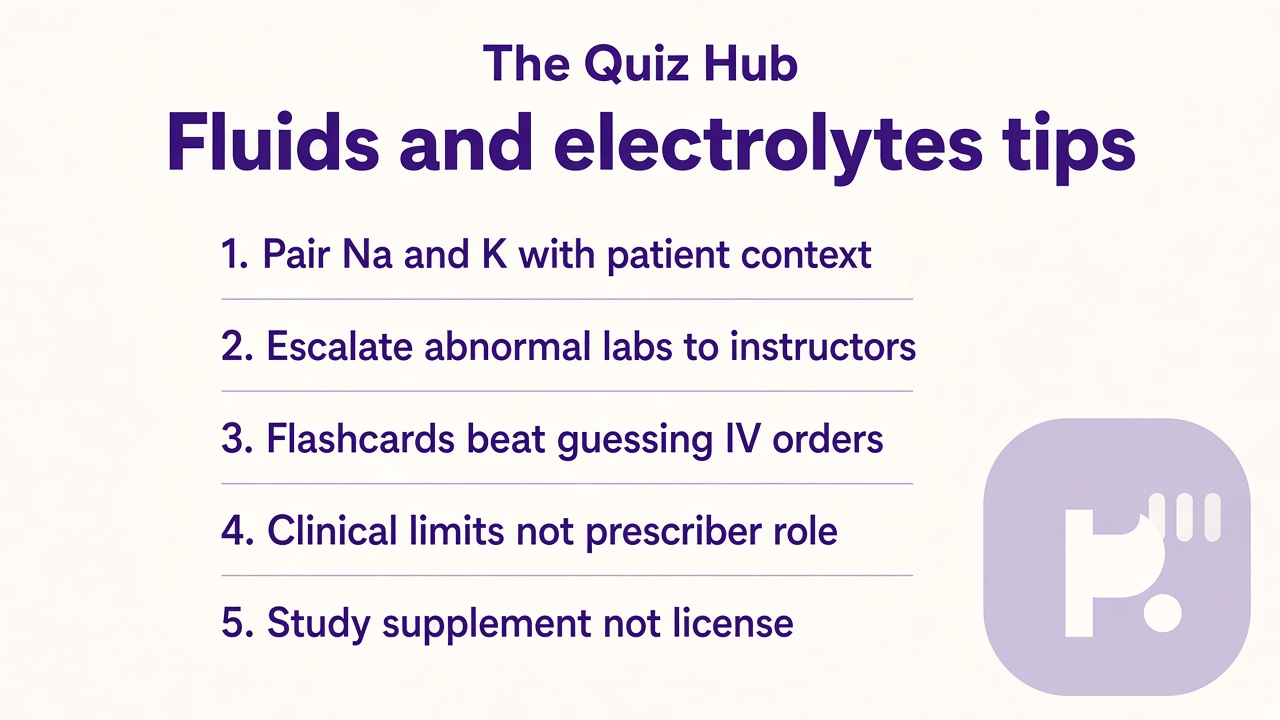
What this quiz can and cannot tell you
Can tell you
- Clarify introductory sodium, potassium, and water balance vocabulary in plain language
- Highlight escalation and speak-up habits worth practicing before sim and clinical
- Encourage labeled unit study and renal pairing without shame between lectures
- Spark better questions during nursing fundamentals and med-surg fluid units
Cannot tell you
- Prescribe IV fluids, electrolyte replacements, or fluid restrictions for real patients
- Diagnose hyponatremia, hyperkalemia, renal failure, or dehydration from trivia answers alone
- Replace NCLEX prep, hospital pump competencies, or preceptor sign-off on clinical rotations
- Prove electrolytes are safe when confusion, weakness, seizures, or dangerous rhythm symptoms appear
Fluid and electrolyte study without playing prescriber online
Nursing students search fluid and electrolytes quizzes when sodium and potassium flashcards blur together and every IV bag thumbnail looks interchangeable on review night. Fundamentals courses still teach ions in context: sodium as the major extracellular cation, potassium as the major intracellular cation, and water stories tied to osmolarity and renal regulation rather than isolated integers. Skipping water balance to memorize one normal sodium value is a trap this screener flags on purpose.
Dr. James Whitfield reviews IQ and cognitive study quizzes with a simple split: reward unit-aware study and escalation humility, and refuse prescribing theater from bar height. Na and K fluid basics tracks extracellular-intracellular language, hypo- and hyper- teaching frames, and cardiac rhythm worry that belongs in escalation lectures—not DIY replacement from classmates. Clinical safety limits tracks confusion, weakness, edema, oliguria, rhythm symptoms, and critical sim labs as speak-up moments. Study habit literacy keeps labeled units, renal chapter pairing, simulation debriefs, and rationales visible beside threads that treat one mnemonic as a full renal course. Quiz not prescriber keeps IV selection, pump questions, and licensed-team ownership visible beside brag posts that start fluids from trivia wins.
Real readers mix bars. You might score high on sodium-potassium recall while quiz-not-prescriber stays moderate, which often means memorized ranges outran prescriber humility before rotations. You might score high on study habits with softer clinical safety, which can mean strong flashcards yet shaky escalation language in sim. Reverse items catch sloppy confidence: seawater hydration myths, ignoring flagged critical labs, replacing instructors with viral mnemonics, or licensing IV orders from perfect agreement here should not inflate bars meant to track study habits.
Pair results with siblings on this hub instead of forcing one fluid story. Our excretory system quiz leans kidney filter and waste vocabulary when you want renal structure before electrolyte numbers. Our am I dehydrated quiz stays on hydration symptom reflection with different stems—not IV prescribing here. Our first aid quiz covers broader emergency study habits without sodium-potassium drill focus on one page. Browse the IQ and cognitive test hub for more low-stakes study games. Caption shares as class prep and skip dosing strangers from cropped lab screenshots.
Fluid literacy grows when layers stay in order: name the ion context, tie water balance language to renal units, practice escalation scripts in sim, then ask RNs when pump settings disagree with your homework. Retake after one instructor worksheet and notice whether quiz-not-prescriber bars rise even when Na-K recall lags, which often means you separated performative scoring from actual unit manners.
| Test | Focus |
|---|---|
| Excretory system quiz | Kidney filter and waste intro rather than sodium-potassium IV study habits on one page |
| Am I dehydrated quiz | Hydration symptom reflection rather than fundamentals electrolyte prescribing limits here |
| First aid quiz | General emergency study habits rather than Na-K fluid drill vocabulary |
Fluid and Electrolytes Quiz FAQ
What does the Fluid and Electrolytes Quiz measure?
It measures how much you agree with introductory fluid and electrolyte study literacy across Na and K fluid basics, clinical safety limits, study habit literacy, and quiz-not-prescriber humility. You get an index from 0 to 100 plus four bars. It reflects self-reported study habits on this screener, not a clinical skills exam, lab readout, or IQ score.
Can this quiz tell me which IV fluid to hang?
No. IV fluid selection, rates, restrictions, and electrolyte replacements require licensed prescribers, orders, and unit protocols. This page is fundamentals trivia and vocabulary prep only.
Why mention escalating to instructors or RNs?
Fundamentals courses teach that alarming symptoms and critical lab teaching values are speak-up moments in sim and clinical. This screener rewards that habit instead of treating classmates or quiz scores as treatment plans.
Why are some statements worded as myths?
Reverse-worded myths catch overconfidence. Agreeing that seawater safely fixes dehydration, that flagged critical labs can be ignored when someone feels fine, that one mnemonic replaces renal instruction, or that trivia licenses IV orders should not inflate your literacy index.
Who reviewed this quiz?
Dr. James Whitfield, PhD reviewed the educational framing, fluid and electrolyte practice limits, and result explanations. See our editorial policy for review standards.
Reviewed by
