What the Idiom Quiz measures
This quiz does not certify interpreters, sell dictionary subscriptions, or replace AP rhetorical analysis essays. It measures how much you agree with idiom study habits grouped four ways: context clue habits about sentences and tone; regional phrase humility about dialect without dunk threads; literal translation traps about impossible literal reads; and study not dictionary rank about class supplement framing and refusing editor hiring myths from bar height. You rate 22 statements from strongly disagree to strongly agree, with reverse-worded traps so literal panic cannot inflate every bar. Your answers also feed a second chart on closeness and trust habits.
Idiom context clue habits
Phrase not word list.
Regional phrase humility
Dialect not dunk.
Literal translation traps
Meaning not picture.
Study not dictionary rank
Mirror not AP proof.
How it works
Answer 22 agreement items
Rate each statement from Strongly disagree to Strongly agree. Tap Next after each answer.
Answers sort into four domains
Each answer feeds one of four idiom study groups, and every item also feeds a closeness and trust layer.
See your index and charts
You get a 0 to 100 index, a band, four domain bars, and a second chart for intimacy habits.
Take the Idiom Quiz
Answer 22 short statements to see your idiom study literacy index, four domain bars, and a closeness and trust chart.
What your result means
Your index is the average of all 22 answers, scaled from 0 to 100, with reverse-worded items flipped first. Read study-not-dictionary-rank bars together with regional humility before you treat the total as AP readiness or slang police authority.
| Band | Index range | Typical reading |
|---|---|---|
| Building idiom study literacy | 0 to 35 | Fewer agreed habits on context clues, regional humility, literal traps, or study-not-dictionary limits. |
| Mixed idiom study literacy | 36 to 65 | Solid phrase habits mixed with literal traps, regional dunk slips, or dictionary rank myths. |
| Strong idiom study literacy | 66 to 100 | Frequent agreement with habits and limits; still unofficial study reflection only. |
Tips at a glance
A quick takeaway graphic with topic tips (not your personal quiz scores). Start the quiz for your index, bands, and charts.
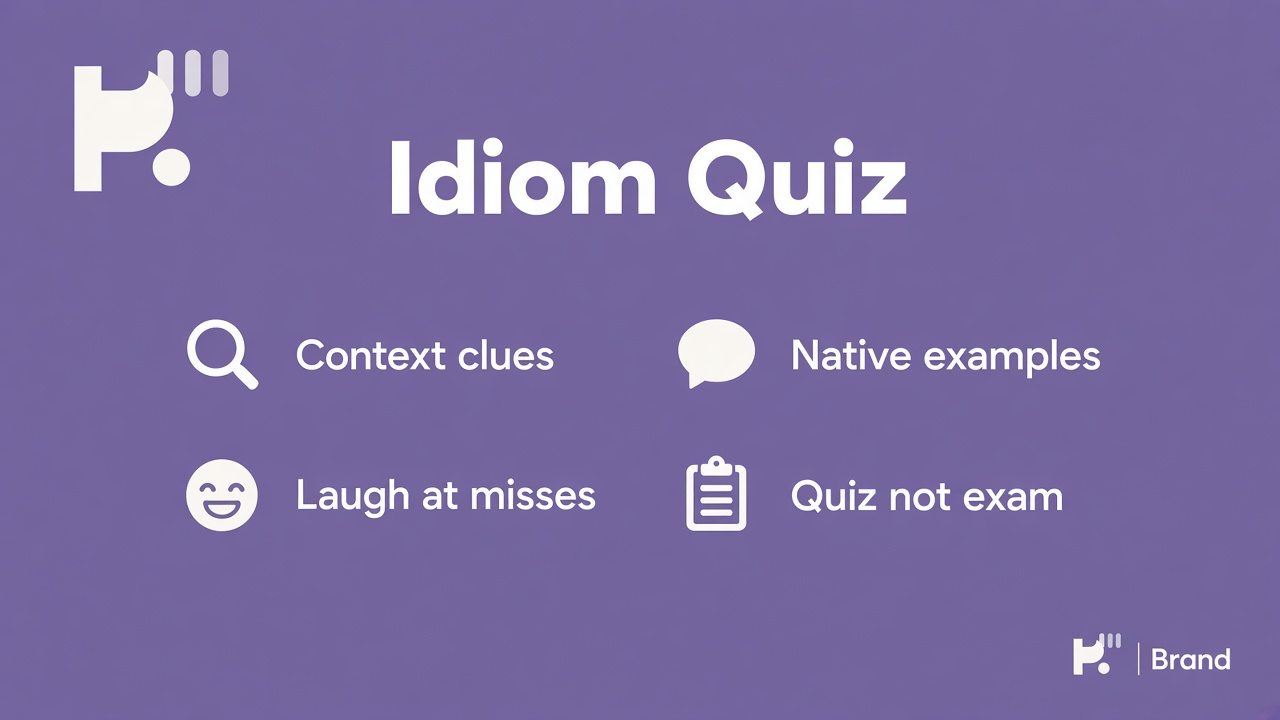
What this quiz can and cannot tell you
Can tell you
- Highlight context, regional humility, and literal trap habits worth practicing in reading and listening
- Separate study reflection from AP cosplay and ESL dunk spirals
- Encourage plain-language explanations without public shame lists
- Spark better phrase notebooks without claiming editor credentials
Cannot tell you
- Prove AP readiness, certify interpreters, or replace graded idiom rubrics
- Justify correcting strangers over casual regional slang they learned at home
- Rank classmates by worth from one couch screener
- Memorize every global idiom from agree totals alone
Why idiom quizzes need context habits, regional humility, literal traps, and study limits
Search traffic around idiom quizzes often wants quick phrase confidence for reading class, ESL practice, or meme lists, not publisher stickers or hallway dunk threads. Those goals help when readers name context clues, regional variation, and study-not-rank caps together. They hurt when couch scores become ESL shame licenses.
Dr. James Whitfield reviews language screeners with a split between honest phrase habits and refusal of dictionary cosplay. Context items track sentences and tone. Regional items track dialect without superiority rants. Literal trap items track impossible mental pictures. Study limits keep screeners separate from AP waivers.
Real students mix bars. You might score high on meme idioms while essay clarity stays moderate. Reverse items catch every-phrase-is-idiom myths, public shame lists, and bar-height editor hiring.
Pair results with siblings instead of one giant phrase bank. Our figures of speech quiz covers idiom, hyperbole, and oxymoron with stems written to avoid overlap with this dedicated idiom page. Our figurative language quiz explores simile and metaphor habits when comparison stems fit better. Our good vs well quiz stays on adjective and adverb idioms rather than full phrase context here. Browse the IQ and cognitive hub for more language screeners.
| Test | Focus |
|---|---|
| Figures of speech quiz | Hyperbole and oxymoron stems separate from this dedicated idiom context bank |
| Figurative language quiz | Simile and metaphor habits rather than idiom phrase context on this page |
| Good vs well quiz | Adjective versus adverb idioms rather than full idiom context lanes here |
Idiom Quiz FAQ
What does the Idiom Quiz measure?
It measures self-reported idiom study habits across context clues, regional humility, literal translation traps, and unofficial study limits, plus a parallel fear-of-intimacy stack chart.
How is this different from the figures of speech quiz?
Both touch expressions with separate stems. This page focuses on idiom context and regional humility banks rather than the sibling hyperbole and oxymoron mix.
Does a high score prove I am ready for the AP English exam?
No. Limit items reject AP cosplay. Teachers and exam boards own formal readiness decisions.
Can I use results to mock classmates who misuse idioms?
No. Regional humility items reject ESL dunk myths. High bars describe habits you endorsed here, not permission to shame.
Who reviewed this quiz?
Dr. James Whitfield reviewed the framing, patience language, and result explanations. See our editorial policy for review standards.
Reviewed by