What the Fire Extinguisher Quiz measures
This quiz does not inspect your building, issue fire marshal credentials, or coach live fire entry. It measures how much you agree with introductory portable extinguisher literacy grouped four ways: class label literacy about A B C and K summaries in common handouts without pretend-every-cylinder-works myths; PASS use habits about pull aim squeeze sweep, base aiming, escape paths, and evacuation when fires grow; placement and maintenance about mounts near exits, gauge and tag habits, recharge after discharge, and reporting missing units; and study not fire marshal about employer safety authority, 911-first judgment, and refusing to treat quiz bars like drill cancellation power. You rate 22 statements from strongly disagree to strongly agree, with reverse-worded traps so one PASS meme cannot inflate every bar. Your answers also feed a second chart on closeness and trust habits, because safety study sometimes chases argument wins instead of honest evacuation questions. The total becomes an index from 0 to 100 where higher means more reported extinguisher study literacy on this screener, not proof you should skip emergency calls when smoke rises.
Class label literacy
A B C and K fuel stories in intro charts without universal-cylinder myths.
PASS use habits
Pull aim squeeze sweep, base aim, exit behind you, evacuate when fire grows.
Placement and maintenance
Mounts on paths, gauge and tag checks, recharge after use, no hidden empties.
Study not fire marshal
Employer safety authority, 911 first, limits on quiz credential fantasies.
How it works
Answer 22 agreement items
Rate each statement from Strongly disagree to Strongly agree. Tap Next after each answer.
Answers sort into four domains
Each answer feeds one of four extinguisher literacy groups, and every item also feeds a closeness and trust layer.
See your index and charts
You get a 0 to 100 index, a band, four domain bars, and a second chart for intimacy habits.
Take the Fire Extinguisher Quiz
Answer 22 short statements to see your portable extinguisher literacy index, four domain bars, and a closeness and trust chart.
What your result means
Your index is the average of all 22 answers, scaled from 0 to 100, with reverse-worded items flipped first. Higher means more reported class, PASS, placement, and marshal-limit agreement on this screener. Read study-not-fire-marshal bars with PASS habits before you treat a high class bar as live fire permission.
| Band | Index range | Typical reading |
|---|---|---|
| Building extinguisher literacy | 0 to 35 | Fewer agreed class, PASS, placement, or marshal-limit items on this screener. |
| Mixed extinguisher literacy | 36 to 65 | Solid class or PASS recall mixed with water-on-grease myths or marshal credential fantasies. |
| Strong extinguisher literacy | 66 to 100 | Frequent class, PASS, placement, and marshal-limit agreement; still not credentialing. |
Tips at a glance
A quick takeaway graphic with topic tips (not your personal quiz scores). Start the quiz for your index, bands, and charts.
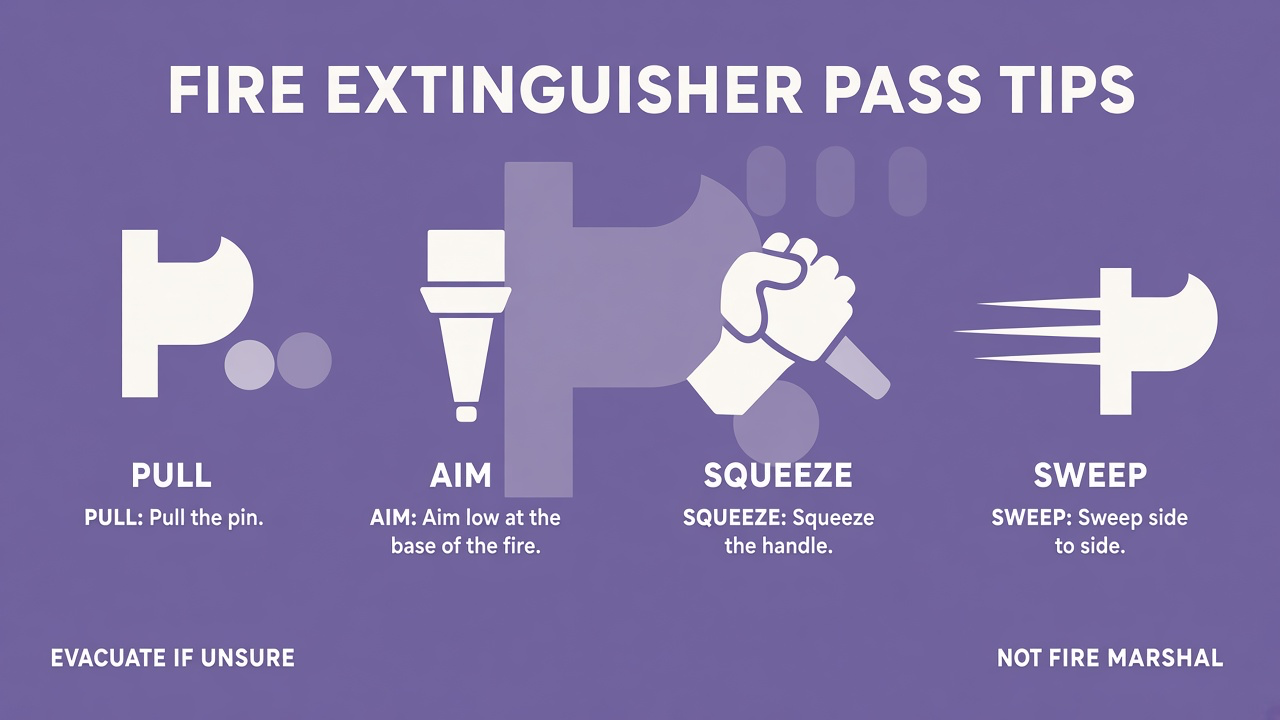
What this quiz can and cannot tell you
Can tell you
- Clarify Class A B C K summaries and PASS steps in plain language
- Highlight water-on-grease and fight-every-fire myths worth unlearning before drills
- Encourage gauge and tag checks without shame between safety meetings
- Spark better questions during workplace extinguisher walk-throughs
Cannot tell you
- Certify fire marshals, live burn instructors, or building inspectors from one online screener
- Replace hands-on extinguisher training required by employers or campuses
- Tell you to fight active structure fires or skip 911 based on bar height
- Turn literacy scores into harassment of safety officers or neighbors online
Extinguisher class literacy before marshal shortcuts
Search traffic around fire extinguisher quizzes usually wants two things: sound informed before a landlord walk-through without pretending to be the marshal, and check whether PASS and class letters match the unit on the wall. Those goals help when readers treat bars as a study map. They hurt when people treat scores like credentials, aim at flame tips while grease reignites, or delay evacuation because a training clip made discharging look easy.
Dr. James Whitfield reviews iq cognitive study screeners with a simple split: reward honest agreement with widely taught class summaries and honest limits on credential hype at the same time. Class label literacy tracks ordinary combustibles, flammable liquids, energized electrical gear, and commercial kitchen grease stories without pretending every red cylinder is interchangeable. PASS use habits tracks pull aim squeeze sweep language, base aiming, keeping an exit behind you, and evacuation when smoke banks down. Placement and maintenance keeps mounts on escape paths, gauge needles, inspection tags, and professional recharge visible beside hide-it-in-a-closet myths. Study not fire marshal keeps employer safety staff, live burn courses, and 911-first judgment visible beside quiz appointment fantasies.
Real readers mix bars. You might score high on PASS while keeping marshal limits moderate, which often describes someone who watched demos but never read a Class K placard. You might score high on class letters with softer placement items, which can mean strong trivia yet little habit of checking expired tags. Reverse items catch sloppy answers: universal cylinder myths, water on grease, blocked exits, or high indices like automatic marshal badges should not inflate bars meant to track layered study literacy.
Pair results with siblings on this hub instead of forcing one safety story. Our fire safety quiz sibling uses its own stem bank for smoke alarms, exit drills, and workplace evacuation habits—not these PASS and class-label sentences. Our firefighter quiz sibling stays playful on service culture trivia rather than portable unit maintenance here. Browse the IQ and cognitive test hub for more low-stakes screeners. Caption shares as study practice and skip credential dunking on friends who never asked for marshal court.
Buildings change faster than one trivia night. Recharge dates, relocated mounts, and new fryer lines shift which class stories matter in your kitchen. When you share results, say evacuation beats heroics when heat or smoke rise. When you borrow PASS tips, credit safety officers who teach kindly and firefighters who respond to real calls. Retake after one tenant safety email and watch whether marshal-limit bars rise even if class trivia spikes, which often means you separated performative scoring from actual humility about live fire authority.
| Test | Focus |
|---|---|
| Fire safety quiz | Alarm, exit, and drill habits rather than PASS and Class A B C K labels |
| Firefighter quiz | Respectful service trivia and culture, not portable extinguisher maintenance |
Fire Extinguisher Quiz FAQ
What does the Fire Extinguisher Quiz measure?
It measures how much you agree with statements about class labels, PASS habits, placement and maintenance, and study-not-fire-marshal limits. You get an index from 0 to 100 plus four bars. It describes self-rated study literacy on this screener, not marshal licenses, live burn certification, or proof you should fight spreading fires.
Is this a fire marshal or live burn certification exam?
No. This page builds introductory portable extinguisher literacy for curiosity and study groups. Fire marshals, burn instructors, and employer safety programs issue credentials and hands-on training this screener cannot replace.
Should I fight a fire if I score high here?
Only small contained fires with a clear exit behind you are even candidates in training stories—and many employers still want evacuation first. Heavy smoke, spreading flames, or uncertainty mean leave and call emergency services, regardless of quiz bars.
Why include Class letters with PASS items?
Extinguisher search intent blends label reading, mnemonic memory, and evacuation judgment. Split bars keep class wins separate from PASS myths and marshal humility so results stay honest about which lanes you endorse.
Who reviewed this quiz?
Dr. James Whitfield, PhD reviewed the educational framing, YMYL evacuation limits, and result explanations. See our editorial policy for review standards.
Reviewed by