What the General Knowledge Quiz In Malayalam measures
This quiz does not proctor Malayalam board fluency exams, hire translators, or grade oral language rubrics. It measures how much you agree with bilingual GK statements grouped four ways: bilingual welcome habits about Malayalam and English coexisting in games and study without purity tests; Kerala context literacy about geography, festivals, media examples, and resisting one-size stereotype reels; respectful language discourse about encouraging code-switchers, avoiding accent dunk threads, and evidence-led debate; and quiz not fluency cert about unofficial warm-up framing, official language boards owning scored gates, and refusing bar-height translator or clearance fantasies. You rate 22 statements from strongly disagree to strongly agree, with reverse-worded traps so one lucky guess cannot inflate every bar. Your answers also feed a second chart on closeness and trust habits, because language shame sometimes spills into family tension when purity scores spike. The total becomes an index from 0 to 100 where higher means more reported Malayalam bilingual GK habits on this screener, not proof you should skip language class.
Bilingual welcome habits
Malayalam and English side by side without purity tests.
Kerala context literacy
Maps, festivals, and cited syllabus notes.
Respectful language discourse
Encourage learners; skip accent dunk threads.
Quiz not fluency cert
Warm-up only; board exams live elsewhere.
How it works
Answer 22 agreement items
Rate each statement from Strongly disagree to Strongly agree. Tap Next after each answer.
Answers sort into four domains
Each answer feeds one of four Malayalam GK groups, and every item also feeds a closeness and trust layer.
See your index and charts
You get a 0 to 100 index, a band, four domain bars, and a second chart for intimacy habits.
Take the General Knowledge Quiz In Malayalam
Answer 22 short statements to see your Malayalam bilingual GK habits index, four domain bars, and a closeness and trust chart.
What your result means
Your index is the average of all 22 answers, scaled from 0 to 100, with reverse-worded items flipped first. Read quiz-not-fluency-cert bars together with respectful language discourse before you treat a high score as board proof. Cozy reflection supports kinder bilingual communities; language instructors still own formal assessment.
| Band | Index range | Typical reading |
|---|---|---|
| Building Malayalam GK habits | 0 to 35 | Fewer agreed habits on bilingual welcome, Kerala context, respectful language talk, or fluency limits. |
| Mixed Malayalam GK habits | 36 to 65 | Solid welcome with code-switch shame, context myths, dunk threads, or fluency waiver fantasies. |
| Strong Malayalam GK habits | 66 to 100 | Frequent agreement with welcome, context, respect, and fluency limits; still unofficial warm-up only. |
Tips at a glance
A quick takeaway graphic with topic tips (not your personal quiz scores). Start the quiz for your index, bands, and charts.
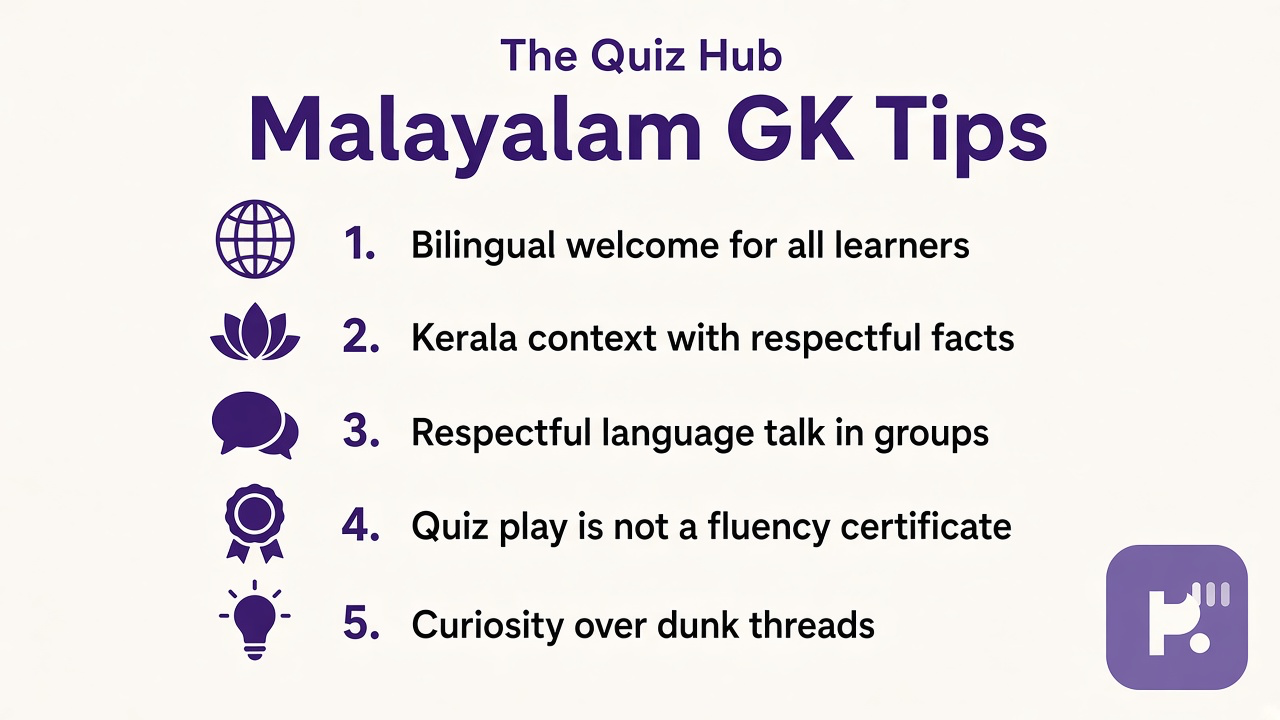
What this quiz can and cannot tell you
Can tell you
- Highlight welcome, context, and respect habits before the next bilingual club or festival gathering
- Separate unofficial reflection from fluency board and translator substitution myths
- Encourage code-switchers and cited sources without public shame spirals
- Spark better questions about syllabus readings without claiming exam authority
Cannot tell you
- Replace Malayalam board exams, school oral rubrics, translator certification, or visa language interviews
- Prove fluency rankings, hiring clearance, or community belonging from one couch screener
- Give permission to mock accents, shame mixed-language families, or dunk strangers online
- Substitute for instructor feedback when teachers require formal language assessments
Why Malayalam GK quizzes need bilingual welcome, context, and fluency separation
Search traffic around general knowledge in Malayalam usually wants a playful mirror after a school unit, Onam poster project, or family bilingual game, not board fluency clearance or accent dunk threads. Those goals help when readers welcome code-switching, cite syllabus festival notes, and keep party scores away from translator cosplay. They hurt when one reel replaces footnotes, or when agree bars get treated like language board proof. Malayalam GK literacy works best when it names welcome habits and fluency limits together while staying distinct from India-wide or age-band siblings on this wave.
Dr. James Whitfield reviews iq-cognitive bilingual screeners with a simple split: reward honest welcome curiosity and honest limits on fluency substitution myths at the same time. Bilingual welcome habits tracks Malayalam and English coexisting without purity tests. Kerala context literacy tracks geography, festivals, and cited media examples without stereotype montages. Respectful language discourse tracks encouragement, pace adjustments, and refusing accent dunk culture. Quiz not fluency cert keeps screeners separate from board exams and bar-height translator fantasies.
Real learners mix bars. You might score high on welcome while keeping context literacy moderate, which often describes supportive classmates who still argue map labels in public threads. You might score high habits with softer fluency limit items, which can mean you avoid boast posts yet still treat quiz totals like board substitutes. Reverse items catch overconfidence: code-switch failure myths, relative mockery, borderless Kerala traps, dunk-thread licenses, or automatic translator certification should not inflate bars meant to track layered bilingual manners.
Pair results with siblings instead of forcing one purity story. Our general knowledge quiz India sibling uses national compare stems separate from Kerala bilingual welcome here. Our funny quiz questions in hindi explores another bilingual party lane with different cultural humility norms rather than Malayalam board framing on this page. Our general knowledge quiz for high school students angles toward classroom citation habits when research units fit better than language welcome wording here. Browse the IQ and cognitive hub for more study screeners. Caption shares as warm-up habits, cite syllabus lines, and skip grading strangers who never asked for a quiz.
Festival seasons and diaspora visits rotate faster than meme threads clear. A welcome bar might spike after one kind gathering while context literacy sleeps until you retake calmly. When you share results, say unofficial Malayalam bilingual GK habits. When you borrow tips, credit teachers who assigned festival readings and relatives who kept code-switching normal. Retake after one language unit and watch whether fluency limit bars stay high even if vocabulary enthusiasm rises, which often means you separated cozy learning joy from board substitution pressure.
| Test | Focus |
|---|---|
| General knowledge quiz India | National GK literacy rather than Malayalam bilingual welcome stems on this page |
| Funny quiz questions in hindi | Hindi party trivia lanes rather than Kerala context and fluency limits here |
| General knowledge quiz for high school students | Classroom citation habits rather than Malayalam welcome discourse on this screener |
General Knowledge Quiz In Malayalam FAQ
What does the General Knowledge Quiz In Malayalam measure?
It measures how much you agree with statements about bilingual welcome habits, Kerala context literacy, respectful language discourse, and quiz-not-fluency limits. You get an index from 0 to 100 plus four bars. It reflects self-reported habits on this screener, not Malayalam board exam scores.
Do I need fluent Malayalam to take this quiz?
No. Items welcome learners who mix Malayalam and English. The page is habit reflection, not a fluency gate.
How is this different from the India GK quiz?
This quiz centers Malayalam bilingual welcome and Kerala context notes. The India sibling uses separate national stems rather than copying these sentences.
Can I mock mixed-language answers online?
No. Respect items reject accent and code-switch dunk licenses. High bars describe habits you endorsed here, not permission to harass.
Who reviewed this quiz?
Dr. James Whitfield reviewed the educational framing, fluency separation, respectful language norms, and result explanations. See our editorial policy for review standards.
Reviewed by