What the Hand Muscles Quiz measures
This quiz does not license physical therapists, prescribe rehab, or diagnose nerve compression from one couch session. It measures how much you agree with hand muscle study statements grouped four ways: intrinsic hand muscle literacy; extrinsic tendon path literacy; functional grip basics; and quiz-not-PT-license limits. You rate 22 statements with reverse-worded traps. Your answers also feed a second chart on closeness and trust habits. The total becomes an index from 0 to 100 where higher means more reported study literacy on this screener. Stems stay separate from hand-bones-quiz osteology on this wave.
Intrinsic hand muscle literacy
Thenar, hypothenar, lumbricals, interossei.
Extrinsic tendon path literacy
Forearm flexors and extensors to digits.
Functional grip basics
Power grasp and precision pinch study.
Quiz not PT license
Study mirror; licensed clinicians own care.
How it works
Answer 22 agreement items
Rate each statement from Strongly disagree to Strongly agree. Tap Next after each answer.
Answers sort into four domains
Each answer feeds one of four hand muscle study groups, and every item also feeds a closeness and trust layer.
See your index and charts
You get a 0 to 100 index, a band, four domain bars, and a second chart for intimacy habits.
Take the Hand Muscles Quiz
Answer 22 short statements to see your hand muscle study literacy index, four domain bars, and a closeness and trust chart.
What your result means
Your index is the average of all 22 answers, scaled from 0 to 100, with reverse-worded items flipped first. Read PT-limit bars together with grip humility before you treat a high score as clinical authority. Study reflection supports kinder anatomy chats; licensed clinicians still own treatment.
| Band | Index range | Typical reading |
|---|---|---|
| Building hand muscle literacy | 0 to 35 | Fewer agreed habits on intrinsics, tendon paths, grip basics, or PT-limit items. |
| Mixed hand muscle literacy | 36 to 65 | Solid intrinsic recall with tendon slips, grip overreach, or PT substitution myths. |
| Strong hand muscle literacy | 66 to 100 | Frequent agreement with intrinsics, tendons, grip basics, and PT limits; still study warm-up only. |
Tips at a glance
A quick takeaway graphic with topic tips (not your personal quiz scores). Start the quiz for your index, bands, and charts.
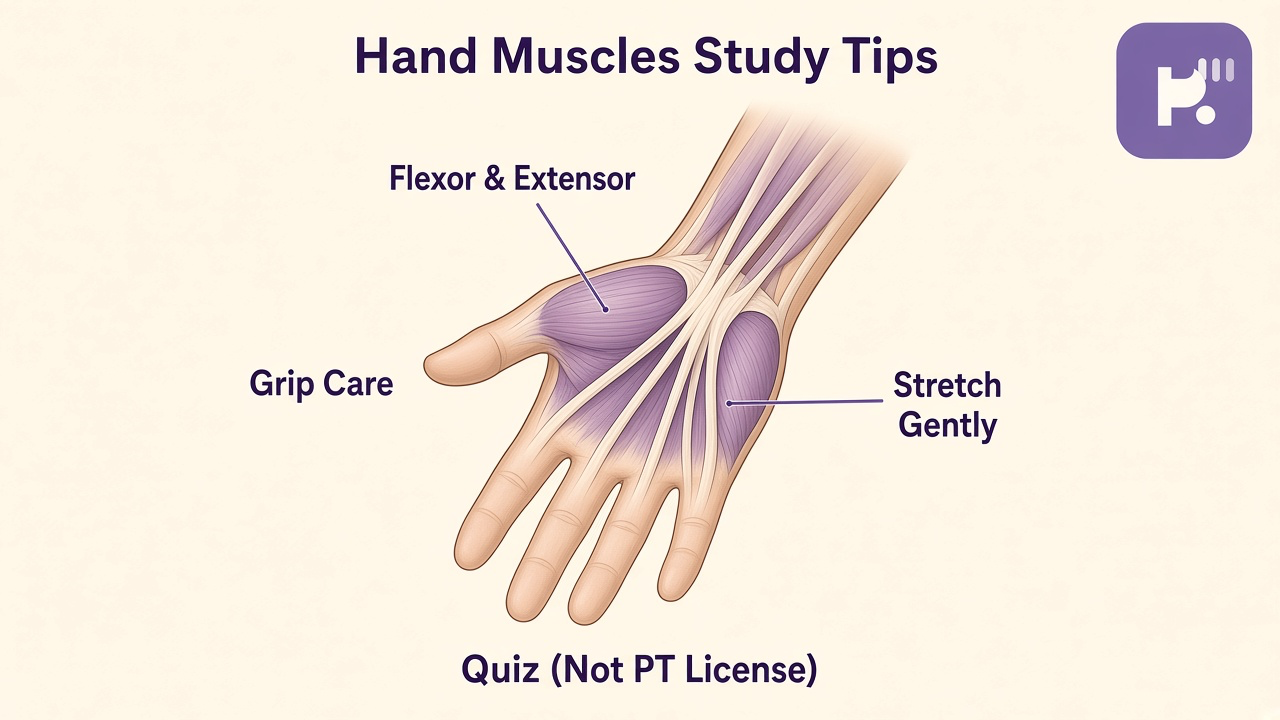
What this quiz can and cannot tell you
Can tell you
- Highlight intrinsic and tendon habits worth revisiting before practicals
- Separate playful study from therapy license myths and online rehab prescription posts
- Encourage grip language study without shame spirals about one misnamed muscle
- Spark better kinesiology questions without claiming clinical authority
Cannot tell you
- Replace dissection grading, licensed therapy plans, or clinician nerve exams
- Prove PT licensing or return-to-work clearance from one couch screener
- Give permission to diagnose carpal tunnel or prescribe stretches to strangers
- Predict practical grades from literacy bars alone
Why hand muscle quizzes need intrinsic literacy, tendon paths, grip basics, and PT separation
Search traffic around hand muscle quizzes usually wants palmar chart boosts before upper limb practicals, not therapy license stickers or stranger rehab prescription threads. Those goals help when readers study thenar and interossei roles, trace tendon paths, and keep agree bars away from credential cosplay. They hurt when couch scores become proof you may diagnose nerve injury online.
Dr. James Whitfield reviews anatomy study screeners with a split: reward honest muscle agreement and honest limits on license substitution myths. Intrinsic literacy tracks thenar and interossei separation. Tendon literacy tracks forearm-to-digit paths at class depth. Grip basics keep functional language in study lanes. Quiz-not-PT limits keep screeners separate from prescription fantasies.
Real students mix bars. Reverse items catch nerve diagnosis myths and billing cosplay.
Pair results with siblings instead of forcing one genius clinician story. Our hand bones quiz on this wave covers osteology rather than muscle stems here. Our carpal bones quiz stays on wrist rows. Our anatomy and physiology quiz widens whole-body study when hand night needs less overlap. Browse the IQ and cognitive hub for more screeners.
Practical season and tendon memes rotate faster than palmar diagrams in group chat. Retake after one dissection session.
| Test | Focus |
|---|---|
| Hand bones quiz | Hand osteology rather than intrinsic and extrinsic muscle stems on this page |
| Carpal bones quiz | Wrist carpal rows rather than full hand muscle lanes here |
| Anatomy and physiology quiz | Whole-body anatomy rather than hand muscle focus on this screener |
Hand Muscles Quiz FAQ
What does the Hand Muscles Quiz measure?
It measures how much you agree with statements about intrinsic muscles, extrinsic tendons, grip basics, and quiz-not-PT limits. You get an index from 0 to 100 plus four bars. It reflects self-rated study habits on this screener, not a license exam.
Can this diagnose carpal tunnel?
No. Numbness and weakness need clinician exams. Limit items reject diagnosis substitution myths.
How is this different from the hand bones quiz?
The hand bones sibling on this wave uses osteology stems. This page focuses on muscles and tendons with separate wording.
Who reviewed this quiz?
Dr. James Whitfield reviewed the educational framing and unofficial limits. See our editorial policy for review standards.
Reviewed by