What this quiz measures
This quiz does not measure IQ, grade students for school, or replace teacher rubrics. It measures how much you agree with elementary English literacy study habits grouped four ways: reading habits about daily reading, rereading, retelling, library variety, and dialogue tags; spelling patterns about word sorts, sounding out, dictionary checks, proofreading, and homophone patience; writing and ideas about one-idea paragraphs, context clues, messy first drafts with revision, graphic organizers, and transition words; and practice limits about mistake-friendly framing, family support without shame, and leaving formal grades and state tests to schools. You answer 22 statements from strongly disagree to strongly agree, with reverse-worded myths so agreeing with every shortcut cannot inflate every bar. Your answers also feed a second chart on closeness and trust habits, because homework stress sometimes pushes families toward harsh labels instead of calm practice. The total becomes an index from 0 to 100 where higher means more reported literacy study habits on this screener, not proof you should skip instruction when the next unit covers research writing.
Reading habits
Daily reading, rereading, retelling, genre variety, and noticing dialogue tags.
Spelling patterns
Word sorts, sounding out, dictionary checks, proofreading, and homophone practice.
Writing and ideas
One-idea paragraphs, context clues, revision passes, organizers, and transitions.
Practice limits
Mistakes as study hints, family support, and online bars not replacing school scores.
How it works
Answer 22 agreement items
Rate each statement from Strongly disagree to Strongly agree. Tap Next after each answer.
Answers sort into four domains
Each answer feeds one of four literacy study groups, and every item also feeds a closeness and trust layer.
See your index and charts
You get a 0 to 100 index, a band, and two bar charts you can use before a unit test or conference.
Take the English Quiz For Elementary Students
Answer 22 short statements to see your elementary English literacy index, four domain bars, and a closeness and trust chart.
What your result means
Your index is the average of all 22 answers, scaled from 0 to 100, with reverse-worded items flipped first. Higher means more reported literacy study habits on this screener. Read practice limit bars together with reading habits before you treat the total as school immunity.
| Band | Index range | Typical reading |
|---|---|---|
| Building elementary English literacy | 0 to 35 | Fewer agreed facts on reading habits, spelling patterns, writing routines, or practice limits on this screener. |
| Mixed elementary English literacy | 36 to 65 | Solid habits in some domains with myths about perfect memory, sound-only spelling, or online bars replacing school grades. |
| Strong elementary English literacy | 66 to 100 | Frequent agreement with accurate elementary literacy study habits and healthy practice limits. |
Tips at a glance
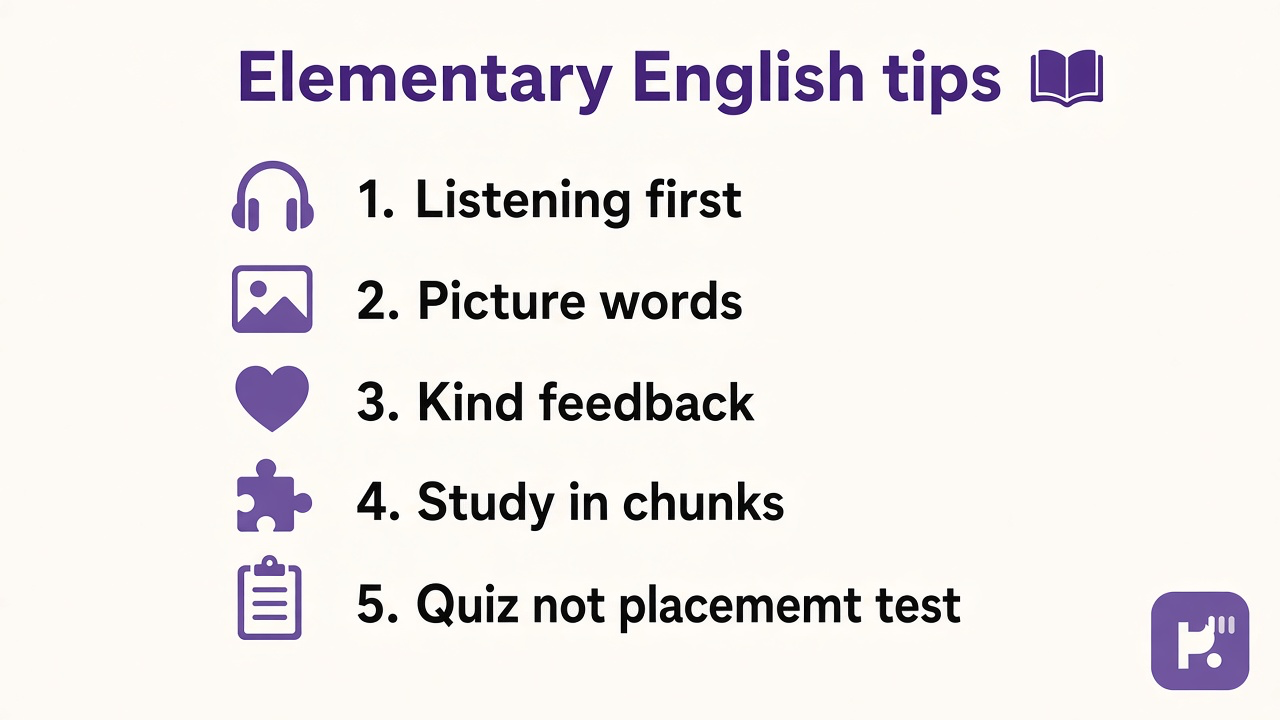
A quick takeaway graphic with topic tips (not your personal quiz scores). Start the quiz for your index, bands, and charts.
What this quiz can and cannot tell you
Can tell you
- Clarify reading, spelling, and writing routines in plain language for elementary learners
- Highlight common literacy myths worth unlearning without shaming students
- Encourage revision and retake habits at home without sibling comparisons
- Spark better questions during parent-teacher conferences or writing conferences
Cannot tell you
- Replace teachers, school rubrics, formal assessments, or individualized education plans
- Prove intelligence rank or predict long-term academic success from one screener
- Diagnose learning disabilities or language disorders from online agree items
- Justify skipping classroom instruction because trivia bars look high
Elementary English literacy without homework shame
Families search elementary English quizzes when reading logs, spelling tests, and paragraph assignments pile up and every correction feels personal. Daily reading of something enjoyable builds stamina better than one marathon night before a log is due. Rereading and retelling main events train comprehension muscles teachers assess in class.
Spelling in English follows patterns with exceptions. Word sorts, sounding out, and dictionary checks beat pretending every word sounds exactly as written. Homophones like there and their need repeated context, not one harsh dinner-table lecture. Proofreading for capitals and end marks belongs in the routine after drafts, not only on spelling quiz day.
Writing at this level often means one main idea per paragraph, context clues for new vocabulary, and a revise pass after a messy first draft. Graphic organizers and transition words match rubrics many teachers share at conferences. Claiming good writers never revise is a myth screeners flag so students learn iteration is normal.
Practice limits keep online scores humble. Weak bars are study hints, not quit-reading orders. This screener supports families; it does not replace report cards, state tests, or teacher grades. Pair it with our English quiz for class 3 for earlier phonics focus, or the English quiz for broader general literacy. Browse the IQ and cognitive test hub for more low-stakes study games.
| Test | Focus |
|---|---|
| English quiz for class 3 | Earlier phonics and little sentences rather than paragraph revision habits |
| English quiz | General English literacy for mixed ages rather than elementary rubric habits |
English Quiz For Elementary Students FAQ
What does this quiz measure?
It measures how much you agree with elementary English literacy study habits across reading, spelling, writing, and practice limits. You get an index from 0 to 100 and four bars. It reflects self-reported habits on this screener, not a school report card or IQ score.
Is this quiz only for elementary school students?
It targets reading, spelling, and paragraph habits common in elementary grades. Older or younger learners may still use it as a low-stakes warm-up, but teachers remain the authority on grade-level expectations.
Does a high score replace spelling tests or state reading exams?
No. Classroom quizzes, district assessments, and state tests stay separate from any online screener, no matter how high the bars look.
Why are some statements worded as myths?
Reverse-worded myths catch overconfidence. Agreeing that memory never needs rereading, that spelling is always phonetic, that revision is unnecessary, or that online bars cancel school curriculum should not inflate the literacy index.
Who reviewed this quiz?
Dr. James Whitfield reviewed the educational framing, family helper limits, and result explanations. See our editorial policy for review standards.
Reviewed by