
What Electrician Quiz measures
This quiz does not issue journeyman cards, approve permits, or hire you onto a crew. It measures how much you agree with beginner-friendly electrician trade literacy grouped four ways: trade vocabulary about conductors, breakers, conduit, wire color teaching, and panel schedules without one-world color law myths; rough-in habits about box fill, staples, cable protection, and rejecting taped splices outside boxes; job-site culture about helper etiquette, PPE programs, reporting damaged gear, journeyman authority, and refusing lockout bypass rush stories; and licensing limits about state boards, homeowner limits, code books, and refusing to treat online bars like master electrician registration. You rate 22 statements from strongly disagree to strongly agree, with reverse-worded myths so one renovation show cannot inflate every bar. Your answers also feed a second chart on closeness and trust habits, because career pressure sometimes chases bravado over honest helper questions. The total becomes an index from 0 to 100 where higher means more reported trade literacy on this screener, not proof you should pull permits.
Trade vocabulary
Conductors, breakers, conduit, wire colors in training, and panel schedules at intro depth.
Rough-in habits
Box fill, staples, cable guards, and documented pulls without hallway tape splices.
Job-site culture
Helper etiquette, PPE, damaged gear reports, and learning before energizing.
Licensing limits
State boards, permits, code references, and limits on quiz credential fantasies.
How it works
Answer 22 agreement items
Rate each statement from Strongly disagree to Strongly agree. Tap Next after each answer.
Answers sort into four domains
Each answer feeds one of four electrician trade literacy groups, and every item also feeds a closeness and trust layer.
See your index and charts
You get a 0 to 100 index, a band, and two bar charts you can compare with a classmate exploring apprenticeship.
Take the Electrician Quiz
Answer 22 short statements to see your electrician trade literacy index, four domain bars, and a closeness and trust chart.
What your result means
Your index is the average of all 22 answers, scaled from 0 to 100, with reverse-worded items flipped first. Read licensing limits with job-site culture before you treat a high vocabulary bar as permit permission. Trade literacy supports better career questions; energized work deserves qualified supervision more than scoreboard wins.
| Band | Index range | Typical reading |
|---|---|---|
| Building electrician trade literacy | 0 to 35 | Fewer agreed facts on trade vocabulary, rough-in habits, job-site culture, or licensing limits on this screener. |
| Mixed electrician trade literacy | 36 to 65 | Solid habits in some domains with color-law myths, taped splices, or master-electrician fantasies in others. |
| Strong electrician trade literacy | 66 to 100 | Frequent agreement with trade, rough-in, job-site, and licensing-limit habits; still not credentialing. |
Tips at a glance
A quick takeaway graphic with topic tips (not your personal quiz scores). Start the quiz for your index, bands, and charts.
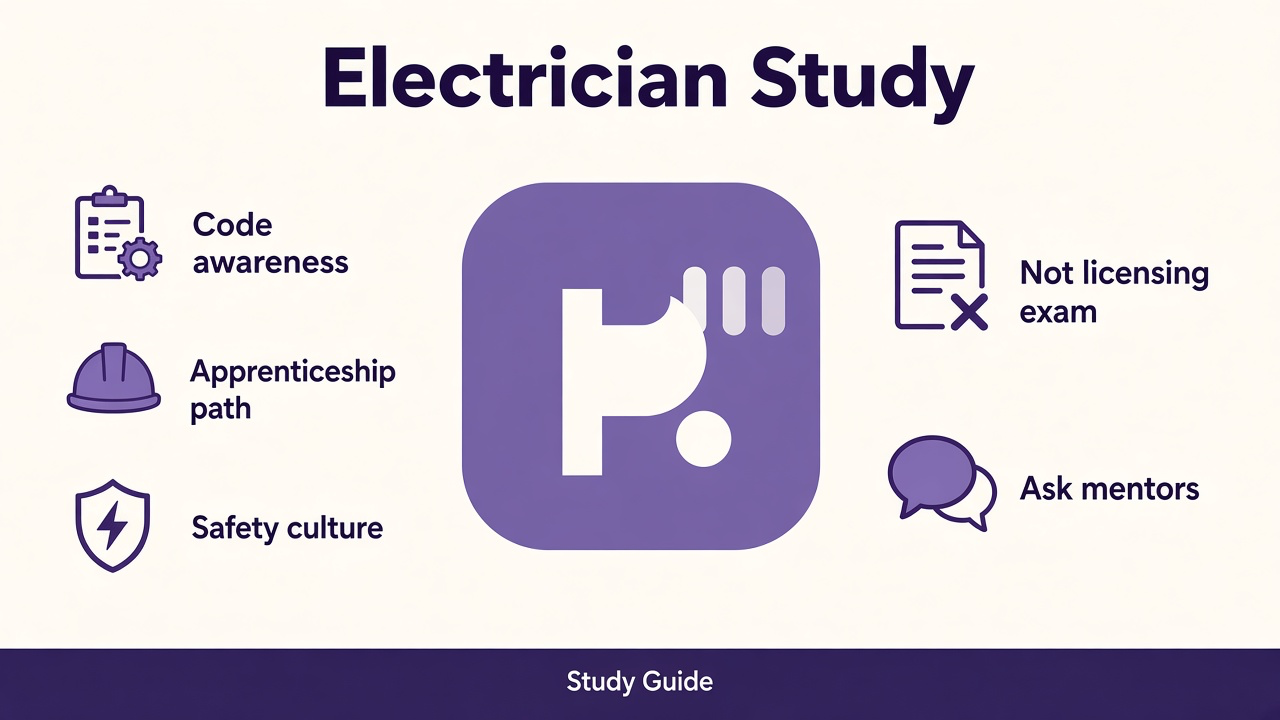
What this quiz can and cannot tell you
Can tell you
- Highlight trade, rough-in, and job-site habits worth revisiting before trade school apps
- Separate career curiosity from licensing fantasies without merging them into one trick lane
- Encourage speak-up language and respect for journeyman training decisions
- Spark better questions for training centers, unions, and licensing board FAQs
Cannot tell you
- Issue journeyman, master, or contractor licenses from one online screener
- Credit apprenticeship hours or pass state electrical exams
- Replace code books, inspectors, employers, or medical care after job-site injury
- Turn literacy scores into harassment, unsafe helper bravado, or fake union badges online
Electrician trade literacy before license shortcuts
Search traffic around electrician quizzes usually wants two things: sound informed before a trade school interview without claiming journeyman status, and check whether wire and panel vocabulary matches intro textbooks. Those goals help when readers treat bars as a study map, not a hiring stamp. They hurt when people treat scores like master licenses, tape splices outside boxes because a show did it, or skip lockout because trivia felt easy.
Dr. James Whitfield reviews iq cognitive study screeners with a simple split: reward honest agreement with widely taught trade vocabulary and honest limits on credential hype at the same time. Trade vocabulary tracks conductors, breakers, conduit, color teaching, and panel schedules without pretending every country copies one green-ground meme. Rough-in habits tracks box fill, staples, cable protection, and as-built notes without hallway splice fantasies. Job-site culture keeps helper etiquette, PPE programs, damaged gear reports, and journeyman authority visible beside rush-day lockout bypass jokes. Licensing limits keeps state boards, permits, code books, and refusal to treat quiz bars like automatic master registration visible beside social media bravado.
Real readers mix bars. You might score high on vocabulary while keeping licensing limits moderate, which often describes curious learners before board FAQs. You might score high on job-site culture with moderate rough-in items, which can mean strong speak-up values yet little exposure to real rough-in weeks. Reverse items catch sloppy answers: universal wire color law with zero local exceptions, splices outside listed boxes, optional lockout on rush days, or high indices like automatic master registration should not inflate bars meant to track layered trade literacy habits.
Pair results with siblings on this hub instead of forcing one career story. Our electrical safety quiz leans home shock and GFCI habits when you want family safety before helper roles. The electrical engineering quiz stays on circuit study vocabulary when you want classroom phasors without permit talk. Browse the IQ and cognitive test hub for more low stakes screeners. Caption shares as study practice and skip license dunking on friends who never asked for a pop quiz.
Careers stack faster than one trivia night. Apprenticeship hours, code update cycles, and employer safety programs shift what helpers may touch each year. When you share results, say boards beat scoreboard for credentials. When you borrow rough-in tips, credit trainers who teach kindly and respect inspectors who enforce listed methods. Retake after one trade orientation and watch whether licensing-limit bars rise even if vocabulary spikes, which often means you separated performative scoring from actual humility about permits.
| Test | Focus |
|---|---|
| Electrical safety quiz | Home shock and GFCI habits rather than trade rough-in vocabulary |
| Electrical engineering quiz | Intro circuit theory study rather than apprenticeship licensing paths |
Electrician Quiz FAQ
What does Electrician Quiz measure?
It measures how much you agree with statements about trade vocabulary, rough-in habits, job-site culture, and licensing limits. You get an index from 0 to 100 plus four bars. It describes self-rated trade literacy on this screener, not journeyman licenses, permits, or proof you may perform live work.
Is this a journeyman or master electrician licensing exam?
No. This page builds introductory literacy for curiosity and study. State boards, unions, and employers issue credentials and assign work this screener cannot replace.
Does a high score mean I can pull electrical permits?
No. High bars mean you related to literacy statements here. Permitting authorities and licensed contractors own approval paths beyond any online agree quiz.
Why include rough-in and job-site items with vocabulary?
Electrician search intent blends tool names, career culture, and code respect. Split bars keep vocabulary wins separate from rough-in myths and licensing humility so results stay honest about which lanes you endorse.
Who reviewed this quiz?
Dr. James Whitfield, PhD reviewed the educational framing, licensing limits, and result explanations. See our editorial policy for review standards.
Reviewed by
