What Environmental Health Quiz measures
This quiz does not certify industrial hygienists, approve workplaces, or diagnose illness. It measures how much you agree with beginner-friendly environmental health literacy grouped four ways: air and ventilation about dilution, moisture, combustion venting, CO alarms, source control, and outdoor smoke adjustments; water and home testing about strip limits, health department notices, well schedules, and invisible contaminant humility; noise sleep and exposure about chronic sound, PPE when needed, symptom escalation to clinicians, and practical noise reduction; and environmental health limits about study screeners, refusing OSHA fantasy, professional spill escalation, and avoiding housing shame from bar height. You rate 22 statements from strongly disagree to strongly agree, with reverse-worded myths so one article clip cannot inflate every bar. Your answers also feed a second chart on closeness and trust habits, because housing stress sometimes chases quick fixes over honest help-seeking. The total becomes an index from 0 to 100 where higher means more reported literacy on this screener, not proof you may ignore safety officers or licensed care.
Air and ventilation
Airflow, moisture, combustion venting, CO alarms, and source control basics.
Water and home testing
Strip limits, boil notices, well schedules, and certified lab humility.
Noise, sleep, and exposure
Chronic sound, PPE, clinician follow-up, and practical noise steps.
Environmental health limits
Study literacy only; OSHA, hygienists, and clinicians stay in charge.
How it works
Answer 22 agreement items
Rate each statement from Strongly disagree to Strongly agree. Tap Next after each answer.
Answers sort into four domains
Each answer feeds one of four environmental health literacy groups, and every item also feeds a closeness and trust layer.
See your index and charts
You get a 0 to 100 index, a band, and two bar charts you can compare after a health unit or housing season.
Take the Environmental Health Quiz
Answer 22 short statements to see your environmental health literacy index, four domain bars, and a closeness and trust chart.
What your result means
Your index is the average of all 22 answers, scaled from 0 to 100, with reverse-worded items flipped first. Read EH limits with noise and exposure bars before you treat a high ventilation score as permission to ignore symptoms or safety officers. Literacy supports better questions; persistent exposure deserves qualified pathways.
| Band | Index range | Typical reading |
|---|---|---|
| Building environmental health literacy | 0 to 35 | Fewer agreed facts on air, water testing limits, noise, or EH limit items on this screener. |
| Mixed environmental health literacy | 36 to 65 | Solid habits in some domains with ventilation myths, test overconfidence, or limit slips in others. |
| Strong environmental health literacy | 66 to 100 | Frequent agreement with air, water limit, noise, and EH limit habits; still not licensing. |
Tips at a glance
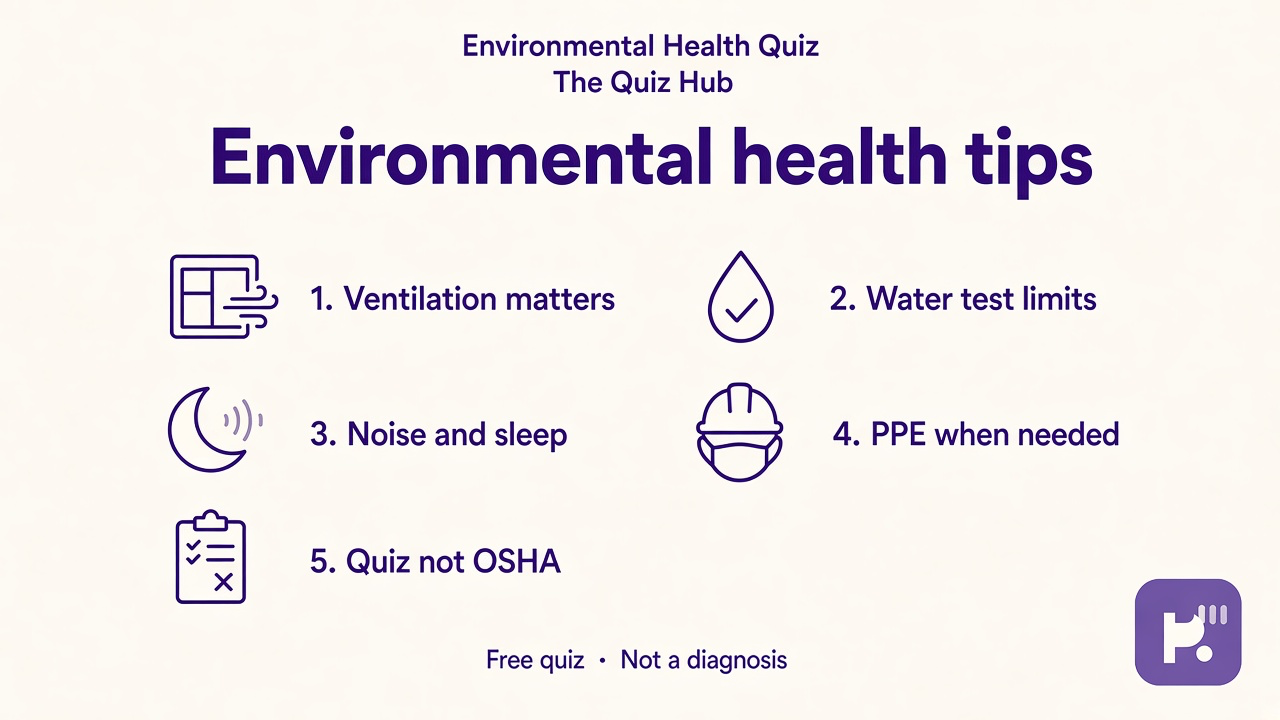
A quick takeaway graphic with topic tips (not your personal quiz scores). Start the quiz for your index, bands, and charts.
What this quiz can and cannot tell you
Can tell you
- Highlight air, water, noise, and limit facts worth revisiting before housing or study decisions
- Separate home literacy from OSHA and licensed hygienist roles
- Encourage clinician follow-up language when exposure symptoms persist
- Spark better class talk about ventilation and test limits
Cannot tell you
- Issue OSHA credentials or workplace compliance approval from one online screener
- Diagnose mold illness, lead poisoning, or chemical injury from agree statements alone
- Replace employer safety training, certified labs, or public health orders
- Turn literacy scores into neighbor shaming about housing they cannot control
Environmental health literacy before OSHA cosplay
Search traffic around environmental health quizzes usually wants two things: plain language before renting or renovating without reading every agency PDF, and check whether ventilation and water testing habits still line up after a busy semester. Those goals help when readers treat bars as a study map, not a compliance stamp. They hurt when people treat scores like hygienist licenses, skip clinicians after exposure because trivia felt easy, or shame neighbors about conditions outside their control.
Dr. James Whitfield reviews iq cognitive study screeners with a simple split: reward honest agreement with widely taught air, water, and noise facts and honest limits on credential hype at the same time. Air and ventilation tracks dilution, moisture, and CO culture without one-window perfection myths. Water testing tracks strip limits and health notices without forever-negative fantasies. Noise and exposure tracks sleep, PPE, and clinician escalation without youth-immunity jokes. Environmental health limits keeps screeners, OSHA pathways, and professional spill response visible beside forum hero stress.
Real readers mix bars. You might score high on ventilation while keeping water testing moderate, which often describes strong airflow habits before lab vocabulary lands. You might score high on noise awareness with moderate limit items, which can mean good earplug habits yet little exposure to workplace compliance language. Reverse items catch sloppy answers: claiming one window solves every pollutant, insisting one strip test ends all water worry, denying noise health effects, or treating high indices like drum-opening permission should not inflate bars meant to track layered literacy habits.
Pair results with siblings on this hub instead of forcing one EH story. Our ecology quiz leans species and habitat links when your class overlaps living systems homework. The Earth Day quiz stays on everyday green habits at playful depth rather than indoor exposure literacy. Browse the IQ and cognitive test hub for more study screeners. Caption shares as study practice and escalate real symptoms to clinicians.
Housing seasons and job sites change faster than one pamphlet. When you share results, say clinician and inspector pathways beat scoreboard. When you borrow tips, credit teachers who ground test limits and respect safety officers who enforce lockout culture. Retake after one public health unit and watch whether water-limit bars rise even if air trivia lags, which often means you separated performative scoring from actual follow-up after exposure scares.
| Test | Focus |
|---|---|
| Ecology quiz | Habitat and species relationships rather than indoor air, water, and noise exposure literacy |
| Earth Day quiz | Everyday green habit reflection rather than environmental health exposure screener stems |
Environmental Health Quiz FAQ
What does Environmental Health Quiz measure?
It measures how much you agree with statements about air and ventilation, water testing limits, noise and exposure habits, and EH quiz limits. You get an index from 0 to 100 plus four bars. It describes self-rated literacy on this screener, not OSHA certification or clinical diagnosis.
Is this an OSHA or workplace compliance exam?
No. This page builds introductory habits for study and home reflection. Employer training, regulated sites, and licensed hygienists govern workplace compliance beyond any agree quiz.
Can a home water test strip replace lab testing?
Not for every contaminant or legal standard. Strips can screen some concerns; certified methods and health department guidance matter when risk is real or notices apply.
When should I see a clinician about exposure?
When symptoms persist or worsen after suspected chemical, mold, or noise exposure, or when public health advisories apply. This quiz encourages literacy and professional follow-up; it does not diagnose.
Who reviewed this quiz?
Dr. James Whitfield, PhD reviewed the educational framing, light YMYL limits, and result explanations. See our editorial policy for review standards.
Reviewed by