What the Identity Theft Quiz measures
This quiz does not file police reports, freeze credit for you, or certify fraud investigators. It measures how much you agree with unofficial identity theft literacy statements grouped four ways: phishing and scam recognition about urgent links and impersonation; account and password hygiene about MFA and unique credentials; credit and reporting basics about freezes, evidence, and official checklists; and quiz-not-legal-advice limits about humble captions and refusing victim blame cosplay. You rate 22 statements from strongly disagree to strongly agree, with reverse-worded traps so one lucky guess cannot inflate every bar. Your answers also feed a second chart on closeness and trust habits.
Phishing and scam recognition
Pause before click.
Account and password hygiene
Locks and alerts.
Credit and reporting basics
Report with records.
Quiz not legal advice
Mirror not attorney.
How it works
Answer 22 agreement items
Rate each statement from Strongly disagree to Strongly agree. Tap Next after each answer.
Answers sort into four domains
Each answer feeds one of four fraud literacy groups, and every item also feeds a closeness and trust layer.
See your index and charts
You get a 0 to 100 index, a band, four domain bars, and a second chart for intimacy habits.
Take the Identity Theft Quiz
Answer 22 short statements to see your identity theft fraud literacy index, four domain bars, and a closeness and trust chart.
What your result means
Your index is the average of all 22 answers, scaled from 0 to 100, with reverse-worded items flipped first. Read quiz-not-legal-advice bars together with reporting basics before you treat a high score as authority to instruct strangers or blame victims.
| Band | Index range | Typical reading |
|---|---|---|
| Building fraud literacy | 0 to 35 | Fewer agreed habits on phishing recognition, account hygiene, reporting basics, or quiz-not-legal-advice limits. |
| Mixed fraud literacy | 36 to 65 | Solid scam habits with password slips, reporting gaps, or legal cosplay traps. |
| Strong fraud literacy | 66 to 100 | Frequent agreement with habits and limits; still unofficial educational reflection only. |
Tips at a glance
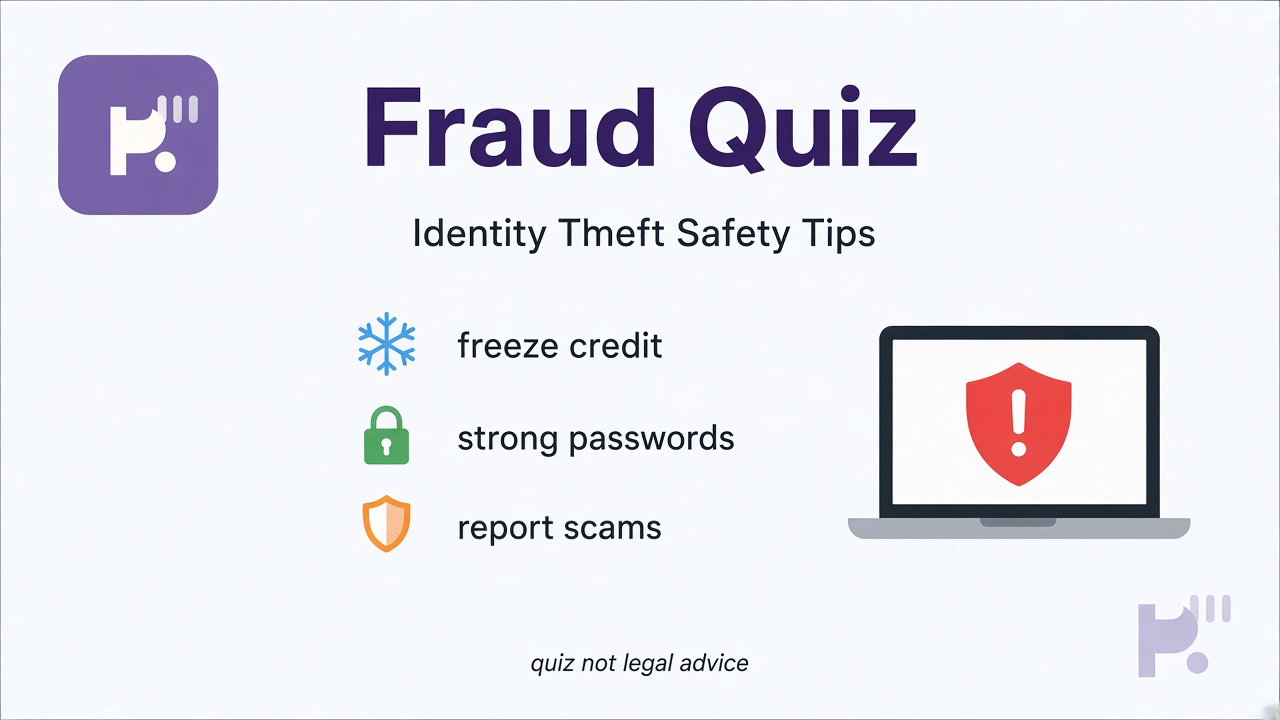
A quick takeaway graphic with topic tips (not your personal quiz scores). Start the quiz for your index, bands, and charts.
What this quiz can and cannot tell you
Can tell you
- Highlight phishing, hygiene, and reporting habits worth revisiting before you click urgent links
- Separate study reflection from attorney cosplay and victim shame spirals
- Encourage official checklist use without dunk threads on scammed relatives
- Spark better security goals without claiming law enforcement credentials
Cannot tell you
- Replace attorneys, banks, credit bureaus, or IdentityTheft.gov workflows
- Prove you handled every breach correctly or guarantee future safety from couch scores
- License public victim blame or legal instruction threads
- Diagnose fraud cases or prescribe legal strategy from agree totals
Why identity theft quizzes need scam spotting, account hygiene, reporting basics, and legal limits
Search traffic around identity theft quizzes often arrives from panic after suspicious charges or family group chats sharing refund scripts, not from regulators offering couch diplomas. Those goals help when readers name phishing pauses, MFA habits, and quiz-not-legal-advice caps together. They hurt when couch scores become victim blame licenses.
Dr. James Whitfield reviews educational screeners with a split between honest fraud vocabulary and refusal of attorney cosplay. Phishing items track pause habits. Hygiene items track MFA and reuse traps. Reporting items track official channels without influencer script worship.
Real readers mix bars. You might score high on scam recognition while reporting basics stay moderate until your first dispute. Reverse items catch victim mockery, bar-height FTC myths, and legal advice threads from agree totals.
Pair results with siblings instead of forcing one forever-expert story. Our financial literacy quiz for high school students explores teen money ethics with separate stems. Our figures of speech quiz stays on idiom language rather than fraud habits here. Our general knowledge quiz for high school students widens trivia when classroom stems fit better than theft literacy wording. Browse the IQ and cognitive hub for more study screeners.
| Test | Focus |
|---|---|
| Financial literacy quiz for high school students | Teen budgeting ethics rather than identity theft fraud literacy stems on this page |
| Figures of speech quiz | Idiom and hyperbole habits rather than phishing recognition on this screener |
| General knowledge quiz for high school students | Classroom trivia recall rather than credit freeze basics here |
Identity Theft Quiz FAQ
What does the Identity Theft Quiz measure?
It measures self-reported fraud literacy across phishing recognition, account hygiene, reporting basics, and unofficial legal-limit items, plus a parallel fear-of-intimacy stack chart.
Is this quiz legal advice if my identity was stolen?
No. Limit items reject attorney cosplay. Use official hotlines, your bank, and qualified counsel when real theft happens.
Does a high score mean I will never be scammed?
No. Bars describe habits you endorsed here, not guarantees. Scammers change tactics; keep following official guidance.
Can I use results to shame someone who fell for phishing?
No. Reverse items reject victim blame. High bars are not permission to dunk relatives who already feel embarrassed.
Who reviewed this quiz?
Dr. James Whitfield reviewed the framing, limit language, and result explanations. See our editorial policy for review standards.
Reviewed by