What the Future Will Quiz measures
This quiz does not draft wills, represent you in probate, or replace licensed estate attorneys in your jurisdiction. It measures how much you agree with estate planning literacy statements grouped four ways: beneficiary basics about names, executors, guardianship themes, and careful reading without template myths; document update habits about marriage, divorce, births, moves, and account forms that may override a will; licensed counsel humility about attorneys, witnesses, notaries, and local formalities owning binding work; and quiz not legal advice limits about playful study captions, joy without DIY cosplay, and refusing to treat bar height as signed documents. You rate 22 statements from strongly disagree to strongly agree, with reverse-worded traps so one lucky guess cannot inflate every bar. Your answers also feed a second chart on closeness and trust habits, because family money talk sometimes spills into friendship stress when humility scores dip. The total becomes an index from 0 to 100 where higher means more reported estate literacy humility on this screener, not proof of valid documents.
Beneficiary basics
Vocabulary without treating templates as finished wills.
Document update habits
Life changes that should trigger professional review.
Licensed counsel humility
Attorneys and formalities own binding documents.
Quiz not legal advice
Literacy mirror only; counsel and courts live elsewhere.
How it works
Answer 22 agreement items
Rate each statement from Strongly disagree to Strongly agree. Tap Next after each answer.
Answers sort into four domains
Each answer feeds one of four estate literacy groups, and every item also feeds a closeness and trust layer.
See your index and charts
You get a 0 to 100 index, a band, four domain bars, and a second chart for intimacy habits.
Take the Future Will Quiz
Answer 22 short statements to see your estate planning literacy index, four domain bars, and a closeness and trust chart.
What your result means
Your index is the average of all 22 answers, scaled from 0 to 100, with reverse-worded items flipped first. Read quiz-not-legal-advice bars together with licensed counsel humility before you treat a high score as permission to sign DIY kits. Cozy literacy supports better attorney questions; licensed counsel still owns binding work.
| Band | Index range | Typical reading |
|---|---|---|
| Building estate literacy | 0 to 35 | Fewer agreed habits on beneficiary basics, update awareness, counsel humility, or legal-limit items. |
| Mixed estate literacy | 36 to 65 | Solid beneficiary recall with template myths, skipped updates, forum-law slips, or DIY cosplay. |
| Strong estate literacy | 66 to 100 | Frequent agreement with beneficiary, update, counsel, and legal-limit habits; still literacy only. |
Tips at a glance
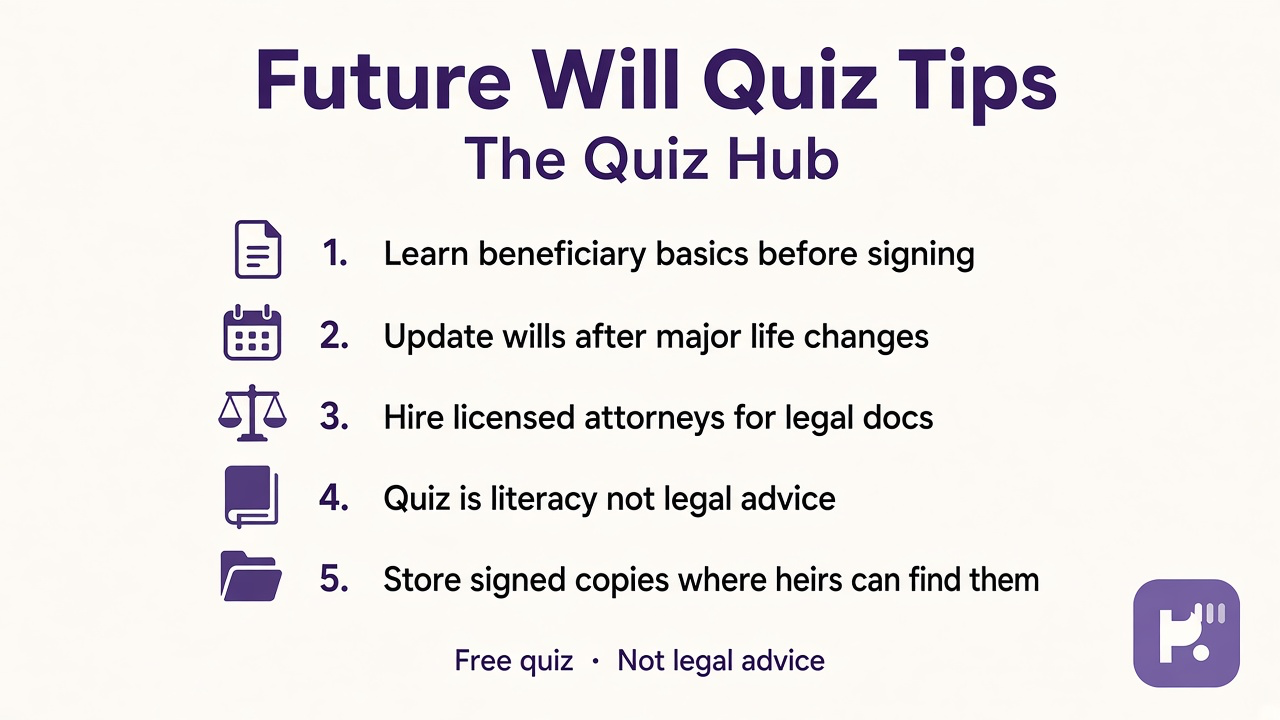
A quick takeaway graphic with topic tips (not your personal quiz scores). Start the quiz for your index, bands, and charts.
What this quiz can and cannot tell you
Can tell you
- Highlight beneficiary, update, and counsel humility habits worth revisiting before you download templates
- Separate unofficial literacy reflection from influencer DIY myths
- Encourage attorney question lists without public shame spirals
- Spark better family conversations about planning without claiming legal authority
Cannot tell you
- Replace estate attorneys, notaries, tax professionals, or court clerks
- Prove a will is valid, execute probate, or certify inheritance outcomes from one screener
- Give permission to advise friends on binding documents or hide assets from partners
- Predict tax results or declare who inherits from trivia bars alone
Why future will quizzes need literacy limits and attorney humility
Search traffic around future will quizzes usually wants a gentle mirror after a life change article, adulting podcast, or family conversation, not a signed document machine or inheritance subpoena. Those goals help when readers learn beneficiary vocabulary, note update triggers, and keep quiz scores away from DIY cosplay. They hurt when literacy bars become proof that influencer templates beat attorneys, or when forum posts skip witnesses because a couch screener looked tall. Estate literacy works best when it names counsel humility and unofficial limits together while staying distinct from evidence law classroom siblings.
Dr. James Whitfield reviews iq-cognitive literacy screeners with a simple split: reward honest beneficiary curiosity and honest limits on legal advice substitution myths at the same time. Beneficiary basics tracks names, executors, and guardianship themes without finished-document myths. Document update habits tracks marriage, divorce, births, and moves that should trigger review. Licensed counsel humility tracks attorneys, witnesses, and local formalities. Quiz not legal advice keeps screeners separate from DIY kits, influencer notary fantasies, and bar-height inheritance verdicts.
Real readers mix bars. You might score high on beneficiary vocabulary while keeping counsel humility moderate, which often describes curious students who still trust templates too fast. You might score high literacy with softer legal-limit items, which can mean you avoid counsel boasts yet still treat quiz totals like signed intent. Reverse items catch overconfidence: automatic template validity, skipped life-change review, influencer bar exam myths, or giving friends binding instructions from screener height should not inflate bars meant to track layered literacy manners.
Pair results with siblings instead of forcing one law story. Our evidence law quiz explores courtroom literacy with separate stems when trial themes fit better than estate paperwork here. Browse the IQ and cognitive test hub for more study screeners. Caption shares as literacy play, credit attorneys who taught formalities, and skip advising strangers who never asked for inheritance help.
Life changes and template ad seasons rotate faster than courthouse pamphlets update online. A counsel humility bar might dip after one influencer week while beneficiary vocabulary stays high until you retake calmly. When you share results, say unofficial estate literacy habits. When you borrow tips, credit educators who warned about account beneficiary forms. Retake after one planning conversation and watch whether legal-limit bars stay high even if vocabulary enthusiasm rises, which often means you separated cozy study joy from DIY substitution pressure.
| Test | Focus |
|---|---|
| Evidence law quiz | Courtroom evidence literacy rather than will and beneficiary paperwork on this page |
| IQ and cognitive hub | Broader study screeners rather than estate-specific literacy only |
Future Will Quiz FAQ
What does the Future Will Quiz measure?
It measures how much you agree with statements about beneficiary basics, document update habits, licensed counsel humility, and quiz-not-legal-advice limits. You get an index from 0 to 100 plus four bars. It reflects self-rated literacy on this screener, not legal advice.
Is this quiz legal advice or a will drafting tool?
No. This page is literacy reflection only. Licensed estate attorneys must draft and review binding documents in your jurisdiction.
Can a high score prove my DIY will is valid?
No. Quiz not legal advice items reject template and bar-height myths. Witness rules, notaries, and state formalities still require professional review.
Should I update documents after marriage, divorce, or new children?
Life changes often should trigger professional review. This screener encourages that habit language but cannot tell you what your specific documents require. Ask a licensed attorney.
Who reviewed this quiz?
Dr. James Whitfield reviewed the literacy framing, not-legal-advice limits, YMYL content warning, and result explanations. See our editorial policy for review standards.
Reviewed by