What the Fiction and Nonfiction Quiz measures
This quiz does not license basal readers, certify school librarians, or score whether you should only read novels. It measures how much you agree with unofficial fiction versus nonfiction library literacy grouped four ways: genre signal basics about invented narrative versus factual accounts, historical fiction labels, memoir lanes, and picture-book traps; shelf and spine labels about FIC stacks, call numbers, juvenile section signs, catalog checks, and e-book categories; title and blurb clues about back-cover promises, subtitle hints, author notes, and table-of-contents source signals; and study not licensed curriculum about self-study framing, kind feedback, teachers and librarians owning credentials, and refusing bar-height replacement for staff or state tests. You rate 22 statements from strongly disagree to strongly agree, with reverse-worded items so cover-art guessing cannot inflate every line. Your answers also feed a second chart on closeness and trust habits, because reading culture sometimes chases dunking rights instead of curiosity. The total becomes an index from 0 to 100 where higher means more reported library genre literacy and kind limits on this screener, not proof a publisher hired you as curriculum consultant.
Genre signal basics
Fiction versus nonfiction frames, historical fiction, memoir lanes, and picture-book myths.
Shelf and spine labels
FIC codes, call numbers, juvenile sections, catalog checks, and e-book categories.
Title and blurb clues
Back-cover language, subtitles, flap notes, and contents pages before you shelve guesses.
Study not licensed curriculum
Self-study reflection, kind feedback, and no publisher or state test authority from bars.
How it works
Answer 22 agreement items
Rate each statement from Strongly disagree to Strongly agree. Tap Next after each answer.
Answers sort into four domains
Each answer feeds one of four library literacy groups, and every item also feeds a closeness and trust layer.
See your index and charts
You get a 0 to 100 index, a band, four domain bars, and a second chart for intimacy habits.
Take the Fiction and Nonfiction Quiz
Answer 22 short statements to see your fiction and nonfiction library literacy index, four domain bars, and a closeness and trust chart.
What your result means
Your index is the average of all 22 answers, scaled from 0 to 100, with reverse-worded items flipped first. Higher means more reported fiction and nonfiction library literacy and kind study limits on this screener. Read blurb and spine label bars together before you treat the total as librarian certification.
| Band | Index range | Typical reading |
|---|---|---|
| Building shelf genre habits | 0 to 35 | Fewer agreed genre signal, spine label, blurb clue, or study-limit items on this screener. |
| Mixed library genre literacy | 36 to 65 | Some genre and label facts mixed with cover-art guesses or curriculum credential slips. |
| Source-aware shelf habits | 66 to 100 | Frequent genre signal, label, blurb, and study-limit agreement with humble sharing habits. |
Tips at a glance
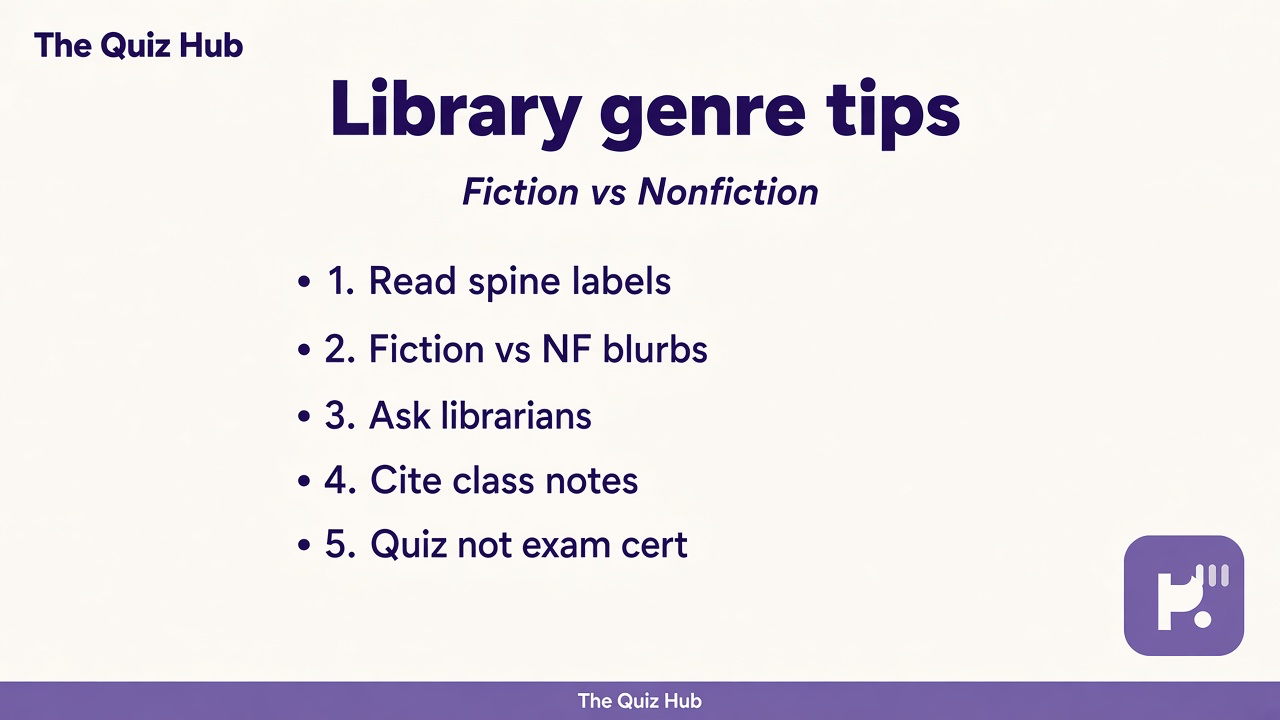
A quick takeaway graphic with topic tips (not your personal quiz scores). Start the quiz for your index, bands, and charts.
What this quiz can and cannot tell you
Can tell you
- Spot whether you guess genre from cover dragons alone
- Encourage library walks and blurb reading without shaming beginners
- Separate self-study reflection from licensed program or state test prep
- Give a playful baseline to retake after one nonfiction aisle tour
Cannot tell you
- Prove library science degrees or district reading specialist licenses
- Replace teachers, librarians, or formal reading assessments
- Certify affiliation with any publisher basal program or testing vendor
- Tell someone which books they must enjoy to count as well read
Fiction and nonfiction shelf literacy without curriculum cosplay
People land on fiction versus nonfiction quizzes because classroom posters simplify genres while real branches mix stickers, call numbers, and blurbs on every aisle. Fiction usually carries invented plots and characters even when settings borrow real towns. Nonfiction usually informs with checkable claims when authors cite sources. Historical fiction and memoir add hybrid cases, which is why spine labels beat cover art alone.
Shelf literacy is a walk, not a memorization stunt. Fiction stacks often sort by author while nonfiction sorts by subject numbers in many public libraries. Juvenile fiction and juvenile nonfiction may neighbor each other yet still post different signs. E-book apps keep categories even when spines stay invisible. Assuming every branch uses identical colors is a myth this screener flags so readers look up local rules.
Titles and blurbs answer questions covers skip. Subtitles with history or how-to language, flap notes about true accounts, and tables of contents with dated chapters often signal nonfiction. Dragons on art do not cancel fossil facts when the blurb describes research for kids. Skipping blurbs because the title sounds exciting is how research papers grab novels by mistake.
Study limits keep the page honest. This screener is self-study reflection, not a licensed basal package or state reading exam. Kind feedback helps classmates sort genres faster than public shelf dunking. Teachers and librarians own formal guidance; online bars do not replace them or justify cutting library staff.
Use your index as a nudge toward one library visit, not a credential. Pair this with our figurative language quiz when you want simile and metaphor study habits in prose, the figures of speech quiz for idiom and hyperbole lanes with separate stems, or the IQ and cognitive test hub for more low-stakes screeners. Retake after you can explain one historical fiction label in plain words without mixing in publisher license claims; literacy grows when sources stay labeled, not when you win the paperback aisle.
| Test | Focus |
|---|---|
| Figurative language quiz | Simile, metaphor, and personification study habits, not shelf genre stickers |
| Figures of speech quiz | Idiom, hyperbole, and oxymoron stems separate from figurative language sibling |
Fiction and Nonfiction Quiz FAQ
What does the Fiction and Nonfiction Quiz measure?
It measures how much you agree with library genre literacy across signal basics, shelf and spine labels, title and blurb clues, and study-not-licensed-curriculum limits. You get an index from 0 to 100 and four bars. It reflects self-reported habits on this screener, not formal reading exam scores.
Can I use this quiz instead of my school reading program?
No. Licensed basal packages, teachers, and state assessments own formal reading placement. This screener is habit reflection only and cannot replace curriculum vendors or classroom instruction.
Why do historical fiction and memoir matter here?
Hybrid labels trip readers who only memorized one poster. Historical fiction usually sits in fiction stacks while memoir usually sits in nonfiction lanes in most libraries, so blurbs and stickers still deserve a second look.
Why are some items worded negatively?
Reverse-worded statements balance optimism. Agreeing that pictures always mean fiction, that every library uses identical stickers, that exciting titles replace blurbs, or that quiz bars cancel library staff should not inflate literacy scores.
Who reviewed this quiz?
Dr. James Whitfield reviewed the educational framing, study-not-license limits, and result explanations. See our editorial policy for review standards.
Reviewed by