What the Financial Literacy Quiz for High School Students measures
This quiz does not prepare tax returns, sell investments, or grade your school course. It measures how much you agree with beginner-friendly high school money literacy grouped four ways: teen money basics about income, needs versus wants, safe account vocabulary, and rejecting influencer PIN traps; budgeting and saving about simple plans, pay-yourself-first habits, tiny emergency funds, and price comparison without magic-tracking myths; classroom ethics about citing sources, spotting scams, academic integrity on money projects, and asking teachers when instructions confuse; and study not tax advice about adult filing complexity, licensed professional authority, and refusing to treat online bars like preparer licenses. You rate 22 statements from strongly disagree to strongly agree, with reverse-worded traps so one lucky streak cannot inflate every bar. Your answers also feed a second chart on closeness and trust habits, because money stress sometimes chases argument wins instead of honest adult questions. The total becomes an index from 0 to 100 where higher means more reported teen money study literacy on this screener, not proof you may file taxes for pay.
Teen money basics
Income, needs versus wants, accounts, and simple interest stories from class.
Budgeting and saving
Plans, goals, emergency ideas, and spending tracking without meme budgets.
Classroom ethics
Citations, scam spotting, integrity, and teacher questions on homework.
Study not tax advice
Adult filing limits, licensed professionals, and quiz credential humility.
How it works
Answer 22 agreement items
Rate each statement from Strongly disagree to Strongly agree. Tap Next after each answer.
Answers sort into four domains
Each answer feeds one of four teen money literacy groups, and every item also feeds a closeness and trust layer.
See your index and charts
You get a 0 to 100 index, a band, four domain bars, and a second chart for intimacy habits.
Take the Financial Literacy Quiz for High School Students
Answer 22 short statements to see your high school financial literacy index, four domain bars, and a closeness and trust chart.
What your result means
Your index is the average of all 22 answers, scaled from 0 to 100, with reverse-worded items flipped first. Higher means more reported teen money, budgeting, ethics, and study-limit agreement on this screener. Read study-not-tax bars with classroom ethics before you treat a high budgeting bar as filing permission.
| Band | Index range | Typical reading |
|---|---|---|
| Building teen money literacy | 0 to 35 | Fewer agreed teen money, budgeting, classroom ethics, or study-limit items on this screener. |
| Mixed teen money literacy | 36 to 65 | Solid saving recall mixed with budget myths, integrity slips, or tax credential fantasies. |
| Strong teen money literacy | 66 to 100 | Frequent teen money, budgeting, ethics, and study-limit agreement; still not credentialing. |
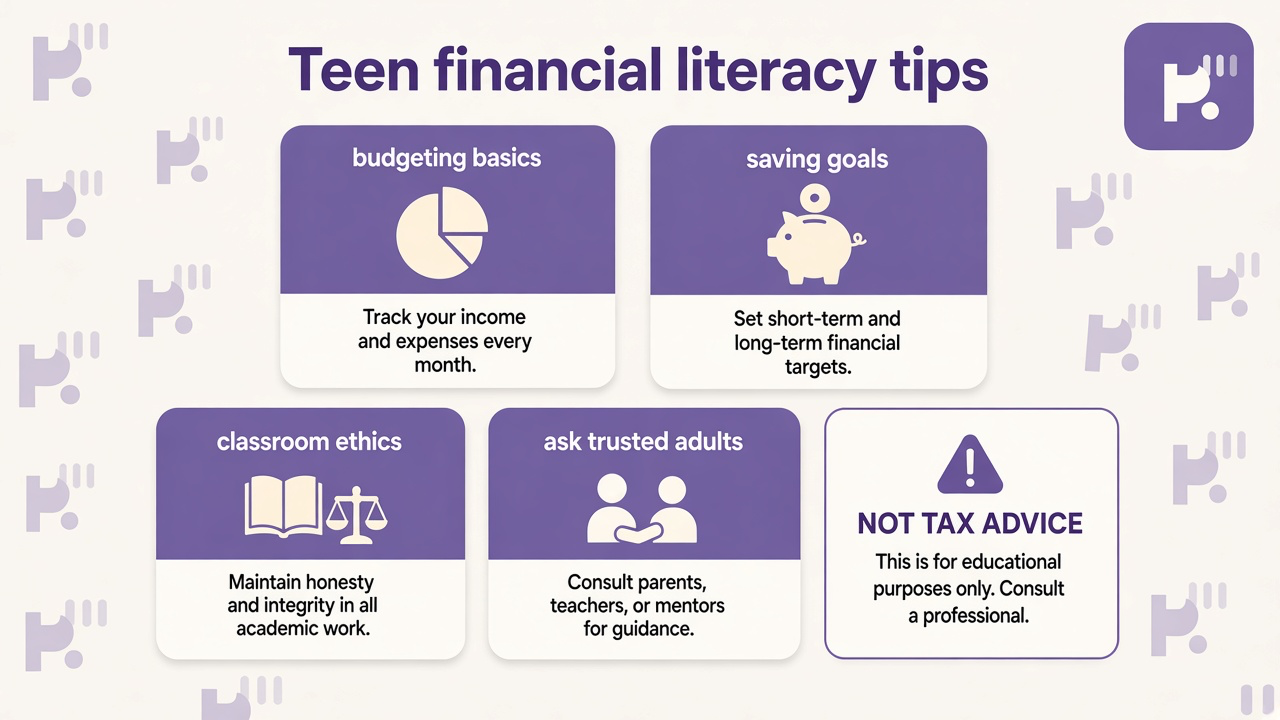
Tips at a glance
A quick takeaway graphic with topic tips (not your personal quiz scores). Start the quiz for your index, bands, and charts.
What this quiz can and cannot tell you
Can tell you
- Highlight teen money, budget, and ethics habits worth revisiting before personal finance units
- Separate study curiosity from tax preparer fantasies without merging them into one trick lane
- Encourage teacher and parent questions instead of scam forwarding or homework copying
- Give a playful baseline to retake after one textbook chapter on spending plans
Cannot tell you
- License tax preparers, financial advisors, or credit counselors from one online screener
- File IRS returns or pick investments from agree bars without qualified help
- Replace teachers, parents, school counselors, or fraud hotlines on real money crises
- Turn literacy scores into harassment of classmates who are still learning vocabulary
Teen money literacy before tax filing shortcuts
Search traffic around financial literacy quizzes for high school students usually wants two things: sound informed before a first job or allowance talk without pretending to be a tax preparer, and check whether needs-versus-wants vocabulary matches what teachers assign in personal finance units. Those goals help when readers treat bars as a study map. They hurt when people treat scores like CPA badges, share debit details with strangers, or copy homework because the topic feels personal.
Dr. James Whitfield reviews iq cognitive study screeners with a simple split: reward honest agreement with widely taught teen money habits and honest limits on credential hype at the same time. Teen money basics tracks income, needs and wants, account vocabulary, and simple interest illustrations without pretending adults fund every want. Budgeting and saving tracks plans, pay-yourself-first stories, emergency fund ideas, and price patience without magic-tracking myths. Classroom ethics keeps citations, scam spotting, integrity, and teacher questions visible beside optional-homework traps. Study not tax advice keeps adult filing complexity, licensed professional authority, and refusal to treat quiz bars like neighborhood preparer licenses visible beside social media bravado.
Real readers mix bars. You might score high on ethics while keeping budgeting moderate, which often describes scam-aware teens who have not tracked spending yet. You might score high on saving with softer study limits, which can mean strong goals yet little exposure to how tax courses differ from class screeners. Reverse items catch sloppy answers: automatic adult coverage myths, PIN sharing, self-tracking budgets, or high indices like automatic tax licenses should not inflate bars meant to track layered study literacy.
Pair results with siblings on this hub instead of forcing one finance story. Our financial statement quiz leans balance sheet and cash flow labels when you want statement vocabulary separate from teen spending habits. The double entry accounting quiz stays on debits and credits when you want ledger habits from another chapter. Browse the IQ and cognitive test hub for more low stakes screeners. Caption shares as study practice and skip preparer dunking on friends who never asked for tax help.
Semesters stack faster than one trivia night. State standards, first jobs, and scam trends shift what teens hear each year. When you share results, say parents and teachers beat scoreboards for real money calls. When you borrow budget tips, credit educators who teach kindly and report fraud channels your school recommends. Retake after one personal finance unit and watch whether study-not-tax bars rise even if teen money spikes, which often means you separated performative scoring from actual humility about adult filing.
| Test | Focus |
|---|---|
| Financial statement quiz | Balance sheet and cash flow labels rather than teen allowance habits |
| Double entry accounting quiz | Journal debits and credits rather than high school scam ethics |
Financial Literacy Quiz for High School Students FAQ
What does the Financial Literacy Quiz for High School Students measure?
It measures how much you agree with statements about teen money basics, budgeting and saving, classroom ethics, and study-not-tax limits. You get an index from 0 to 100 plus four bars. It describes self-rated study literacy on this screener, not tax licenses, investment advice, or proof you may file returns.
Is this a CPA exam or tax preparation course?
No. This page builds introductory teen money literacy for curiosity and class review. Licensed preparers, CPA exams, and IRS instructions live in adult pathways this screener cannot replace.
Does a high score mean I should file my parents taxes?
No. High bars mean you related to literacy statements here. Filing depends on training, law, and family situations, not online agree quizzes.
Why mix budgeting items with classroom ethics?
High school search intent blends personal habits, homework integrity, and scam awareness. Split bars keep saving wins separate from cheating myths and tax credential humility so results stay honest about which lanes you endorse.
Who reviewed this quiz?
Dr. James Whitfield, PhD reviewed the educational framing, study-not-tax limits, and result explanations. See our editorial policy for review standards.
Reviewed by