What this essay quiz measures
This quiz does not measure IQ, assign course grades, or replace instructor rubrics, plagiarism detection, or timed exam essays. It measures how much you agree with essay writing habits grouped four ways: thesis and outline about early claims, outlines before drafting, paragraph-to-thesis fit, title checks, and cutting tangents; evidence paragraphs about one idea per paragraph, cite-and-explain quotes, paraphrase credit, statistic context, and balancing voice with sources; revision habits about read-aloud passes, transitions, messy first drafts, cutting repetition, writing center feedback, and refusing spellcheck-only myths; and essay quiz limits about practice reflection, teacher-owned credentials, kind retakes, and refusing to treat bars as citation or grade replacements. You answer 22 statements from strongly disagree to strongly agree, with reverse-worded myths so agreeing with every shortcut cannot inflate every bar. Your answers also feed a second chart on closeness and trust habits, because writing stress sometimes pushes people toward harsh perfectionism instead of calm revision. The total becomes an index from 0 to 100 where higher means more reported essay habits on this screener, not proof you should skip classes when you need graded feedback.
Thesis and outline
Clear claim, outline first, paragraph fit, title check, cut tangents.
Evidence paragraphs
One idea each, cite and explain, context, voice plus sources.
Revision habits
Read aloud, transitions, second passes, peer and center feedback.
Essay quiz limits
Practice not rubric scores; bars not teacher grades.
How it works
Answer 22 agreement items
Rate each statement from Strongly disagree to Strongly agree. Tap Next after each answer.
Answers sort into four domains
Each answer feeds one of four essay habit groups, and every item also feeds a closeness and trust layer.
See your index and charts
You get a 0 to 100 index, a band, and two bar charts you can compare after a writing center or revision sprint.
Take the Essay Quiz
Answer 22 short statements to see your essay writing habits index, four domain bars, and a closeness and trust chart.
What your result means
Your index is the average of all 22 answers, scaled from 0 to 100, with reverse-worded items flipped first. Higher means more reported essay habits on this screener. Read quiz limit bars together with evidence paragraphs before you treat the total as course grade readiness.
| Band | Index range | Typical reading |
|---|---|---|
| Building essay writing habits | 0 to 35 | Fewer agreed facts on thesis and outline, evidence paragraphs, revision habits, or quiz limits on this screener. |
| Mixed essay writing habits | 36 to 65 | Solid habits in some domains with myths about hidden thesis suspense, quote-only evidence, spellcheck-only revision, or bars replacing grades. |
| Strong essay writing habits | 66 to 100 | Frequent agreement with accurate essay writing habits and healthy quiz limits. |
Tips at a glance
A quick takeaway graphic with topic tips (not your personal quiz scores). Start the quiz for your index, bands, and charts.
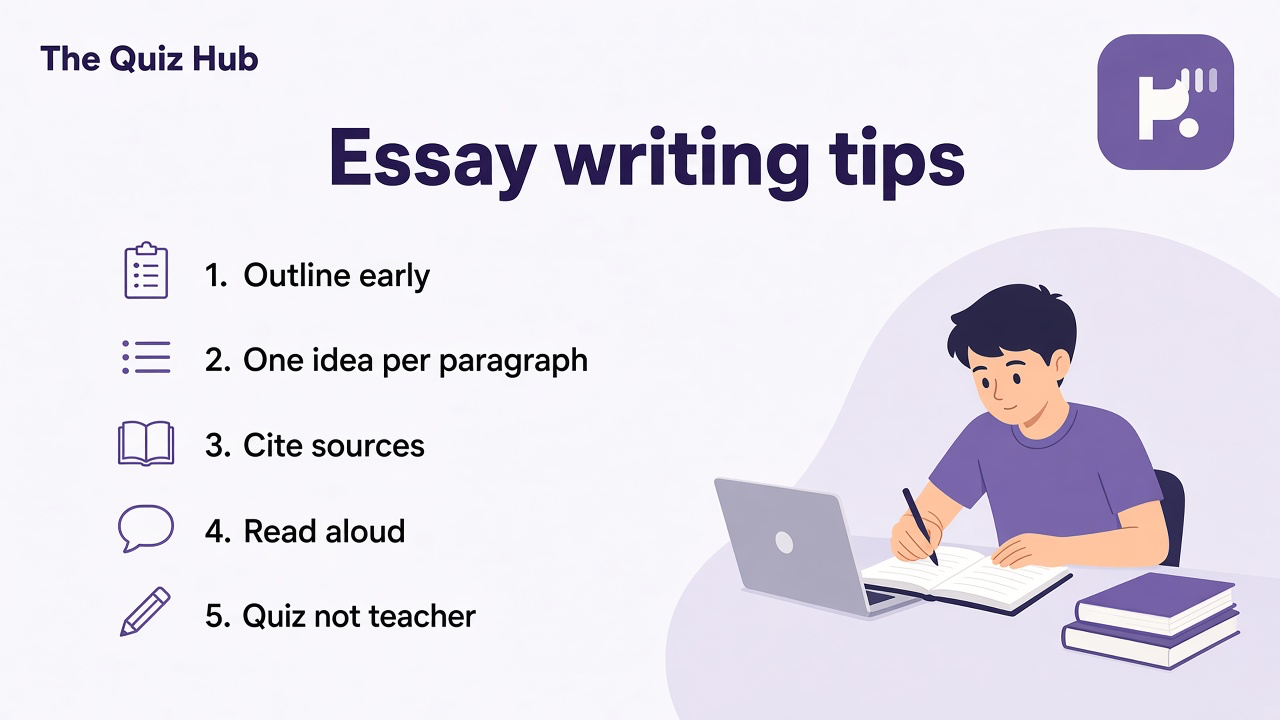
What this quiz can and cannot tell you
Can tell you
- Highlight thesis, evidence, and revision habits worth practicing before deadlines
- Separate self-study reflection from instructor rubrics in plain language
- Encourage cite-and-explain habits without public writing shaming
- Spark better questions for writing centers, teachers, or study groups
Cannot tell you
- Replace instructor grades, plagiarism review, or timed exam essays
- Prove intelligence rank or college admission readiness from one agree screener
- Diagnose learning disorders or certify job writing readiness alone
- Justify skipping citations or feedback because trivia bars look high
Essay habits without grade confusion
Search traffic around essay quizzes often mixes habit building with grade anxiety. A thesis readers can find early, plus an outline that maps body sections, beats surprise endings that hide the argument. Each paragraph should hand off one idea, not a pile of facts with no bridge.
Evidence paragraphs need cite-and-explain discipline. Quotes without analysis, silent paraphrase, and statistic drops without context are myths screeners flag so readers learn sources support claims instead of decorating them. One idea per paragraph keeps graders and peers oriented.
Revision is more than spellcheck. Reading aloud, fixing transitions, cutting repetition, and inviting writing center feedback on flow turn drafts into arguments. First drafts may be messy when a second pass targets clarity.
Quiz limits keep this page honest. It is practice reflection, not a teacher grade. Pair results with our persuasive essay quiz when argument structure needs a warm-up, the English quiz when general literacy habits overlap, or the IQ and cognitive test hub for more study games. Retake after a month of deliberate revision; habits move slowly and that is normal.
| Test | Focus |
|---|---|
| Persuasive essay quiz | Argument and persuasion structure rather than general essay habit reflection on this slug |
| English quiz | General English literacy habits rather than thesis-and-citation essay routines |
Essay Quiz FAQ
What does this essay quiz measure?
It measures how much you agree with essay writing habits across thesis and outline, evidence paragraphs, revision routines, and quiz limits. You get an index from 0 to 100 and four bars. It reflects self-reported habits on this screener, not an instructor rubric score.
Can I use this quiz instead of teacher feedback or grades?
No. Instructors, writing centers, and graded assignments own scores and plagiarism review. This screener is habit reflection only.
Does a high score mean my essay would get an A?
No. High scores mean you agreed with many habit statements here. Course rubrics, timing, and assignment prompts still decide grades.
Why are some statements worded as myths?
Reverse-worded myths catch overconfidence. Agreeing that thesis suspense beats clarity, that quotes need no analysis, that spellcheck replaces structure, or that online bars replace instructor grades should not inflate the habits index.
Who reviewed this quiz?
Dr. James Whitfield, PhD reviewed the educational framing, essay habit limits, and result explanations. See our editorial policy for review standards.
Reviewed by