What this mixed-handedness trait quiz measures
This am I mixed handed quiz estimates how often you switch hands or hesitate to claim a single handedness label across daily chores, sports, tools, writing, and self-description. Twenty original frequency items group into four domains inspired by neuropsychology handedness research from Archibald Carey Bishop on cross-dominance patterns and the Edinburgh Handedness Inventory tradition of measuring hand preference by task type. Each item also maps to a fear-of-intimacy stack layer for parallel charting. Your mixed-handedness trait index averages these patterns into a 0 to 100 score.
Cross-dominance daily
Switching hands for doors, chores, and casual tasks without planning which hand to use
Sport and tool switching
Changing hands during sports, tools, or hobbies when either hand feels workable
Writing and fine motor
Alternating hands for writing, utensils, phones, and fine motor tasks when convenient
Preference ambivalence
Hesitating to claim strict right- or left-handed labels and answering both or either
How it works
Three steps from first question to your mixed-handedness report with domain bars and fear-of-intimacy stack.
Answer 20 frequency items
Rate how often each hand-use pattern showed up in your life, from Never to Almost always. Question stems describe actions after the prompt prefix about hands and daily tasks.
Items map to handedness domains and intimacy stack
Your answers accumulate percentages for cross-dominance daily, sport tool switching, writing fine motor, and preference ambivalence, plus four fear-of-intimacy stack layers.
View band and dual charts
Results show Lower, Mixed, or Higher Mixed-Handedness Signals with domain bars and a fear-of-intimacy stack chart.
Take the am I mixed handed quiz
Rate 20 frequency items about hand switching and label ambivalence in your daily habits. Your answers produce a mixed-handedness trait index from 0 to 100, a fear-of-intimacy stack index, four domain scores, and a band label for playful self-reflection.
Opens in a focused modal. No account required. Results stay on screen.
What your mixed-handedness result means
Your mixed-handedness trait index is the normalized total across all 20 items on a 0 to 100 scale, with reverse scoring on dominant-hand rigidity items so higher scores mean stronger mixed-handedness patterns on this screener.
| Band | Index range | Typical reading |
|---|---|---|
| Lower Mixed-Handedness Signals | 0 to 35 | Fewer cross-dominance habits; mostly consistent dominant-hand use |
| Mixed Mixed-Handedness Signals | 36 to 65 | Blend of dominant-hand default and situational switching; domain chart shows where hands split |
| Higher Mixed-Handedness Signals | 66 to 100 | Frequent hand switching, tool alternation, and label ambivalence on this screener |
What your mixed-handedness report looks like
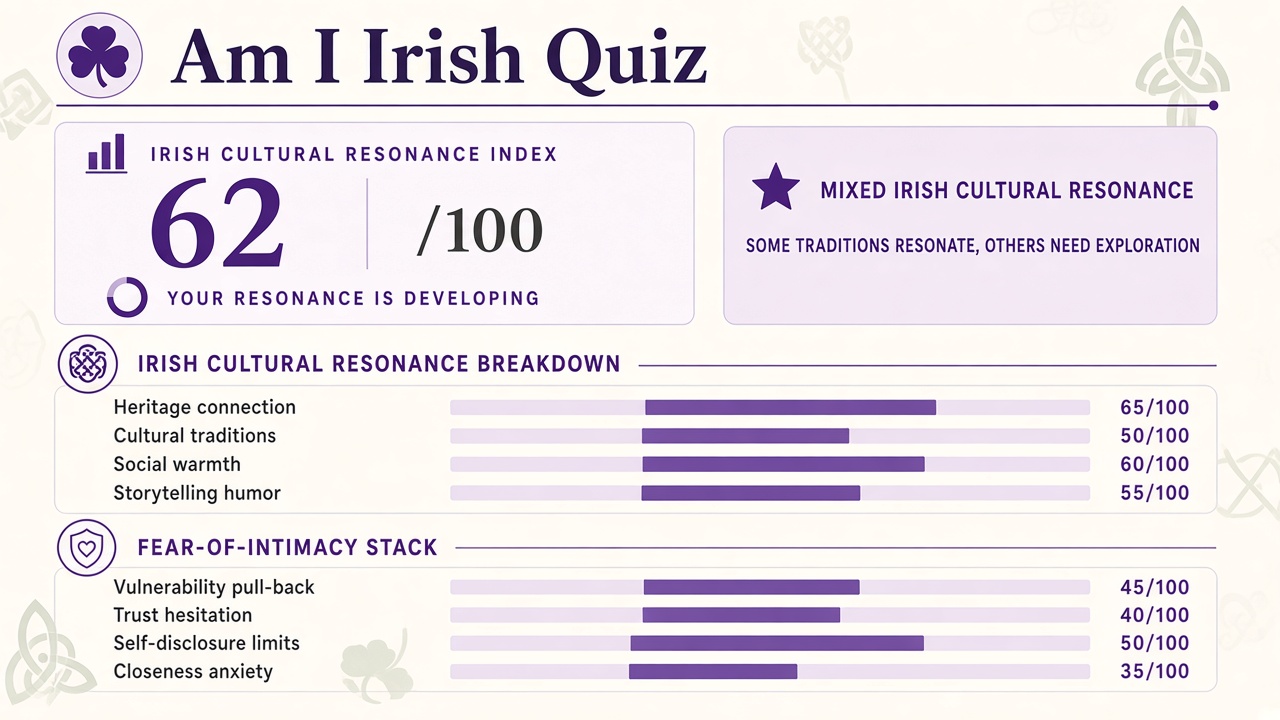
After all 20 items, you get a mixed-handedness trait index from 0 to 100, a band label, four domain bars, and a fear-of-intimacy stack chart. Percentages reflect self-reported frequency, not lab-measured handedness ratios.
What this quiz can and cannot tell you
Can tell you
- How often cross-dominance, sport switching, fine motor alternation, and label ambivalence showed up in your self-report
- A mixed-handedness trait index and fear-of-intimacy stack index with domain bars
- Which handedness domain feels strongest in your current habits
- A starting point for comparing sibling dexterity quizzes with honest limits
Cannot tell you
- Your exact Edinburgh Handedness Inventory score without a standardized protocol
- Whether you have dyspraxia, dysgraphia, or neurological conditions
- Innate brain lateralization percentages from imaging or clinical tests
- Whether mixed-handedness makes you more creative or intelligent than others
Cross-dominance, handedness labels, and self-report limits
Researchers such as Archibald Carey Bishop documented that handedness is task-specific: many people write with one hand yet throw or eat with another. The Edinburgh Handedness Inventory asks about multiple activities rather than a single label, which helps explain why mixed-handed adults feel misclassified on forms that force right or left only.
The Quiz Hub built this am I mixed handed quiz as an original frequency screener plus FOIS-style intimacy stack charting. Our am I ambidextrous quiz screens broader dexterity pride. The am I double-jointed quiz maps joint flexibility rather than hand switching.
| The Quiz Hub test | What it adds |
|---|---|
| Am I ambidextrous quiz | Broader two-hand dexterity pride, not frequency-based cross-dominance items |
| Am I double-jointed quiz | Joint hypermobility frequency, not hand-switching habits |
| Left brain right brain test | Thinking-style metaphors, not handedness task frequencies |
| Fear of intimacy quiz | General closeness avoidance, not hand preference ambivalence |
| This quiz | Mixed-handedness trait index plus fear-of-intimacy stack for cross-dominance, sport switching, fine motor, and preference ambivalence |
Sample items include whether you grab objects with whichever hand is closer or feel frustrated by forms that force a single handedness choice. High cross-dominance with high preference ambivalence often lands in Mixed Mixed-Handedness Signals bands. Read our editorial policy or browse the IQ and cognitive tests hub.
Am I Mixed Handed Quiz FAQ
What does the am I mixed handed quiz measure?
Twenty original frequency items ask how often cross-dominance, sport and tool switching, fine motor alternation, and preference ambivalence show up in your daily hand use. Each item also maps to a fear-of-intimacy stack layer. You receive a mixed-handedness trait index from 0 to 100.
Does a higher mixed-handedness trait index prove I am ambidextrous?
No. The index measures self-reported frequency patterns on this screener, not clinical ambidexterity or standardized handedness inventory scores.
What is the fear-of-intimacy stack on this quiz?
The fear-of-intimacy stack is a second results chart inspired by FOIS-style intimacy avoidance themes, included for parallel charting across Quiz Hub screeners.
How is this different from the am I ambidextrous quiz?
The am I ambidextrous quiz screens pride and skill claims about two-hand dexterity. This quiz uses frequency stems about daily hand switching and label ambivalence.
Can mixed-handedness be trained?
Many people improve non-dominant hand skill through practice after injury or hobby learning. This quiz describes current self-reported habits, not innate traits fixed for life.
Should I see a doctor based on my result?
Only if you have coordination pain, writing difficulty, or neurological symptoms that worry you clinically. This entertainment screener cannot diagnose medical conditions.
Who reviewed this content?
Dr. James Whitfield, reviewed the test framing and result explanations. See our editorial policy for review standards.
Reviewed by