What the Following Directions Quiz measures
This quiz does not diagnose ADHD, replace individualized education plans, or certify teachers to punish students from one couch session. It measures how much you agree with following directions statements grouped four ways: step order literacy about numbered sequences, tracking the current step, and resisting skip-ahead traps; listen and clarify habits about hearing the full string, repeating or noting steps, and asking when wording is vague; calm compliance not shame about pausing after misses, kind redo language, and separating mistakes from contempt labels; and quiz not discipline weapon limits about playful study captions, refusing recess hostage games, and rejecting shame boards tied to bar height. You rate 22 statements from strongly disagree to strongly agree, with reverse worded traps so guess-first myths cannot inflate every bar. Your answers also feed a second chart on closeness and trust habits, because homework directions stress sometimes spills into family tone when scores get weaponized. The total becomes an index from 0 to 100 where higher means more reported direction-friendly habits on this screener, not proof you should grade strangers without context.
Step order literacy
First, next, then tracking without skip-ahead traps.
Listen and clarify habits
Full listen, repeat or note, ask when verbs blur.
Calm compliance not shame
Redo calmly; praise effort; skip public ranking.
Quiz not discipline weapon
Habit mirror only; no recess or shame scoreboards.
How it works
Answer 22 agreement items
Rate each statement from Strongly disagree to Strongly agree. Tap Next after each answer.
Answers sort into four domains
Each answer feeds one of four following directions groups, and every item also feeds a closeness and trust layer.
See your index and charts
You get a 0 to 100 index, a band, four domain bars, and a second chart for intimacy habits.
Take the Following Directions Quiz
Answer 22 short statements to see your following directions habit index, four domain bars, and a closeness and trust chart.
What your result means
Your index is the average of all 22 answers, scaled from 0 to 100, with reverse worded items flipped first. Read quiz not discipline weapon bars together with calm compliance not shame before you treat a high score as classroom license. Cozy reflection supports kinder study spaces; teachers, therapists, and parents still own formal support plans.
| Band | Index range | Typical reading |
|---|---|---|
| Building direction habits | 0 to 35 | Fewer agreed habits on step order, listen and clarify, calm redo, or unofficial limits on this screener. |
| Mixed direction habits | 36 to 65 | Solid step tracking with guess-first slips, shame language, skipped listens, or discipline weapon myths. |
| Strong direction habits | 66 to 100 | Frequent agreement with step order, clarify habits, calm redo, and unofficial limits; still study only. |
Tips at a glance
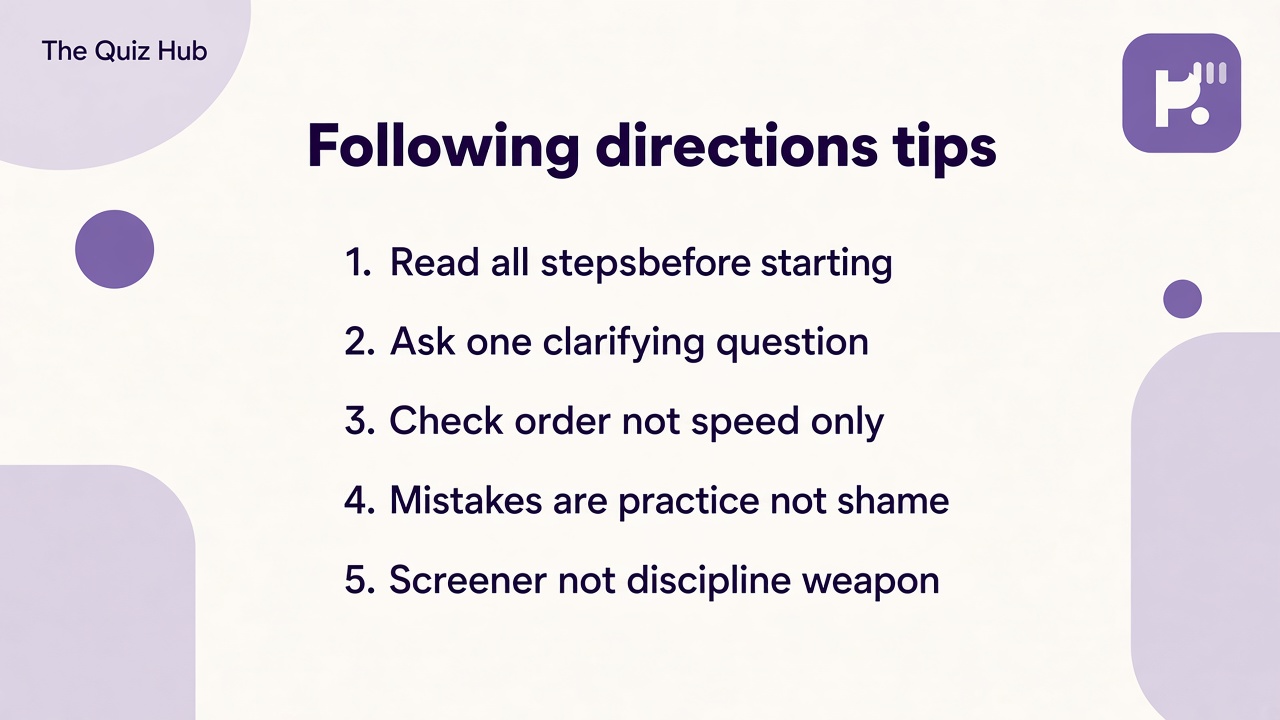
A quick takeaway graphic with topic tips (not your personal quiz scores). Start the quiz for your index, bands, and charts.
What this quiz can and cannot tell you
Can tell you
- Highlight step order, listen, and calm redo habits worth revisiting before the next hectic routine
- Separate unofficial habit reflection from discipline scripts, shame boards, or recess hostage games
- Encourage clarifying questions and gentle redo talk without public score dunking on kids
- Spark better study questions about multi-step tasks without claiming diagnostic authority
Cannot tell you
- Replace occupational therapy, speech support, or formal attention evaluations
- Prove a child is defiant or gifted from one couch screener alone
- Give permission to withhold play, food, or affection because bars looked low today
- Predict report card conduct grades or declare who should lead every group from trivia bars alone
Why following directions quizzes need steps, clarifying questions, and shame limits
Search traffic around following directions quizzes usually wants a quick check after a listen-and-do unit, chore charts, or lab safety read-throughs, not a public ranking board. Those goals help when readers honor step order, ask clarifying questions, and keep couch scores away from punishment fantasies. They hurt when trivia bars become proof a child deserves humiliation, or when listen drills get treated as moral verdicts. Direction literacy works best when it names calm redo habits and unofficial limits together while staying distinct from diagram siblings.
Dr. James Whitfield reviews iq cognitive study screeners with a simple split: reward honest step tracking and honest limits on discipline substitution myths at the same time. Step order literacy tracks numbered sequences, current-step tracking, and resisting skip-ahead traps without ranking friends as careless. Listen and clarify habits tracks full listens, repeat or note routines, and curiosity before guessing. Calm compliance not shame tracks pauses after misses, kind redo language, and separating mistakes from contempt labels. Quiz not discipline weapon keeps screeners separate from recess hostage games, shame boards, and homework punishment tied to bar height.
Real families and classrooms mix bars. You might score high on step order while keeping clarify habits moderate, which often describes careful readers who still rush when the bell rings. You might score high listen habits with softer unofficial items, which can mean you avoid shame talk yet still treat quiz totals like behavior reports. Reverse items catch overconfidence: skip-ahead saves time myths, silent guessing, public ranking, yelling fixes, or extra homework punishment claims should not inflate bars meant to track layered direction manners.
Pair results with siblings on this hub instead of forcing one obedient kid story. Our flowchart quiz sibling stays on node and branch diagram literacy with stems separate from step order habits here. Our logic quiz explores broader reasoning warm ups rather than listen-twice etiquette on this page. Our cause and effect quiz leans sequence and arrow habits when causal chains fit better than multi-step chore lists here. Browse the IQ and cognitive test hub for more low stakes study screeners. Caption shares as fun reflection, model clarifying questions aloud, and skip grading kids who never asked for a quiz.
Semester schedules and morning routines move faster than sticker charts on the fridge. A calm compliance bar might dip after one rushed week while step order stays high until you retake calmly. When you share results, say unofficial direction habits. When you borrow tips, credit teachers who model listen-twice routines and specialists who deserve privacy off screen. Retake after one heated homework night and watch whether discipline weapon reverse items stay low even if step order rises, which often means you separated cozy study joy from punishment pressure.
| Test | Focus |
|---|---|
| Flowchart quiz | Node and branch diagram literacy rather than numbered step order habits on this page |
| Logic quiz | General logic warm ups rather than listen-twice and clarify question stems here |
| Cause and effect quiz | Causal sequence habits rather than calm redo and discipline limit items on this screener |
Following Directions Quiz FAQ
What does the Following Directions Quiz measure?
It measures how much you agree with statements about step order literacy, listen and clarify habits, calm compliance not shame, and quiz not discipline weapon limits. You get an index from 0 to 100 plus four bars. It reflects self reported direction habits on this screener, not conduct grades or diagnostic labels.
Is this a classroom discipline or behavior report?
No. This page focuses on multi-step listen and redo habits. Schools use separate official behavior systems and support plans with trained staff.
Why mention clarifying questions on a directions quiz?
Real instructions stay vague. Asking before guessing protects group tasks when half the room grabs the wrong supply or skips a safety step.
Can I punish a child because their score is low?
No. Quiz not discipline weapon items reject shame boards, recess hostage games, and homework punishment tied to couch bars. Use results as a habit mirror and seek appropriate support when struggles persist.
Who reviewed this quiz?
Dr. James Whitfield reviewed the unofficial framing, quiz not discipline weapon separation, calm redo ethics, and result explanations. See our editorial policy for review standards.
Reviewed by