What the Engineering Quiz measures
This quiz does not issue PE licenses, rank innate intelligence, or replace employer interviews. It measures how much you agree with introductory engineering study literacy grouped four ways: discipline map about civil, mechanical, electrical, software, chemical, and biomedical breadth without interchangeable-major myths; math as tool about assumptions, units, formula limits, anxiety versus curiosity, and study-group habits without calculus-as-worth traps; team docs and ethics about labeled files, safety factors, honest failure logs, peer ethical listening, and attribution; and quiz not hiring about screeners versus accredited degrees, internships, mentor pathways, and refusing perfect-index recruit fantasies. You rate 22 statements from strongly disagree to strongly agree, with reverse-worded myths so one hype thread cannot inflate every bar. Your answers also feed a second chart on closeness and trust habits, because major exploration sometimes chases identity performance over honest teamwork. The total becomes an index from 0 to 100 where higher means more reported study literacy on this screener, not proof you should skip ethics courses or treat bars like job offers.
Discipline map
Civil, mechanical, electrical, software, and related lanes at intro breadth.
Math as tool
Models, assumptions, units, and study habits without IQ verdicts.
Team docs and ethics
Documentation, safety, uncertainty, listening, and attribution on projects.
Quiz not hiring
Reflection separate from degrees, PE paths, and recruiter decisions.
How it works
Answer 22 agreement items
Rate each statement from Strongly disagree to Strongly agree. Tap Next after each answer.
Answers sort into four domains
Each answer feeds one of four engineering study groups, and every item also feeds a closeness and trust layer.
See your index and charts
You get a 0 to 100 index, a band, and two bar charts you can compare before a major fair or team debrief.
Take the Engineering Quiz
Answer 22 short statements to see your engineering study literacy index, four domain bars, and a closeness and trust chart.
What your result means
Your index is the average of all 22 answers, scaled from 0 to 100, with reverse-worded items flipped first. Read quiz-not-hiring with team ethics bars before you treat a high discipline score as career permission. Literacy supports better questions on campus; real projects deserve mentors and accredited training more than scoreboard wins.
| Band | Index range | Typical reading |
|---|---|---|
| Building engineering study literacy | 0 to 35 | Fewer agreed facts on disciplines, math habits, team ethics, or hiring limit items on this screener. |
| Mixed engineering study literacy | 36 to 65 | Solid awareness in some domains with hype or documentation gaps in others. |
| Strong engineering study literacy | 66 to 100 | Frequent agreement with discipline awareness, ethics, and limit habits. |
Tips at a glance
A quick takeaway graphic with topic tips (not your personal quiz scores). Start the quiz for your index, bands, and charts.
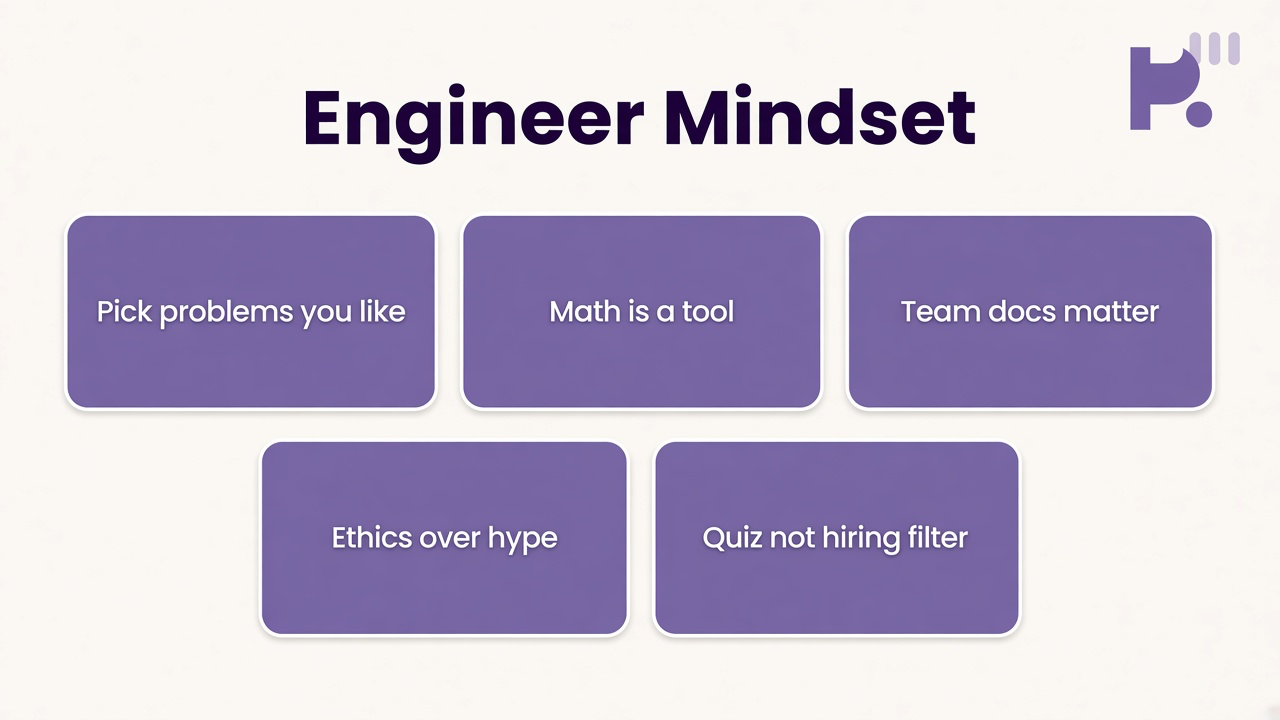
What this quiz can and cannot tell you
Can tell you
- Highlight discipline, math, and ethics habits worth revisiting during major exploration
- Separate reflection from PE licensure and employer hiring fantasies
- Encourage documentation talk when you share scores in study group chats
- Spark better questions about teamwork without IQ dunking
Cannot tell you
- Issue professional engineering licenses or job offers from one online screener
- Prove innate genius or replace transcripts, portfolios, and interviews
- Replace faculty advisors, accreditors, or workplace ethics programs
- Turn reflection scores into unsafe project bravado or fake hire guarantees online
Disciplines and ethics before hiring hype
Students search engineering quizzes when major fairs overlap, team projects stall, and social posts treat calculus grades as destiny or web scores as hire scripts. Those goals help when readers treat bars as a map for disciplines, documentation, and ethics curiosity. They hurt when people skip safety reviews, hide uncertainty, or cite screeners in recruiting arguments.
Dr. James Whitfield reviews iq cognitive study screeners with a simple split: reward honest agreement with widely taught discipline and ethics facts and honest limits on licensure and hiring hype at the same time. Discipline map keeps civil, mechanical, electrical, software, and related lanes visible beside interchangeable-major myths. Math as tool keeps assumptions, units, and study-group habits visible beside calculus-worth traps. Team docs and ethics keeps labeled files, safety factors, failure honesty, and attribution visible beside hero-without-paperwork jokes. Quiz not hiring keeps screeners, accredited pathways, and mentor feedback visible beside perfect-index recruit fantasies.
Real students mix bars. You might score high on discipline names while moderate on documentation, which often describes early curiosity before co-op workflows land. You might score high on math-as-tool with moderate hiring-limit items, which can mean solid humility yet little interview experience. Reverse items catch sloppy answers: identical majors, calculus as worth verdict, documentation-free engineers, or web scores mandating hires should not inflate bars meant to track layered study habits.
Pair results with siblings on this hub instead of forcing one major story. Our civil engineering quiz goes deeper on infrastructure study literacy when that lane interests you. The electrical engineering quiz sibling angles toward circuits and phasor habits when your syllabus overlaps volts and amps homework. Browse the IQ and cognitive test hub for more low stakes study screeners. Caption shares as reflection and skip hiring dunking on friends who never asked for a recruiter stamp.
Campus seasons shift faster than one viral thread. Co-ops, capstones, and ethics seminars evolve while old bar charts still sit in camera rolls. When you share results, say mentor questions beat scoreboard. When you borrow tips, credit faculty who enforce safety reviews. Retake after one project cycle and watch whether team ethics bars rise even if discipline trivia lags, which often means you separated performative identity from actual documentation habits.
| Test | Focus |
|---|---|
| Civil engineering quiz | Infrastructure and structures study depth rather than broad discipline overview on this page |
| Electrical engineering quiz | Circuits and phasor study rather than cross-discipline ethics framing here |
Engineering Quiz FAQ
What does this quiz measure?
It measures how much you agree with introductory engineering study literacy across disciplines, math as tool, team docs and ethics, and quiz-not-hiring limits. You get an index from 0 to 100 and four bars. It reflects self-reported habits on this screener, not a professional engineering exam.
Does a high score prove I have a high IQ?
No. It describes reflection habits you endorsed here. Math skill grows with practice, support, and time; this screener does not rank innate intelligence.
Will recruiters see my results?
No. This is a private study reflection tool on our site, not an employer database or hiring filter.
Why are some statements worded as myths?
Reverse-worded myths catch overconfidence. Agreeing that all majors are identical, that calculus struggle bans ethical contribution, that real engineers skip documentation, or that web scores force hires should not inflate your literacy index.
Who reviewed this quiz?
Dr. James Whitfield, PhD reviewed the educational framing, engineering study literacy limits, and result explanations. See our editorial policy for review standards.
Reviewed by