What this appositive quiz measures
This appositive quiz estimates self-reported recall of phrase punctuation rules. Twenty original agree-disagree items group into identifying appositives, comma punctuation, restrictive phrases, and placement patterns following themes from Purdue OWL grammar guides and Chicago Manual of Style examples. Each item also maps to a fear-of-intimacy stack layer. A second results chart inspired by FOIS-style intimacy avoidance themes from Descutner and Thelen (1991), adapted to this topic. Your appositive knowledge index averages these patterns into a 0 to 100 score.
Identifying appositives
Noun phrases that rename or explain another noun sitting beside them in the sentence.
Comma punctuation
Setting off nonrestrictive appositives with commas on both sides without breaking flow.
Restrictive phrases
Essential appositives that identify which noun you mean and take no commas.
Placement patterns
After-noun placement, mid-sentence inserts, and compound appositives without dangling.
How it works
Answer 20 agree-disagree items
Rate each agree-disagree statement. You click Next after each answer; there is no auto-advance.
Items map to domains and intimacy stack
Answers accumulate percentages for four primary domains plus four fear-of-intimacy stack layers.
View index, band, and charts
Results show Lower, Mixed, or Higher signal bands with domain bars and stack chart.
Take the appositive quiz
Complete 20 items to receive your appositive knowledge index, four domain bars, and fear-of-intimacy stack chart.
What your result means
Your appositive knowledge index is the normalized total across all 20 items on a 0 to 100 scale. Domain bars show which grammar family needs more review.
| Band | Index range | Typical reading |
|---|---|---|
| Lower Appositive Knowledge | 0 to 35 | Gaps in appositive phrase grammar recall are common without recent Purdue OWL grammar guides review |
| Mixed Appositive Knowledge | 36 to 65 | Solid recall mixed with fuzzy spots worth targeting before mock exams |
| Higher Appositive Knowledge | 66 to 100 | Steady recall across domains; still not a substitute for proctored AP exams |
What your report looks like
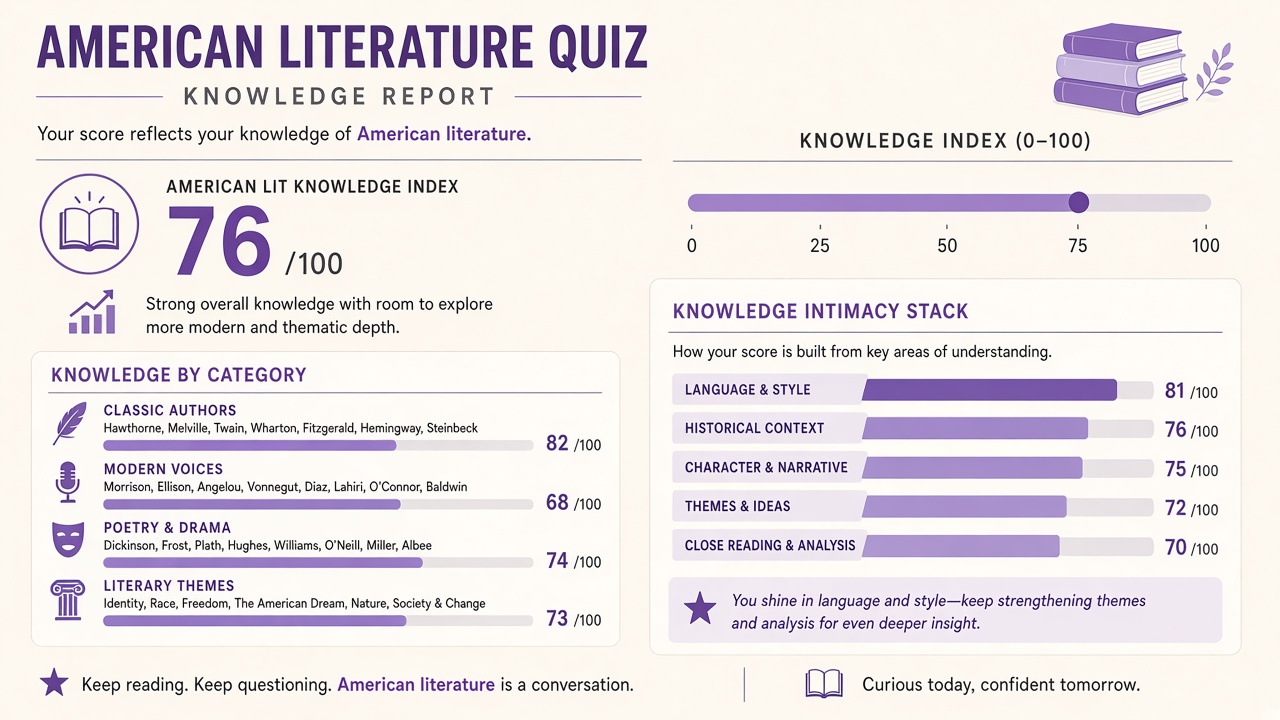
What this quiz can and cannot tell you
Can tell you
- Which appositive domains feel strongest or weakest in your self-report today
- An appositive knowledge index and four domain bars plus fear-of-intimacy stack
- A study baseline before grammar tests or editing workshops
- Whether restrictive comma rules or placement patterns need more drill
Cannot tell you
- Grade a class exam or certify professional copyediting skill
- Replace style guide consultation for legal or publishing workflows
- Cover every dialect choice in creative dialogue
- Measure overall writing quality beyond appositive recall items
Grammar handbooks vs this appositive quiz
Writing teachers cite Purdue OWL and Chicago Manual examples when students confuse restrictive and nonrestrictive appositives. Online lists rarely show domain bars or intimacy-stack patterns when grammar shame blocks office hours. This quiz adds a 0 to 100 index with four grammar domains inspired by those resources, not a reproduction of any publisher worksheet.
Sample items ask whether you spot renaming phrases, comma both sides, or essential versus extra detail. Pair results with our apostrophe quiz for punctuation siblings or APA quiz when research writing meets grammar rules.
| Test | Focus |
|---|---|
| Apostrophe quiz | Possessive and contraction apostrophes, not comma appositives |
| APA quiz | Citation style when grammar meets research papers |
| AP style quiz | Journalism punctuation including comma guidance |
Appositive Quiz FAQ
What does this appositive quiz measure?
20 agree-disagree items map to four grammar domains plus a fear-of-intimacy stack. You receive an appositive knowledge index from 0 to 100. Not a graded exam.
What is an appositive phrase?
A noun phrase that renames or explains another noun beside it, such as a pilot in my brother, a pilot, called.
When do appositives need commas?
Nonrestrictive appositives that add extra detail take commas on both sides. Restrictive appositives that identify which noun you mean usually take no commas.
What is the fear-of-intimacy stack?
A second results chart with vulnerability pull-back, trust hesitation, self-disclosure limits, and closeness anxiety layers adapted to grammar study stress.
How long does the quiz take?
About 4 minutes for 20 items with session autosave.
Who reviewed this content?
Dr. James Whitfield, PhD, reviewed the test framing and result explanations. See our editorial policy for review standards.
Reviewed by