What this quiz measures
This quiz does not measure IQ, certify fluency for immigration or hiring, or replace TOEFL, IELTS, or classroom courses. It measures how much you agree with general English literacy habits grouped four ways: vocabulary breadth about wide reading, context clues, specific word choice, word lists, and synonyms; grammar awareness about agreement, pronoun clarity, comma splices, its versus it's, and parallel structure; reading and writing about outlining, tone and audience, read-aloud proofing, paragraph clarity, and fact checking shared content; and quiz limits about practice reflection, kind feedback, credentials staying with teachers and formal tests, and refusing to treat bars as editor replacements. You answer 22 statements from strongly disagree to strongly agree, with reverse-worded myths so agreeing with every shortcut cannot inflate every bar. Your answers also feed a second chart on closeness and trust habits, because communication stress sometimes pushes people toward harsh perfectionism instead of calm revision. The total becomes an index from 0 to 100 where higher means more reported literacy habits on this screener, not proof you should skip classes when you need exam prep.
Vocabulary breadth
Wide reading, context clues, specific nouns and verbs, word lists, and synonyms.
Grammar awareness
Agreement, pronoun clarity, comma splices, its versus it's, and parallel lists.
Reading and writing
Outlining, tone and audience, read-aloud revision, clear paragraphs, and fact checks.
Quiz limits
Practice not formal exams, kind feedback, and bars not replacing credentials.
How it works
Answer 22 agreement items
Rate each statement from Strongly disagree to Strongly agree. Tap Next after each answer.
Answers sort into four domains
Each answer feeds one of four literacy habit groups, and every item also feeds a closeness and trust layer.
See your index and charts
You get a 0 to 100 index, a band, and two bar charts you can compare after a reading or writing sprint.
Take the English Quiz
Answer 22 short statements to see your general English literacy habits index, four domain bars, and a closeness and trust chart.
What your result means
Your index is the average of all 22 answers, scaled from 0 to 100, with reverse-worded items flipped first. Higher means more reported literacy habits on this screener. Read quiz limit bars together with grammar awareness before you treat the total as exam readiness.
| Band | Index range | Typical reading |
|---|---|---|
| Building general English literacy habits | 0 to 35 | Fewer agreed facts on vocabulary, grammar awareness, reading and writing routines, or quiz limits on this screener. |
| Mixed general English literacy habits | 36 to 65 | Solid habits in some domains with myths about rare words everywhere, optional grammar, or online bars replacing formal exams. |
| Strong general English literacy habits | 66 to 100 | Frequent agreement with accurate general English literacy habits and healthy quiz limits. |
Tips at a glance
A quick takeaway graphic with topic tips (not your personal quiz scores). Start the quiz for your index, bands, and charts.
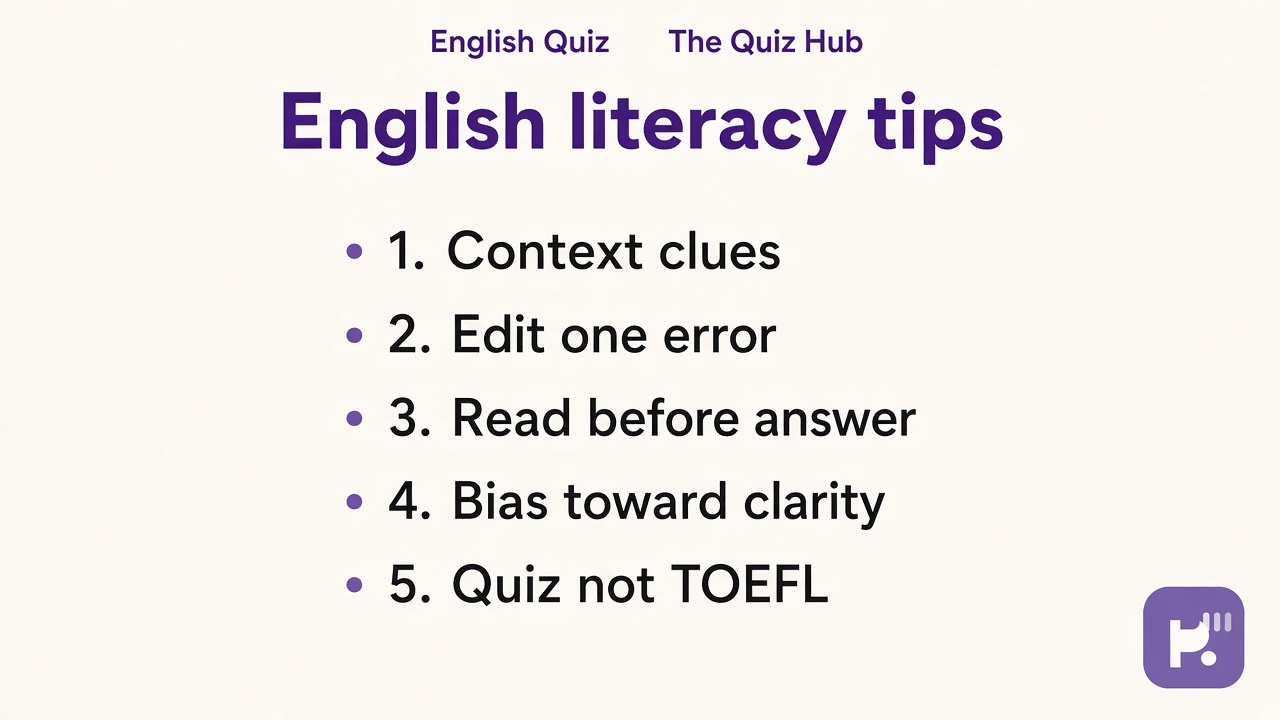
What this quiz can and cannot tell you
Can tell you
- Highlight vocabulary, grammar, and revision habits worth practicing in daily English
- Separate self-study reflection from formal exam prep in plain language
- Encourage kind feedback and retake habits without public grammar shaming
- Spark better questions for tutors, teachers, or writing groups
Cannot tell you
- Replace TOEFL, IELTS, school courses, or employer language assessments
- Prove intelligence rank or native fluency from one agree screener
- Diagnose language disorders or certify job readiness alone
- Justify skipping editors or classes because trivia bars look high
General English literacy habits without credential confusion
Search traffic around English quizzes often mixes habit building with credential hunger. Reading widely and noting words in context grows vocabulary faster than memorizing rare lists you never use. Choosing specific nouns and verbs beats repeating thing and stuff in emails colleagues must decode.
Grammar awareness is not pedantry theater. Agreement, clear pronouns, and fixing comma splices reduce confusion in messages and essays. Its versus it's and parallel lists still trip skilled writers, which is why proofreading passes matter. Claiming grammar never matters is a myth screeners flag so readers learn clarity still counts.
Reading and writing habits overlap daily life. Outlining before long posts, matching tone to audience, and reading aloud catch awkward lines silent skimming misses. First drafts are allowed to be messy when revision follows. Strong paragraphs state a point and support it with concrete detail before you hit publish.
Quiz limits keep this page honest. It is practice reflection, not TOEFL or IELTS proof. Kind feedback beats public typo dunking. Pair results with our grammar quiz for rule-heavy warm-ups, the English quiz for elementary students when you coach younger learners, or the IQ and cognitive test hub for more study games. Retake after a month of deliberate reading; habits move slowly and that is normal.
| Test | Focus |
|---|---|
| Grammar quiz | Rule-focused grammar recall rather than whole literacy habit reflection |
| English quiz for elementary students | Elementary reading and spelling routines rather than adult self-study habits |
English Quiz FAQ
What does this quiz measure?
It measures how much you agree with general English literacy habits across vocabulary, grammar awareness, reading and writing routines, and quiz limits. You get an index from 0 to 100 and four bars. It reflects self-reported habits on this screener, not a formal language exam score.
Can I use this quiz instead of TOEFL or IELTS prep?
No. Formal exams, courses, and tutors own credentials. This screener is habit reflection only and cannot certify fluency for school, immigration, or hiring.
Does a high score mean I am a native speaker?
No. High scores mean you agreed with many habit statements here. Accent, birthplace, and official assessments are separate from any online agree scale.
Why are some statements worded as myths?
Reverse-worded myths catch overconfidence. Agreeing that you must always use rare words, that grammar never matters, that revision is only for novelists, or that online bars replace editors should not inflate the habits index.
Who reviewed this quiz?
Dr. James Whitfield reviewed the educational framing, habits-not-credentials limits, and result explanations. See our editorial policy for review standards.
Reviewed by