What Eukaryotic Cell Labeling Quiz measures
This quiz does not grade fluorescence practicums, certify microscopists, or read patient samples. It measures how much you agree with diagram labeling habit statements grouped four ways: nucleus and chromatin about control-center tags, nucleolus and chromatin language, and rejecting prokaryote-has-nucleus myths; membrane and cytoplasm about plasma membrane boundaries, cytoplasm matrix, eukaryotic versus prokaryotic contrasts, and plant cell wall order; organelle diagram tags about mitochondria ovals, rough versus smooth ER, Golgi stacks, lysosomes, ribosome dots, and chloroplast placement on plant charts; and eukaryotic labeling limits about study screeners, refusing infection guesses from cartoons, keeping homework primary, and separating this bank from fluorescent antibody sibling quizzes. You rate 22 statements from strongly disagree to strongly agree, with reverse-worded myths so one passionate thread cannot inflate every bar. Your answers also feed a second chart on closeness and trust habits, because study stress sometimes chases belonging over honest diagram review. The total becomes an index from 0 to 100 where higher means more reported labeling literacy on this screener, not proof you aced lab or microscopy exams.
Nucleus and chromatin
Control center, nucleolus, chromatin, and nuclear envelope on homework figures.
Membrane and cytoplasm
Plasma membrane, cytoplasm, prokaryote contrast, plant wall order.
Organelle diagram tags
Mitochondria, ER types, Golgi, lysosomes, ribosomes, chloroplasts.
Eukaryotic labeling limits
Diagram screener only; labs, instructors, and clinicians stay primary.
How it works
Answer 22 agreement items
Rate each statement from Strongly disagree to Strongly agree. Tap Next after each answer.
Answers sort into four domains
Each answer feeds one of four eukaryotic labeling groups, and every item also feeds a closeness and trust layer.
See your index and charts
You get a 0 to 100 index, a band, and two bar charts you can compare after a cell unit or midterm week.
Take the Eukaryotic Cell Labeling Quiz
Answer 22 short statements to see your eukaryotic cell labeling literacy index, four domain bars, and a closeness and trust chart.
What your result means
Your index is the average of all 22 answers, scaled from 0 to 100, with reverse-worded items flipped first. Read labeling limit bars with organelle scores before you treat a high nucleus bar as permission to skip diagrams or guess diagnoses online. Literacy supports better study talk; labs still need your instructor rubric.
| Band | Index range | Typical reading |
|---|---|---|
| Building eukaryotic labeling literacy | 0 to 35 | Fewer agreed facts on nucleus, membrane, organelle tags, or labeling limits on this screener. |
| Mixed eukaryotic labeling literacy | 36 to 65 | Solid recall in some domains with prokaryote traps, ER mix-ups, or microscopy fantasy items in others. |
| Strong eukaryotic labeling literacy | 66 to 100 | Frequent agreement with nucleus, membrane, organelle tags, and humble labeling limits. |
Tips at a glance
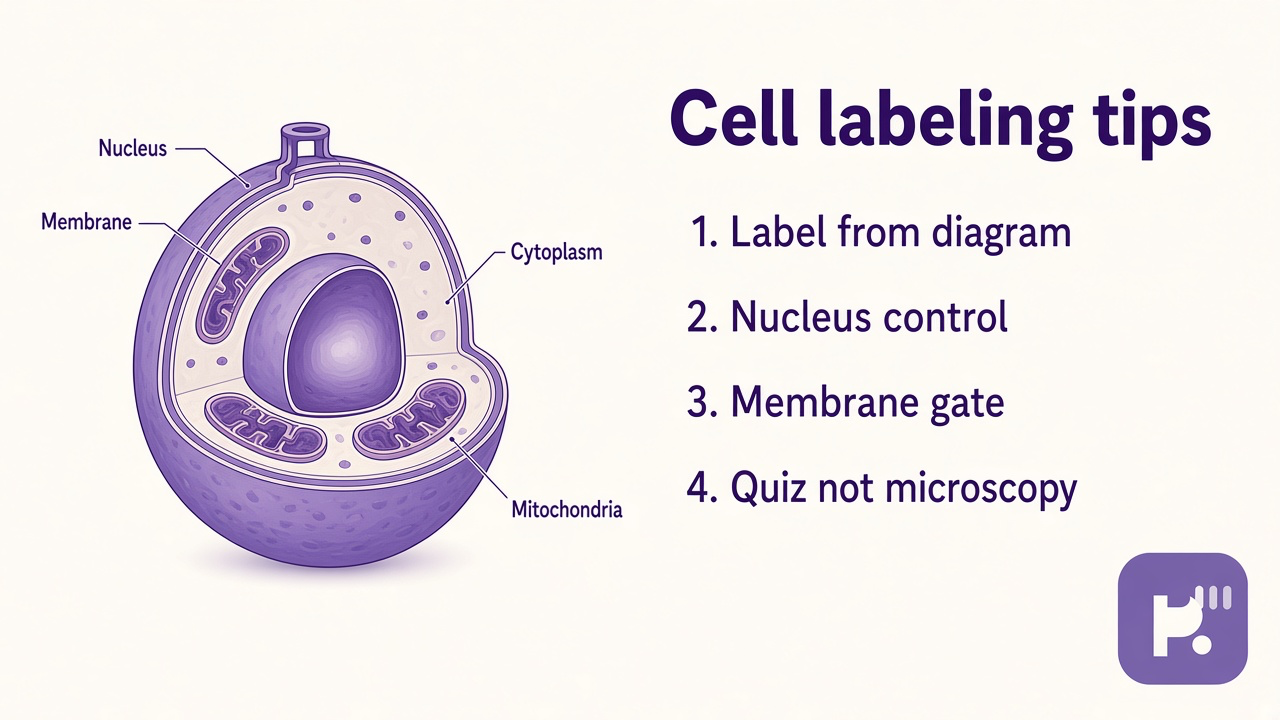
A quick takeaway graphic with topic tips (not your personal quiz scores). Start the quiz for your index, bands, and charts.
What this quiz can and cannot tell you
Can tell you
- Highlight nucleus, membrane, and organelle tag habits worth revisiting before diagram quizzes
- Separate class labeling literacy from microscopy technique certification fantasies
- Encourage prokaryote versus eukaryote contrast review before debate threads
- Spark better study group talk about ER rough versus smooth placement on charts
Cannot tell you
- Issue microscope lab grades or clinical diagnoses from one online screener
- Replace instructor rubrics, academic integrity policies, or licensed lab training
- Prove fluorescence antibody skill or authorize skipping labeled homework
- Turn literacy scores into fake lab credentials or microscopy exemptions
Eukaryotic diagram labels before microscopy cosplay
Eukaryotic cell search intent often blends two needs: sound prepared before diagram quizzes without rereading every textbook figure, and check whether nucleus versus organelle bubbles still line up after a week of prokaryote overlap. Those goals help when readers treat bars as a study map. They hurt when people treat scores like lab keys, skip labeled homework because trivia felt easy, or confuse this slug with fluorescent-tag labeling quizzes that use different vocabulary.
Dr. James Whitfield reviews iq cognitive study screeners with a simple split: reward honest agreement with widely taught eukaryotic diagram facts and honest limits on lab and diagnosis hype at the same time. Nucleus and chromatin tracks control-center tags without bacteria-have-nuclei myths. Membrane and cytoplasm keeps boundary language and plant wall order visible. Organelle diagram tags keeps mitochondria, ER, Golgi, and lysosome placement separate from ribosome-only-in-nucleus traps. Eukaryotic labeling limits keeps screeners, slide lab, and instructor roles visible beside thread-war stress.
Real readers mix bars. You might score high on membrane tags while keeping Golgi stacks moderate, which often describes strong boundary memory before secretory path vocabulary lands. You might score high on organelle trivia with softer limit items, which can mean good oval recall yet rushed humility about clinical cartoons. Reverse items catch sloppy answers: insisting prokaryotes share animal nuclei, swapping membrane and wall names, denying ribosomes on rough ER, diagnosing infections from clip art, or replacing homework from quiz scores should not inflate bars meant to track layered labeling habits.
Pair results with siblings on this hub instead of forcing one cell story. Our cell labeling quiz leans fluorescent tags and antibody markers rather than core eukaryotic diagram tags on this page. The cell organelle quiz stays on organelle function recall at intro depth with a separate stem bank. The animal cell quiz offers broader chart warm-ups. Browse the IQ and cognitive test hub for more study screeners. Caption shares as study practice and keep kindness in lab disagreements.
Syllabi shift faster than one midterm. When you share results, say traced diagrams beat scoreboard. When you borrow study tips, credit teachers who enforce integrity and classmates who ask good ER placement questions. Retake after cell lab week and watch whether membrane bars rise even if Golgi trivia lags, which often means you separated performative debating from actual notebook habits.
| Test | Focus |
|---|---|
| Cell labeling quiz | Fluorescent tags and antibody markers rather than core eukaryotic diagram tag literacy |
| Cell organelle quiz | Organelle function recall rather than membrane-bound nucleus labeling depth on this page |
| Animal cell quiz | Broader animal cell chart warm-ups rather than eukaryotic-only limit framing |
Eukaryotic Cell Labeling Quiz FAQ
What does Eukaryotic Cell Labeling Quiz measure?
It measures how much you agree with statements about nucleus and chromatin labels, membrane and cytoplasm boundaries, organelle diagram tags, and eukaryotic labeling limits. You get an index from 0 to 100 plus four bars. It describes self-rated diagram literacy on this screener, not lab grades or microscopy certification.
Is this the same as the cell labeling quiz?
No. The cell labeling quiz on this site uses a separate bank focused on fluorescent tags, stains, and antibody markers. This page focuses on textbook eukaryotic diagram tags such as nucleus placement, membrane boundaries, and common organelle bubbles.
Can a high score replace microscope lab?
No. Slide work, instructor rubrics, and academic integrity rules still govern lab performance. This screener is reflection only.
Why are some statements worded as myths?
Reverse items catch overconfidence. Agreeing that bacteria have membrane-bound nuclei like animal cells, that membrane and cell wall are always identical, that ribosomes never sit on rough ER, or that cartoons replace clinicians should not inflate bars meant to track labeling habits.
Who reviewed this quiz?
Dr. James Whitfield, PhD reviewed the educational framing, sibling quiz separation, and result explanations. See our editorial policy for review standards.
Reviewed by