What Elements of Poetry Quiz measures
This quiz does not grade your soul, hire you as a critic, or replace instructor comments on essays. It measures how much you agree with beginner-friendly poetry device study habits grouped four ways: meter and rhythm about stress patterns, common feet, free verse, and reading aloud without pretending every rhyming line must be iambic pentameter; figurative language about metaphor, simile, personification, and imagery without literal-only myths; rhyme and sound about end rhyme schemes, alliteration, assonance, and slant rhyme without mandatory-rhyme traps; and study not gatekeeping about class supplement habits, interpretation humility, read-aloud listening, and refusing to treat online bars like prize committee stamps or poet rank law. You rate 22 statements from strongly disagree to strongly agree, with reverse-worded myths so one glossary glance cannot inflate every bar. Your answers also feed a second chart on closeness and trust habits, because workshop culture sometimes chases clever dunking over patient listening. The total becomes an index from 0 to 100 where higher means more reported device literacy on this screener, not proof you should shame classmates or skip teachers when bars spike.
Meter and rhythm
Stressed syllables, common feet, free verse, and hearing rhythm when you read aloud.
Figurative language
Metaphor, simile, personification, and imagery beyond one dictionary gloss.
Rhyme and sound
End rhyme schemes, alliteration, assonance, and slant rhyme without rhyme-mandatory myths.
Study not gatekeeping
Class prep, read-aloud habits, humble interpretation talk, and limits on poet rank fantasies.
How it works
Answer 22 agreement items
Rate each statement from Strongly disagree to Strongly agree. Tap Next after each answer.
Answers sort into four domains
Each answer feeds one of four poetry device study groups, and every item also feeds a closeness and trust layer.
See your index and charts
You get a 0 to 100 index, a band, and two bar charts you can compare with a classmate after a devices worksheet.
Take the Elements of Poetry Quiz
Answer 22 short statements to see your poetry devices literacy index, four domain bars, and a closeness and trust chart.
What your result means
Your index is the average of all 22 answers, scaled from 0 to 100, with reverse-worded items flipped first. Read study-not-gatekeeping with meter and figurative bars before you treat a high rhyme score as proof you outrank other readers. Device literacy supports better seminar questions; kindness deserves more than scoreboard wins.
| Band | Index range | Typical reading |
|---|---|---|
| Building poetry devices literacy | 0 to 35 | Fewer agreed facts on meter, figurative language, sound devices, or study-limit items on this screener. |
| Mixed poetry devices literacy | 36 to 65 | Solid facts in some domains with meter traps, rhyme myths, or gatekeeping blind spots in others. |
| Strong poetry devices literacy | 66 to 100 | Frequent agreement with accurate meter, figurative, sound, and study-limit items; still educational only. |
Tips at a glance
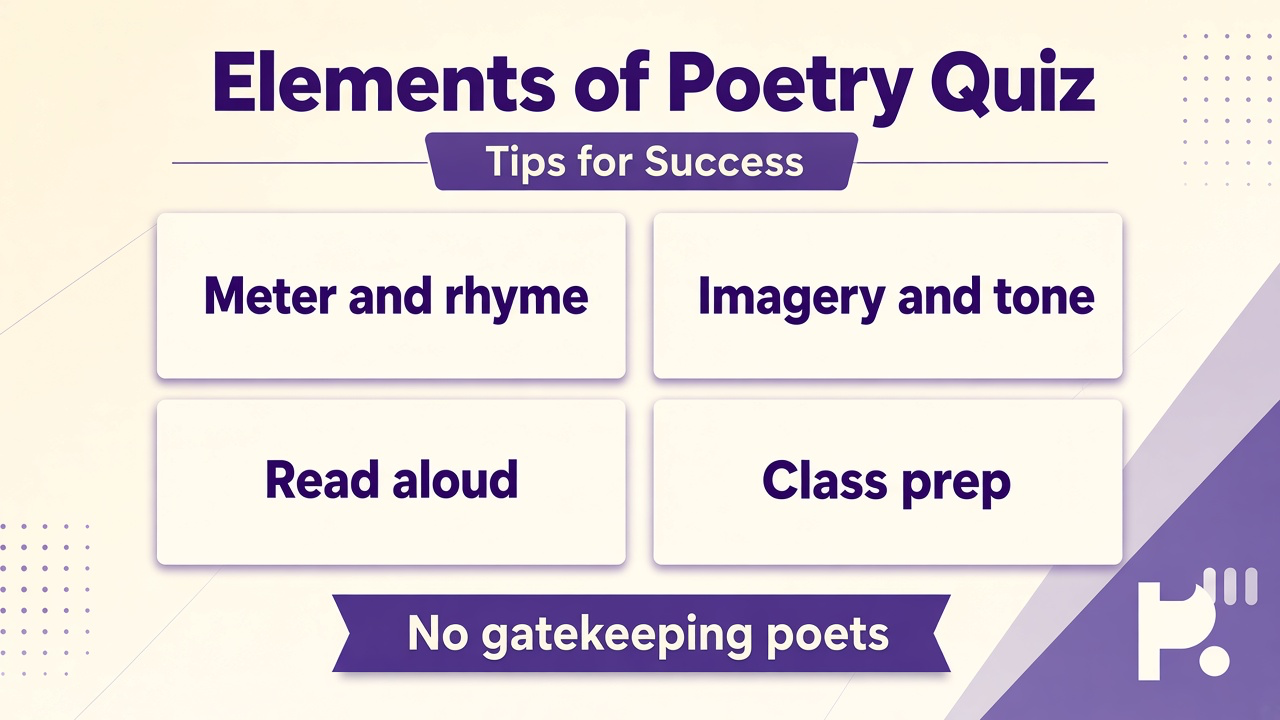
A quick takeaway graphic with topic tips (not your personal quiz scores). Start the quiz for your index, bands, and charts.
What this quiz can and cannot tell you
Can tell you
- Highlight meter, metaphor, and rhyme facts worth revisiting before unit tests
- Separate figurative definitions from literal-only myths without merging them into one trick lane
- Encourage read-aloud habits and annotation talk in study groups
- Spark better questions for poetry packets, oral presentations, and library browsing
Cannot tell you
- Issue MFA degrees, publishing contracts, or critic credentials from one online screener
- Prove you should mock classmates who liked different poets or stanzas
- Replace English teachers, librarians, writing centers, or licensed counselors when feedback hurts
- Turn literacy scores into harassment, taste wars, or fake laureate badges online
Poetry devices literacy before taste wars
Search traffic around poetry device quizzes usually wants two things: sound prepared before a meter or metaphor quiz without rereading the whole anthology, and check whether rhyme scheme letters still line up after a busy week. Those goals help when readers treat bars as a study map, not a taste or publishing verdict. They hurt when people treat scores like poet rank, skip reading aloud because trivia felt easy, or debate classmates with meme definitions that ignore context.
Dr. James Whitfield reviews iq cognitive study screeners with a simple split: reward honest agreement with widely taught device facts and honest limits on gatekeeping hype at the same time. Meter and rhythm tracks stress, feet, free verse, and aloud listening without Shakespeare-only meter myths. Figurative language tracks metaphor, simile, personification, and imagery without literal-only traps. Rhyme and sound keeps end rhyme, alliteration, assonance, and slant rhyme separate from must-rhyme-every-line jokes. Study not gatekeeping keeps class supplement habits, interpretation humility, and refusal to treat quiz bars like prize stamps visible beside seminar stress.
Real readers mix bars. You might score high on figurative language while keeping meter moderate, which often describes strong metaphor worksheets before scansion homework lands. You might score high on rhyme and sound with moderate study-limit items, which can mean solid alliteration memory yet little exposure to humble interpretation talk in workshop. Reverse items catch sloppy answers: insisting every rhyming poem must be iambic pentameter, claiming metaphors never need interpretive layers, demanding rhyme on every line for poetry status, or treating high indices like automatic publishing approval should not inflate bars meant to track layered study habits.
Pair results with siblings on this hub instead of forcing one anthology story. Our classic literature quiz leans broader book literacy when you want canon context without device drill stems on one page. The grammar quiz stays on syntax and sentence habits when you want a non-poetry cognitive warm-up. Browse the IQ and cognitive test hub for more low stakes study screeners. Caption shares as class practice and skip poet dunking on friends who never asked for a pop quiz.
Units stack faster than one worksheet. Sonnets, spoken word, and translated lyrics arrive after chapter one metaphor hunts. When you share results, say read aloud beats scoreboard. When you borrow device tips, credit classmates who teach kindly and respect teachers who model close reading. Retake after one poetry week and watch whether meter bars rise when you hear lines, which often means you separated performative scoring from actual listening honesty.
| Test | Focus |
|---|---|
| Classic literature quiz | Broader classic book literacy rather than meter metaphor and rhyme device drills |
| Grammar quiz | Syntax and sentence study rather than scansion and figurative device vocabulary |
Elements of Poetry Quiz FAQ
What does Elements of Poetry Quiz measure?
It measures how much you agree with statements about meter and rhythm, figurative language, rhyme and sound devices, and study-not-gatekeeping limits. You get an index from 0 to 100 plus four bars. It describes self-rated device literacy on this screener, not poet rank, publishing approval, or proof your taste is objectively best.
Is this an MFA admissions or publishing test?
No. This page builds introductory study habits for reflection and class prep. Admissions committees and editors use processes this screener cannot replace.
Does a high score mean I should correct how others read poems?
No. High bars mean you related to study statements here. Study-not-gatekeeping items explicitly reject mocking classmates. Use curiosity to listen, not to dunk.
Why mix meter, metaphor, and rhyme items?
Poetry unit search intent blends scansion homework, figurative worksheets, and sound-device glossaries. Split bars keep rhythm wins separate from metaphor myths and rhyme traps so results stay honest about which lanes you endorse.
Who reviewed this quiz?
Dr. James Whitfield, PhD reviewed the educational framing, study-not-gatekeeping limits, and result explanations. See our editorial policy for review standards.
Reviewed by