What Express Diagnostic of Economic Attitudes measures
This quiz does not recommend securities, file taxes, or certify financial planners. It measures how much you agree with money habit statements grouped four ways: saving habits about named goals, emergency buffers, subscription reviews, and honest tracking when income is tight; spending triggers about stress, boredom, sale banners, cart pauses, and values checks before discretionary buys; values and comparison about spending aligned with priorities, resisting haul envy, and refusing neighbor-upgrade scoreboards; and economic quiz limits about unofficial screeners, refusing broker fantasies, and captioning shares as reflection not buy or sell signals. You rate 22 statements from strongly disagree to strongly agree, with reverse-worded traps so one hustle binge cannot inflate every bar. Your answers also feed a second chart on closeness and trust habits, because money performance sometimes chases belonging over honest budgets. The total becomes an index from 0 to 100 where higher means more reported habit agreement on this screener, not proof an advisor approved your plan.
Saving habits
Named goals, buffers, and subscription reviews when cash is tight.
Spending triggers
Stress, sales, and mood cues before checkout.
Values and comparison
Priorities over feed envy and friend scoreboards.
Economic quiz limits
Reflection only; licensed advice stays separate.
How it works
Answer 22 agreement items
Rate each statement from Strongly disagree to Strongly agree. Tap Next after each answer.
Answers sort into four domains
Each answer feeds one of four economic attitude groups, and every item also feeds a closeness and trust layer.
See your index and charts
You get a 0 to 100 index, a band, four domain bars, and a second chart for intimacy habits.
Take the Express Diagnostic of Economic Attitudes
Answer 22 short statements to see your economic attitudes habit index, four domain bars, and a closeness and trust chart.
What your result means
Your index is the average of all 22 answers, scaled from 0 to 100, with reverse-worded items flipped first. Read quiz-not-advisor limits with saving bars before you treat a high values score as permission to coach strangers. Literacy supports kinder money talk; licensed professionals still matter for taxes, debt, and investments.
| Band | Index range | Typical reading |
|---|---|---|
| Building economic attitude habits | 0 to 35 | Fewer agreed habits on saving buffers, spending triggers, values clarity, or unofficial limits on this screener. |
| Mixed economic attitude habits | 36 to 65 | Solid habits in some domains with trigger slips, comparison envy, or advisor fantasy traps in others. |
| Strong economic attitude habits | 66 to 100 | Frequent agreement with saving, trigger awareness, values humility, and unofficial limits; still not licensing advice. |
Tips at a glance
A quick takeaway graphic with topic tips (not your personal quiz scores). Start the quiz for your index, bands, and charts.
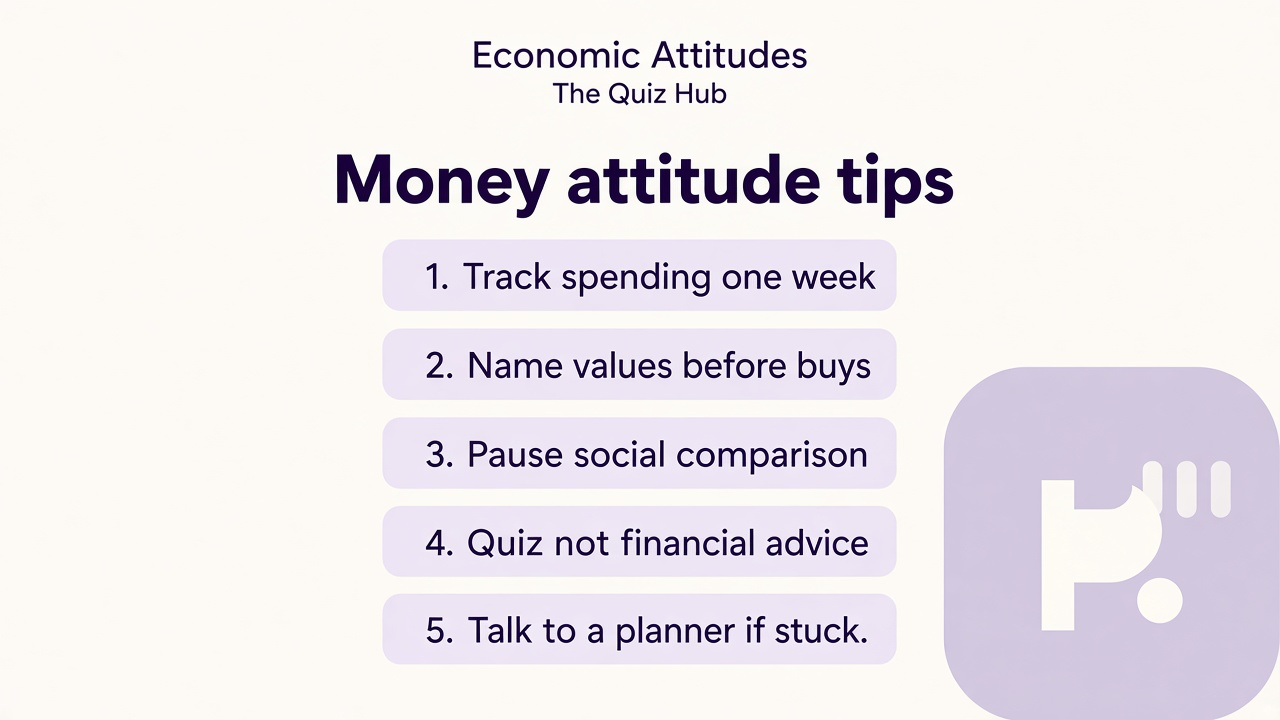
What this quiz can and cannot tell you
Can tell you
- Highlight saving, trigger, and values habits worth revisiting before the next spending season
- Separate unofficial reflection from broker, bank, or planner credentials
- Encourage one-week spending notes and named values before big discretionary buys
- Spark honest talk with friends about unofficial captions on shares
Cannot tell you
- Recommend stocks, bonds, crypto, or insurance products from one online screener
- Replace certified financial planners, accountants, or credit counselors
- Prove you should shame friends who earn less or save slower
- Turn habit scores into harassment, dunk threads, or faux fiduciary authority
Values and triggers before haul-envy autopilot
Economic attitude searches often blend two needs: name whether saving and spending match your values, and claim a share lane that feels responsible in mixed chats. Those goals help when they spark one-week tracking and humility about income limits. They hurt when quiz scores become licenses to shame slower savers, or when threads blur reflection into stock tips without licenses.
Dr. James Whitfield reviews iq-cognitive habit screeners with a simple split: reward honest saving and trigger awareness and honest limits on advisor pretense at the same time. Saving habits tracks named goals, buffers, and subscription reviews without lump-sum fantasy traps. Spending triggers tracks stress, sales, and cart pauses without retail-therapy totalism. Values and comparison keeps priorities visible beside influencer haul envy and neighbor scoreboards. Economic quiz limits keeps screeners, banks, and planners separate from bar height.
Real readers mix bars. You may score high on values while keeping saving moderate, which often describes clear priorities before buffer cash lands. You may score high saving with softer trigger items, which can mean strong goals plus occasional sale-banner autopilot. Reverse items catch sloppy answers: pointless small savings myths, retail therapy as total fix, neighbor upgrades as worth tests, screenshot portfolio advice, or dunking tied to high bars should not inflate charts meant to track humble habit reflection.
Pair results with siblings instead of forcing one money story. Our budget quiz leans category mapping when you want envelope habits beside attitude reflection. Our entrepreneur personality quiz angles founder risk honesty when income mixes business and personal lanes. Our engagement ring quiz covers partner budget talk when milestones overlap spending values. Browse the IQ and cognitive hub for more study screeners. Caption shares unofficial, read the room, and skip bait threads on friends who never opted in.
Income seasons shift faster than one viral hustle reel. When you share results, say values and kindness beat scoreboard. When you borrow tips, credit planners and counselors who answer real questions. Retake after one honest budget month and watch whether trigger bars rise even if comparison still feels loud, which often means you separated performative money posts from actual listening.
| Test | Focus |
|---|---|
| Budget quiz | Category and envelope mapping rather than saving triggers and social comparison depth here |
| Entrepreneur personality quiz | Founder risk and runway honesty rather than everyday saving and spending cue habits |
| Engagement ring quiz | Partner budget and ring planning rather than general economic attitude reflection bars |
Express Diagnostic of Economic Attitudes FAQ
What does Express Diagnostic of Economic Attitudes measure?
It measures how much you agree with statements about saving habits, spending triggers, values and social comparison, and unofficial quiz limits. You get an index from 0 to 100 plus four bars. It describes self-reported money attitude habits on this screener, not certified planning or investment readiness.
Is this financial, tax, or investment advice?
No. The Quiz Hub wrote this page without partnership from banks, brokerages, or financial planners. Licensed professionals handle portfolios, taxes, and debt plans separately.
Does a high score mean I should give friends money tips?
No. High bars mean you related to habit statements here. Limit items explicitly resist dunking and faux advisor posts; friends may need professionals, not screenshot coaching.
Why include social comparison items with values?
Money attitudes blend priorities with feed envy. Comparison items keep haul videos and neighbor upgrades from inflating habits meant to track values-aligned spending reflection.
Who reviewed this quiz?
Dr. James Whitfield, PhD reviewed the unofficial framing, money respect limits, and result explanations. See our editorial policy for review standards.
Reviewed by