What the Figures of Speech Quiz measures
This quiz does not certify interpreters, sell dictionary subscriptions, or replace AP rhetorical analysis essays. It measures how much you agree with figures of speech study habits grouped four ways: idiom habits about break a leg goodwill, literal-translation traps, regional variation, weekly context logs, and ESL patience; hyperbole and understatement about million-year waits, little scratch downplay, joke versus fact fights, persuasive tone, and comedy stage voice; oxymoron and contrast about deafening silence tension, bittersweet mixes, image contrast in paragraphs, tall-short myths, lyric explanations, and antithesis rhythm beside idiom lists; and study not exam sibling about class supplement framing next to the figurative language quiz, kind phrase explanations, teachers and bilingual coaches owning rubrics, and refusing editor hiring myths from bar height. You rate 22 statements from strongly disagree to strongly agree, with reverse-worded items so literal idiom panic cannot inflate every bar. Your answers also feed a second chart on closeness and trust habits, because slang debates sometimes chase dunking rights instead of curiosity. The total becomes an index from 0 to 100 where higher means more reported figures-of-speech study habits and kind limits on this screener, not proof a dictionary brand endorsed your meme folder.
Idiom habits
Context clues, regional variation, weekly logs, and patience for ESL classmates.
Hyperbole and understatement
Exaggeration jokes, downplay tone, persuasive drafts, and comedy versus homework.
Oxymoron and contrast
Opposite pairs, bittersweet beats, image contrast, and speech rhythm beside labels.
Study not exam sibling
Supplement reflection, kind explanations, and no AP or dictionary authority from bars.
How it works
Answer 22 agreement items
Rate each statement from Strongly disagree to Strongly agree. Tap Next after each answer.
Answers sort into four domains
Each answer feeds one of four expression study groups, and every item also feeds a closeness and trust layer.
See your index and charts
You get a 0 to 100 index, a band, four domain bars, and a second chart for intimacy habits.
Take the Figures of Speech Quiz
Answer 22 short statements to see your figures of speech study habits index, four domain bars, and a closeness and trust chart.
What your result means
Your index is the average of all 22 answers, scaled from 0 to 100, with reverse-worded items flipped first. Higher means more reported figures of speech study habits and kind limits on this screener. Read study-not-exam bars together with idiom habits before you treat the total as AP readiness.
| Band | Index range | Typical reading |
|---|---|---|
| Building expression study habits | 0 to 35 | Fewer agreed idiom, hyperbole, oxymoron, contrast, or study-limit items on this screener. |
| Mixed expression study habits | 36 to 65 | Some idiom and hyperbole facts mixed with every-phrase-is-idiom myths or AP credential slips. |
| Strong expression study habits | 66 to 100 | Frequent idiom, hyperbole, oxymoron, contrast, and study-limit agreement with humble sharing. |
Tips at a glance
A quick takeaway graphic with topic tips (not your personal quiz scores). Start the quiz for your index, bands, and charts.
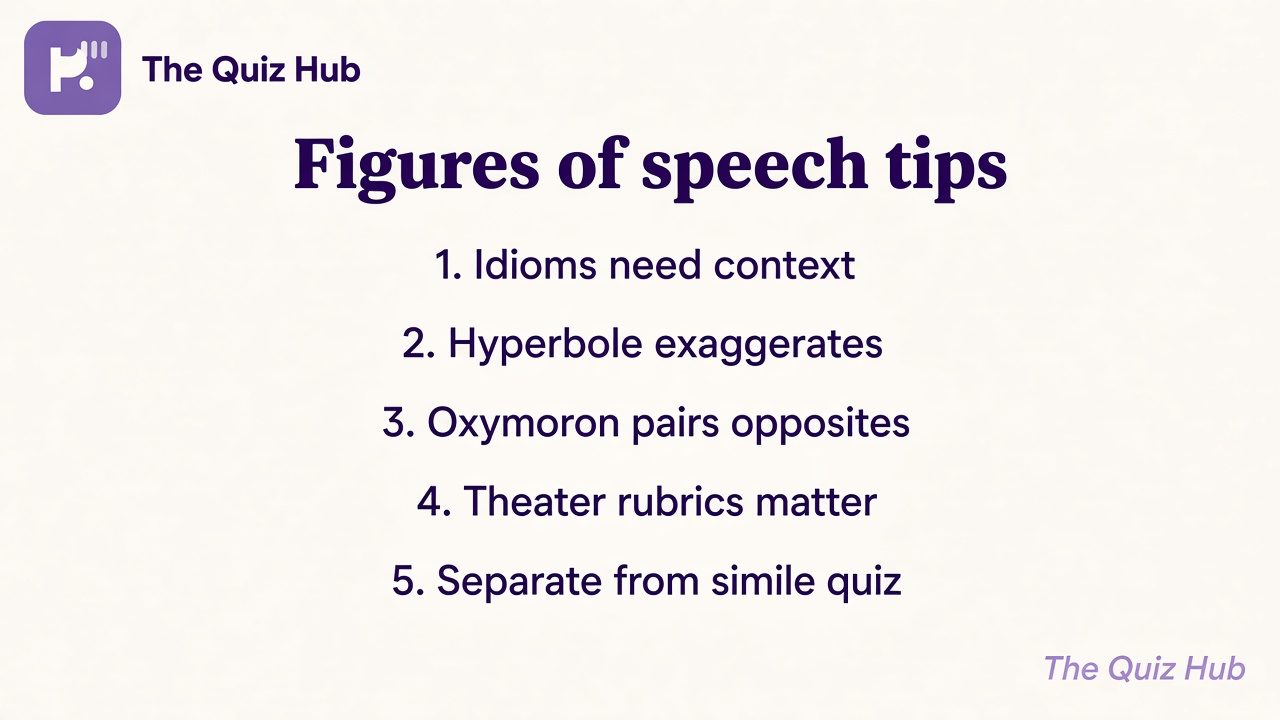
What this quiz can and cannot tell you
Can tell you
- Highlight idiom, hyperbole, and oxymoron habits worth practicing in reading and listening
- Separate self-study reflection from formal AP or ESL exam prep in plain language
- Encourage kind phrase explanations without public slang shaming
- Spark better context questions for teachers or bilingual coaches
Cannot tell you
- Replace AP exams, ESL certification tests, or graded rhetorical essays
- Prove dictionary editor rank or native-speaker superiority from one agree screener
- Certify affiliation with publishers, dictionary brands, or exam vendors
- Justify correcting strangers over casual idioms they learned in another region
Figures of speech study without dictionary cosplay
Searchers often want quick lists of idioms and exaggeration jokes without mixing them into simile homework on a sibling page. Idioms such as break a leg carry goodwill meanings that literal word-by-word translation breaks. Regional variation and ESL patience matter because quiz bars do not rank whose English counts. Context sentences beat memorizing isolated phrases from one meme feed.
Hyperbole stacks feeling into impossible scale, like waiting a million years for a slow line, without astronomy debates in group chats. Understatement softens blows when speakers call a large dent a little scratch. Comedy and persuasive essays use both tools; treating every hyperbolic joke as lying news is a myth screeners flag so readers learn tone awareness.
Oxymoron joins opposites for tension, such as deafening silence or bittersweet endings. Contrast can sharpen paragraphs even when margins lack fancy labels. Not every pair of adjectives counts; tall short tree is not automatic oxymoron without opposite ideas working together. Antithesis rhythm in speeches sits beside idiom lists as a separate reading skill.
Study limits pair with the figurative language sibling on purpose. That page owns simile, metaphor, and personification stems; this page owns idiom, hyperbole, and oxymoron stems with zero shared banks. Teachers, tutors, and bilingual coaches own rubrics. Bars do not waive AP essays or hire you as chief idiom editor.
Use your index as a nudge toward one context notebook, not a credential. Pair this with our figurative language quiz when you need like-and-as comparison habits in prose, the fiction and nonfiction quiz for library blurb literacy, or the IQ and cognitive test hub for more study screeners. Retake after you log three phrases with full sentences; expression literacy grows when culture stays labeled kindly, not when you win slang fights in comment threads.
| Test | Focus |
|---|---|
| Figurative language quiz | Simile, metaphor, and personification stems separate from this idiom and hyperbole bank |
| Fiction and nonfiction quiz | Shelf genre literacy rather than idiom and oxymoron expression habits |
Figures of Speech Quiz FAQ
What does the Figures of Speech Quiz measure?
It measures how much you agree with figures of speech study habits across idiom habits, hyperbole and understatement, oxymoron and contrast, and study-not-exam limits. You get an index from 0 to 100 and four bars. It reflects self-reported habits on this screener, not an AP exam score.
How is this different from the figurative language quiz?
This page uses separate stems on idioms, hyperbole, understatement, oxymoron, and contrast. The figurative language sibling focuses on simile, metaphor, personification, and imagery without repeating this expression bank.
Do high scores prove I know every slang phrase?
No. High scores mean you agreed with many habit statements here. Regional slang, professional translation, and formal exams need teachers, coaches, and official materials beyond any online agree scale.
Why are some items worded as myths?
Reverse-worded myths catch overconfidence. Agreeing that kick the bucket always describes kicking, that hyperbole equals lying, that any two adjectives form oxymoron, or that online bars hire you as editor should not inflate the study index.
Who reviewed this quiz?
Dr. James Whitfield reviewed the educational framing, study-not-exam limits, and result explanations. See our editorial policy for review standards.
Reviewed by