What the Field Hockey Stick Quiz measures
This quiz does not approve sticks at tournament check-in, certify umpires, or select national squads. It measures how much you agree with beginner-friendly field hockey stick literacy grouped four ways: stick parts anatomy about head shape, bow profile, shaft and grip zones, and toe design in coaching diagrams without pretend-all-sticks-are-identical myths; rules study basics about stick use, dangerous play awareness, circle and sideline summaries, and learning from officials without bench-shouting shortcuts; gear and grip habits about tape, damage checks, fitter conversations on bow legality, and kind teammate study shares; and unofficial study limits about federation rule and equipment updates, certified coaches and umpires owning field authority, and refusing to treat online bars like automatic credential registration. You rate 22 statements from strongly disagree to strongly agree, with reverse-worded traps so one gear unboxing cannot inflate every bar. Your answers also feed a second chart on closeness and trust habits, because sports study sometimes chases argument wins instead of honest rule questions. The total becomes an index from 0 to 100 where higher means more reported stick and rules study literacy on this screener, not proof you may officiate a final.
Stick parts anatomy
Head, bow, shaft, grip, and toe language in common coaching and equipment diagrams.
Rules study basics
Stick use, dangerous play awareness, and beginner circle summaries without meme law.
Gear and grip habits
Tape, damage checks, fitter questions, and kind study shares with teammates.
Unofficial study limits
Federation updates, coach and umpire authority, and limits on quiz credential fantasies.
How it works
Answer 22 agreement items
Rate each statement from Strongly disagree to Strongly agree. Tap Next after each answer.
Answers sort into four domains
Each answer feeds one of four stick literacy groups, and every item also feeds a closeness and trust layer.
See your index and charts
You get a 0 to 100 index, a band, four domain bars, and a second chart for intimacy habits.
Take the Field Hockey Stick Quiz
Answer 22 short statements to see your field hockey stick literacy index, four domain bars, and a closeness and trust chart.
What your result means
Your index is the average of all 22 answers, scaled from 0 to 100, with reverse-worded items flipped first. Higher means more reported stick anatomy, rules study, grip habit, and unofficial limit agreement on this screener. Read unofficial-limit bars with rules basics before you treat a high anatomy bar as umpire permission.
| Band | Index range | Typical reading |
|---|---|---|
| Building stick literacy | 0 to 35 | Fewer agreed stick anatomy, rules summary, grip habit, or unofficial limit items on this screener. |
| Mixed stick literacy | 36 to 65 | Solid anatomy or grip recall mixed with rule argument myths or certification fantasies. |
| Strong stick literacy | 66 to 100 | Frequent stick anatomy, rules summary, grip habit, and unofficial limit agreement; still not credentialing. |
Tips at a glance
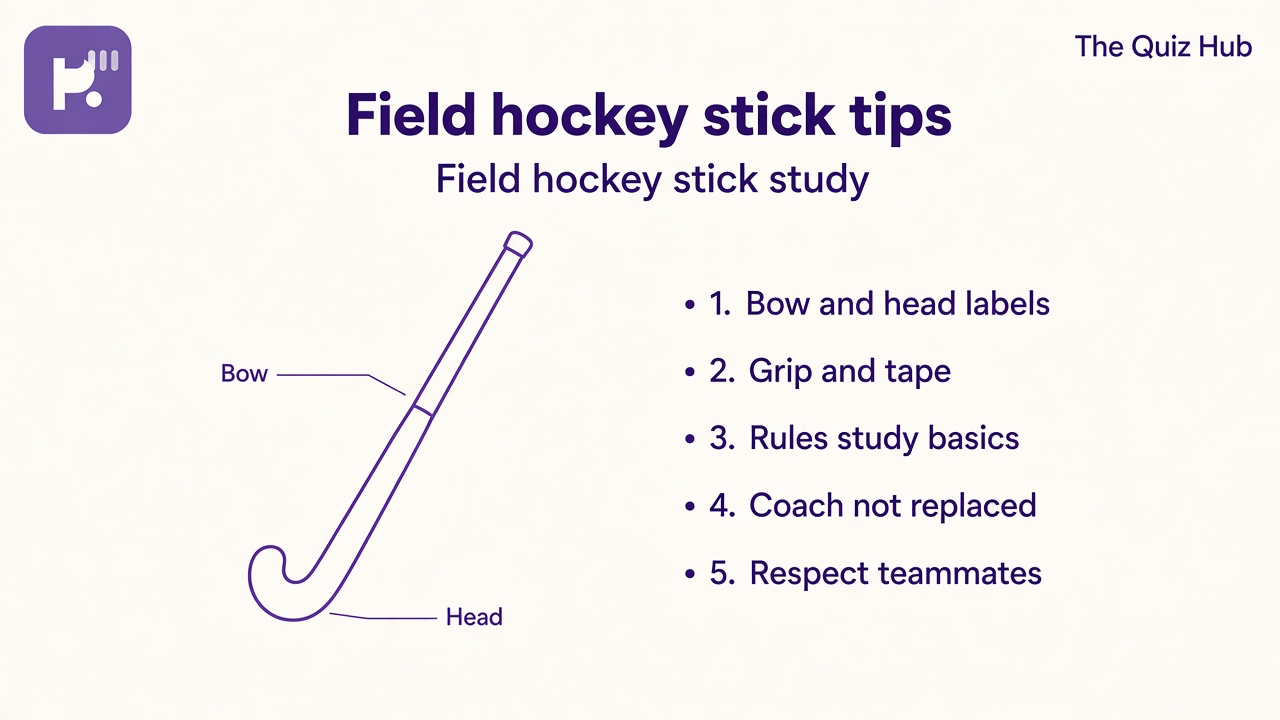
A quick takeaway graphic with topic tips (not your personal quiz scores). Start the quiz for your index, bands, and charts.
What this quiz can and cannot tell you
Can tell you
- Highlight stick part, rule summary, and grip habits worth revisiting before club clinics
- Separate study curiosity from certification fantasies without merging them into one trick lane
- Encourage fitter and coach questions instead of gear dunking on newcomers
- Give a playful baseline to retake after one federation beginner guide chapter
Cannot tell you
- Certify umpires, equipment inspectors, or national team selectors from one online screener
- Approve stick legality at tournament check-in without current federation tables
- Replace certified coaching, medical care after field injuries, or concussion protocols
- Turn literacy scores into harassment of teammates, umpires, or parent volunteers online
Field hockey stick literacy before certification shortcuts
Search traffic around field hockey stick quizzes usually wants two things: sound informed before buying or borrowing gear without pretending to be an equipment inspector, and check whether bow, head, and grip vocabulary matches intro coaching handouts. Those goals help when readers treat bars as a study map. They hurt when people treat scores like federation badges, scoop balls with illegal stick faces because a clip looked cool, or shout over umpires instead of reading one rule section later.
Dr. James Whitfield reviews iq cognitive study screeners with a simple split: reward honest agreement with widely taught stick anatomy and honest limits on credential hype at the same time. Stick parts anatomy tracks head shape, bow curve, shaft length ideas, grip zones, and toe labels without pretending every stick is identical wood. Rules study basics tracks dangerous play awareness, circle and sideline summaries, and humility about rule set updates without bench argument fantasies. Gear and grip habits keeps tape, damage checks, fitter conversations, and kind teammate shares visible beside stiff elite stick shopping myths. Unofficial study limits keeps federation updates, certified coach and umpire authority, and refusal to treat quiz bars like automatic tournament approval visible beside social media bravado.
Real readers mix bars. You might score high on anatomy while keeping unofficial limits moderate, which often describes parents shopping first sticks before a clinic. You might score high on grip habits with softer rules items, which can mean strong gear care yet little exposure to current appendix language. Reverse items catch sloppy answers: identical stick myths, illegal scooping faces, optional umpire respect, or high indices like automatic equipment approval should not inflate bars meant to track layered study literacy.
Pair results with siblings on this hub instead of forcing one sports story. Our basketball rules quiz leans foul and violation flow when you want rule book study from another court sport. The favorite sport quiz stays on broad fandom reflection when you want playful shares separate from stick diagrams. Browse the IQ and cognitive test hub for more low stakes screeners. Caption shares as study practice and skip credential dunking on friends who never asked for equipment court.
Seasons stack faster than one trivia night. Federation equipment tables, rule appendix edits, and club fitter advice shift what junior players may carry each year. When you share results, say coaches and umpires beat scoreboard for on-field calls. When you borrow bow tips, credit trainers who teach kindly and respect officials who enforce listed methods. Retake after one coaching orientation and watch whether unofficial-limit bars rise even if anatomy spikes, which often means you separated performative scoring from actual humility about certification.
| Test | Focus |
|---|---|
| Basketball rules quiz | Court foul and violation study flow rather than stick bow anatomy |
| Favorite sport quiz | Broad sports fandom reflection rather than field hockey equipment tables |
Field Hockey Stick Quiz FAQ
What does the Field Hockey Stick Quiz measure?
It measures how much you agree with statements about stick anatomy, rules study basics, gear and grip habits, and unofficial study limits. You get an index from 0 to 100 plus four bars. It describes self-rated study literacy on this screener, not umpire licenses, equipment approval, or proof you may officiate matches.
Is this a federation umpire or coaching certification exam?
No. This page builds introductory stick and rules literacy for curiosity and study groups. National federations, certified courses, and appointed officials issue credentials this screener cannot replace.
Does a high score mean my stick is legal for tournament check-in?
No. High bars mean you related to literacy statements here. Equipment legality depends on current federation tables, age divisions, and on-site inspection, not online agree quizzes.
Why include bow, head, and grip items with rules summaries?
Field hockey search intent blends gear shopping, rule curiosity, and club culture. Split bars keep anatomy wins separate from rule myths and certification humility so results stay honest about which lanes you endorse.
Who reviewed this quiz?
Dr. James Whitfield, PhD reviewed the educational framing, unofficial study limits, and result explanations. See our editorial policy for review standards.
Reviewed by