What End Marks Quiz measures
This quiz does not certify copyediting jobs, rank intelligence, or replace instructors and style guides. It measures how much you agree with beginner-friendly end-mark literacy grouped four ways: period stops a thought about finished statements, avoiding comma splices in formal drafts, and hearing natural stops in drafts; question versus statement about direct questions, indirect question periods, rhetorical tone, and chat politeness marks; exclamation and dialogue about sparing emphasis, quotation hugs for speech, American classroom quote-end placement, and draft habits that catch missing marks; and practice not shame about retakes, rewrite loops, anti-mockery limits, and refusing to treat bars as hiring passes. You rate 22 statements from strongly disagree to strongly agree, with reverse-worded myths so one texting binge cannot inflate every bar. Your answers also feed a second chart on closeness and trust habits, because grammar policing sometimes chases correctness performance over kind learning. The total becomes an index from 0 to 100 where higher means more reported punctuation literacy on this screener, not proof you should harass dialect speakers online.
Period stops a thought
Complete statements, clean sentence breaks, and hearing where ideas finish in drafts.
Question versus statement
Direct and indirect questions, rhetorical tone, and when statements keep periods.
Exclamation and dialogue
Sparing shouts, quotes around speech, and end-mark placement you practice in class.
Practice not shame
Worksheets, retakes, rewrite loops, and refusing grammar dunk threads.
How it works
Answer 22 agreement items
Rate each statement from Strongly disagree to Strongly agree. Tap Next after each answer.
Answers sort into four domains
Each answer feeds one of four end-mark literacy groups, and every item also feeds a closeness and trust layer.
See your index and charts
You get a 0 to 100 index, a band, and two bar charts you can compare with a study partner.
Take the End Marks Quiz
Answer 22 short statements to see your end-mark literacy index, four domain bars, and a closeness and trust chart.
What your result means
Your index is the average of all 22 answers, scaled from 0 to 100, with reverse-worded items flipped first. Higher means more reported literacy on this screener. Read practice-not-shame together with dialogue bars before you treat the total as license to grammar-police friends.
| Band | Index range | Typical reading |
|---|---|---|
| Building end-mark literacy | 0 to 35 | Fewer agreed facts on periods, questions, exclamation or dialogue, or practice-not-shame habits on this screener. |
| Mixed end-mark literacy | 36 to 65 | Solid recall in some domains with exclamation traps or shame-myth items in others. |
| Strong end-mark literacy | 66 to 100 | Frequent agreement with accurate end-mark habits and practice-not-shame limits; still study only. |
Tips at a glance
A quick takeaway graphic with topic tips (not your personal quiz scores). Start the quiz for your index, bands, and charts.
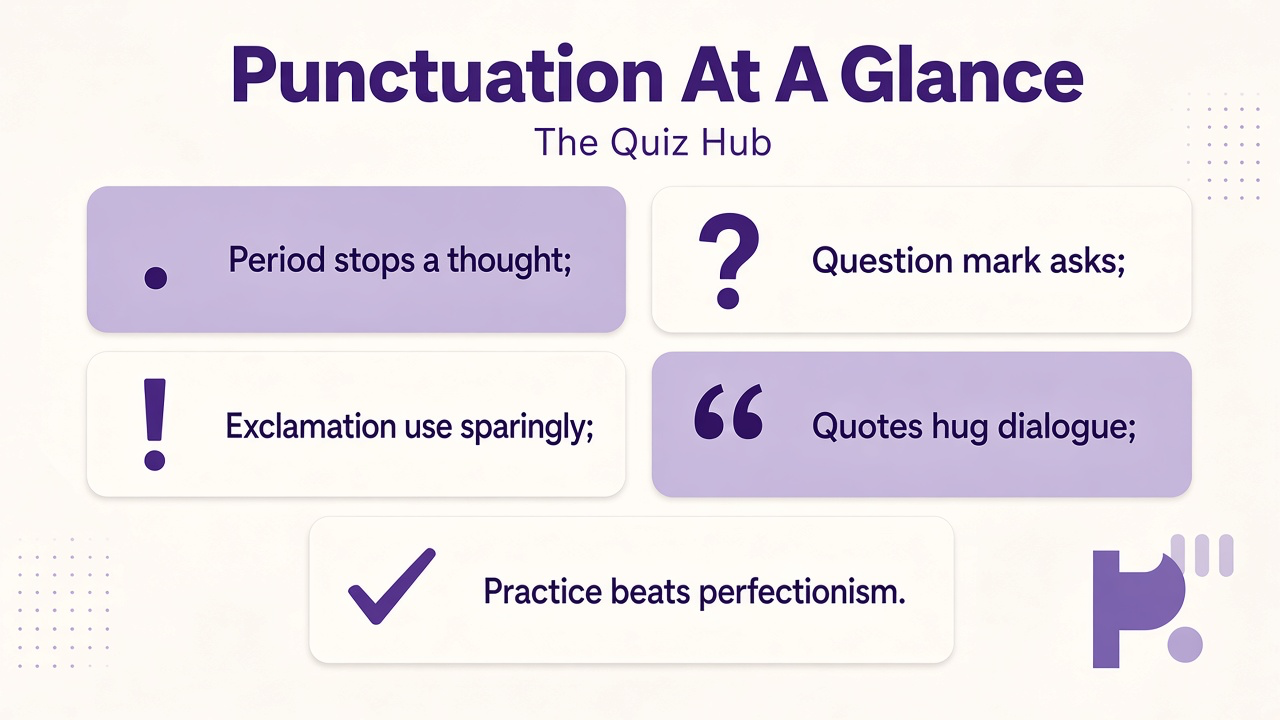
What this quiz can and cannot tell you
Can tell you
- Highlight period, question, and exclamation cues worth revisiting before the next essay draft
- Separate standard classroom habits from texting shortcuts in honest study conversation
- Encourage rewrite loops and unofficial captions when you share scores with classmates
- Spark better questions about dialogue quotes without claiming editor credentials
Cannot tell you
- Prove IQ, gifted placement, or copyeditor hiring from one online screener
- Replace teachers, tutors, style manuals, or graded feedback on long papers
- Give permission to mock dialects, multilingual writers, or strangers over typos
- Certify you for professional publishing work without real training and portfolios
End marks as practice mirrors, not public dunk threads
Search traffic around punctuation quizzes usually wants two things: quick rules for periods and question marks, and relief from grammar-shame forums that treat typos like moral failure. Those goals help when readers notice end marks are habits you can rehearse. They hurt when literacy scores become IQ flexing, or when threads mock dialect speakers while claiming perfect bars. Punctuation language works best when it names classroom habits and kindness limits together.
Dr. James Whitfield reviews cognitive literacy screeners with a simple split: reward honest recall about period stops and question intent at the same time. Period stops a thought tracks finished statements and draft read-aloud habits without ranking slow typists as stupid. Question versus statement tracks direct and indirect questions without forcing every why-sentence into question marks. Exclamation and dialogue tracks sparing emphasis and quote hugs without triple-exclamation texting myths. Practice not shame keeps retake loops, rewrite habits, and anti-mockery stances visible beside scores that were never copyeditor job offers.
Real learners mix bars. You might score high on periods while keeping dialogue moderate, which often describes strong essay closers who still skip quote homework in stories. You might score high on questions with moderate exclamation bars, which can mean careful asking tone yet chatty emphasis online. Reverse items catch overconfidence: endless sentences without stops, why-always-question myths, mandatory triple exclamation texts, or hiring fantasies tied to perfect bars should not inflate charts meant to track layered writing knowledge.
Pair results with siblings on this hub instead of forcing one grammar story. Browse the IQ and cognitive hub for more literacy screeners when you want study habits beside terminal punctuation. Caption shares as practice trivia and skip dunk threads on friends who code-switch or draft on phones.
Assignments and texting seasons refresh faster than forum arguments. When you share results, say practice beats perfectionism. When you borrow punctuation tips, credit teachers who teach kindly and respect writers who learn English alongside other languages. Retake after one timed paragraph and watch whether practice-not-shame bars stay high even when period recall rises, which often means you separated book rules from actual table manners online.
End Marks Quiz FAQ
What does End Marks Quiz measure?
It measures how much you agree with statements about periods stopping thoughts, question versus statement cues, exclamation and dialogue quotes, and practice-not-shame habits. You get an index from 0 to 100 plus four bars. It describes self-reported punctuation literacy on this screener, not IQ rank or copyeditor certification.
Is this an IQ test or editor hiring exam?
No. This is an unofficial educational screener about common end-mark habits for learners. It does not contact publishers, grant editing licenses, or replace instructor feedback on graded work.
Does a high score mean I should correct everyone online?
No. Practice-not-shame items explicitly reject grammar dunk threads. High bars mean you related to literacy statements here, not that you should mock dialects or typos in public pile-ons.
Why include dialogue and exclamation items with basic periods?
End-mark search intent often skips quoted speech and shouting habits that show up in stories and essays. Split bars keep terminal stops separate from dialogue placement so results stay honest about which rules you endorse.
Who reviewed this quiz?
Dr. James Whitfield reviewed the educational framing, anti-shame limits, and separation from IQ or hiring claims. See our editorial policy for review standards.
Reviewed by