
What Expert Assessment of Sociocultural Adaptation measures
This quiz does not decide visas, certify immigration files, or speak for embassies or school placement offices. It measures how much you agree with habit statements grouped four ways: heritage pride about roots, language, and refusing erasure stories; local norms learning about observing courtesy, asking questions, and practicing host-country habits without shame games; both cultures balance about code-switching, family tables, and refusing either-or identity traps; and quiz not visa advice about unofficial screeners, refusing officer fantasies, and captioning shares when friends face real paperwork stress. You rate 22 statements from strongly disagree to strongly agree, with reverse-worded traps so one assimilation myth cannot inflate every bar. Your answers also feed a second chart on closeness and trust habits, because identity strain sometimes overlaps with guarding vulnerability in new groups. The total becomes an index from 0 to 100 where higher means more reported adaptation habits on this screener, not proof an immigration officer would approve your status.
Heritage pride
Name roots, traditions, and dignity without erasure myths.
Local norms learning
Observe, ask, and practice host-country courtesy with humility.
Both cultures balance
Hold heritage and local habits in the same life without either-or traps.
Quiz not visa advice
Unofficial reflection only; legal and embassy processes stay separate.
How it works
Answer 22 agreement items
Rate each statement from Strongly disagree to Strongly agree. Tap Next after each answer.
Answers sort into four domains
Each answer feeds one of four sociocultural adaptation groups, and every item also feeds a closeness and trust layer.
See your index and charts
You get a 0 to 100 index, a band, four domain bars, and a second chart for intimacy habits.
Take the Expert Assessment of Sociocultural Adaptation
Answer 22 short statements to see your sociocultural adaptation index, four domain bars, and a closeness and trust chart.
What your result means
Your index is the average of all 22 answers, scaled from 0 to 100, with reverse-worded items flipped first. Read unofficial limits with heritage pride bars before you treat a high local-norm score as visa evidence. Adaptation habits support kinder study talk; lawyers, teachers, and clinicians still matter for hard questions.
| Band | Index range | Typical reading |
|---|---|---|
| Quieter sociocultural adaptation endorsement | 0 to 35 | Less agreement with heritage pride, local-norm learning, balance, and limit items on this screener. |
| Mixed sociocultural adaptation endorsement | 36 to 65 | Some domains show strong heritage or local-norm habits; others show shame myths, visa fantasies, or either-or traps. |
| Strong sociocultural adaptation endorsement | 66 to 100 | Frequent agreement with heritage pride, local-norm learning, balance, and unofficial limits; still not visa proof. |
Tips at a glance
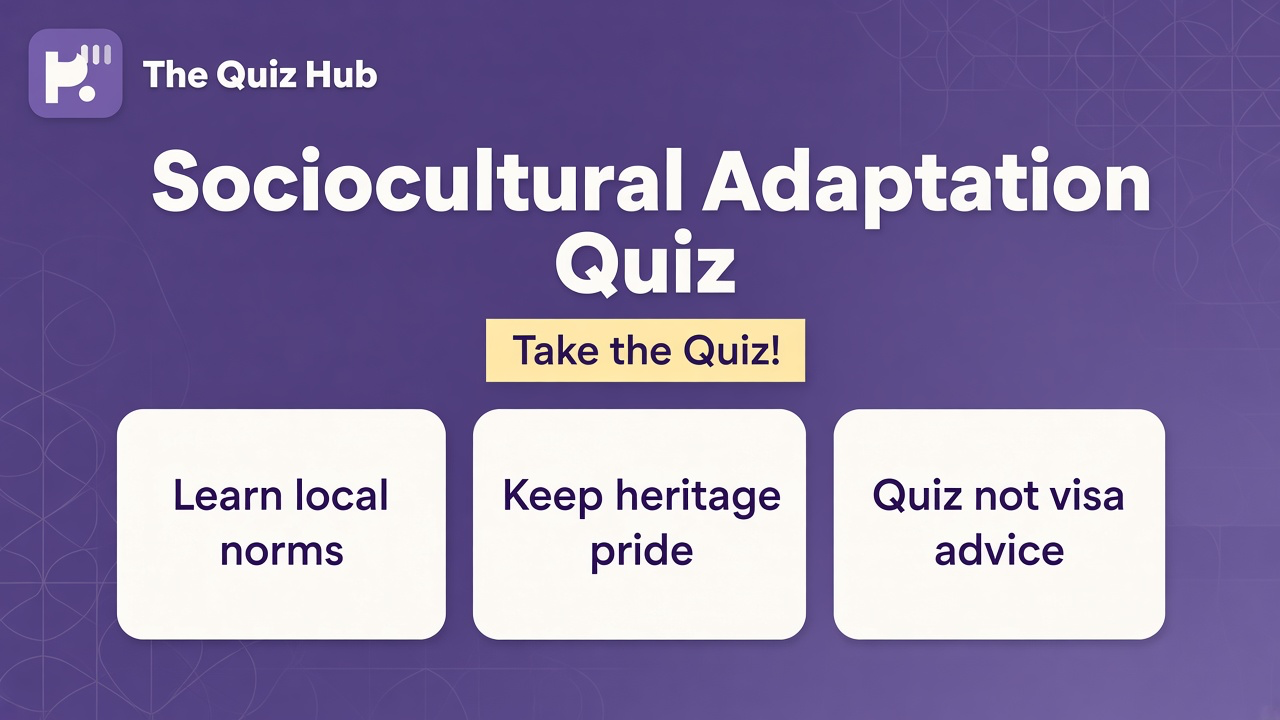
A quick takeaway graphic with topic tips (not your personal quiz scores). Start the quiz for your index, bands, and charts.
What this quiz can and cannot tell you
Can tell you
- Highlight heritage pride, local-norm, and balance habits worth discussing in class or study group
- Separate unofficial reflection from immigration officer or employer fantasies
- Encourage respectful questions about customs before guessing in mixed rooms
- Spark honest talk with friends about unofficial captions on shares
Cannot tell you
- Approve visas, green cards, or work permits from one online screener
- Replace immigration lawyers, embassy staff, or school district placement teams
- Rank whose culture is superior or whose belonging counts more
- Turn adaptation scores into harassment, assimilation shaming, or purity tests
Acculturation habits before visa-thread cosplay
Sociocultural adaptation search intent often blends two needs: prove you respect both cultures for a class or family table, and claim a share lane that feels competent in mixed chats. Those goals help when they spark listening and humble questions. They hurt when meme scores become licenses to mock newcomers, or when threads blur trivia into proof that someone deserves or does not deserve legal status.
Dr. James Whitfield reviews iq-cognitive culture screeners with a simple split: reward honest heritage pride and honest limits on visa pretense at the same time. Heritage pride tracks roots, language, and refusing erasure without costume jokes. Local norms learning tracks observation and courtesy practice without shame games. Both cultures balance keeps code-switching and family stories in the same week without either-or myths. Quiz not visa advice keeps screeners, embassies, and hiring offices separate from bar height.
Real readers mix bars. You may score high on heritage pride while keeping local norms moderate, which often describes strong roots before errands feel easy. You may score high local learning with softer balance items, which can mean good courtesy homework plus family tension about assimilation labels. Reverse items catch sloppy answers: erasure myths, refusing to study local maps, either-or belonging traps, officer approval fantasies, or scoreboard posts tied to high bars should not inflate charts meant to track humble adaptation habits.
Pair results with siblings instead of forcing one identity story. Our brief scale of sociocultural adaptation BSAS leans daily tasks, social norms, language ease, and stress coping on a parallel skill-habit lane. Our brief scale of acculturation orientations BAOS stays on orientation attitudes rather than expert-style adaptation habits. Our culture shock quiz covers general adjustment concern habits when you want a lighter entry point. Browse the IQ and cognitive hub for more study screeners. Caption shares unofficial, read the room, and skip bait threads on friends navigating real paperwork.
Study seasons shift faster than one semester syllabus. When you share results, say respect beats scoreboard. When you borrow tips, credit neighbors who answered etiquette questions and mentors who welcome both languages at the table. Retake after a relocation or school block and watch whether local-norm bars rise even if heritage pride felt easy from the start, which often means you separated performative belonging posts from actual listening.
| Test | Focus |
|---|---|
| Brief scale of sociocultural adaptation BSAS | Daily tasks, social norms, language ease, and stress coping skills rather than expert-style heritage-and-balance habits |
| Brief scale of acculturation orientations BAOS | Acculturation orientation attitudes rather than expert assessment adaptation habit wording |
| Culture shock quiz | General culture shock concern habits rather than heritage pride and local-norm learning bars |
Expert Assessment of Sociocultural Adaptation FAQ
What does Expert Assessment of Sociocultural Adaptation measure?
It measures how much you agree with statements about heritage pride, learning local norms, balancing both cultures, and unofficial quiz limits. You get an index from 0 to 100 plus four bars. It describes self-reported adaptation habits on this screener, not visa readiness or immigration officer decisions.
Is this a validated expert assessment used in clinics?
No. The Quiz Hub wrote this page as an unofficial acculturation literacy screener inspired by study topics, not a published validated expert assessment battery. Licensed clinicians and immigration professionals use separate tools and processes.
Does a high score mean my visa application should succeed?
No. High bars mean you related to adaptation habit statements here. Embassies, lawyers, and employers decide status through legal processes this quiz cannot replace.
How is this different from the BSAS quiz on this site?
BSAS items focus on daily tasks, social norms, language ease, and stress coping skills. This expert assessment lane emphasizes heritage pride, local-norm learning, both-cultures balance, and quiz-not-visa limits with distinct stems.
Who reviewed this quiz?
Dr. James Whitfield, PhD reviewed the unofficial framing, cultural respect limits, and result explanations. See our editorial policy for review standards.
Reviewed by
