What this everyday ethics quiz measures
This page does not award philosophy degrees, replace licensed ethics board training, or grade classroom papers. It measures how much you agree with statements in four groups: harm and care about pausing before rumors, treating daily choices as practice, noticing argument wins that still hurt, weighing care beside convenience, and repairing when impact exceeded intent; promises and honesty about keeping reasonable promises, correcting small lies, avoiding deceptive framing, telling teammates when you cannot deliver, and crediting helpers; consent and permission about asking before sharing stories or photos, accepting no without pressure, checking before fixing problems for others, respecting touch and tag boundaries, and repairing skipped permission; and ethics quiz limits about study-only framing, rejecting perfect-bar moral license myths, and refusing to treat web totals as rank to shame strangers. You rate 22 statements from strongly disagree to strongly agree, with reverse-worded myths so autopilot convenience answers cannot inflate every bar. Your answers also feed a second chart on closeness and trust habits, because gossip shame sometimes overlaps with isolation toward partners. The total becomes an index from 0 to 100 where higher means more endorsed everyday ethics literacy on this screener, not formal credentials or clinical labels.
Harm and care
Consider impact, repair slips, and reject nobody-complained myths.
Promises and honesty
Keep word, correct lies, and credit helpers without court-only ethics traps.
Consent and permission
Ask before sharing, accept no, and respect boundaries in casual settings.
Ethics quiz limits
Study reflection, not degrees, policies, or moral rank from bars.
How it works
Answer 22 agreement items
Rate each statement from Strongly disagree to Strongly agree. Tap Next after each answer.
Answers sort into four domains
Each answer feeds one of four ethics literacy groups, and every item also feeds a closeness and trust layer.
See your index and charts
You get a 0 to 100 index, a band, and two bar charts you can compare after one repair experiment.
Take the Ethics Quiz
Answer 22 short statements to see your everyday ethics literacy index, four domain bars, and a closeness and trust chart.
What your result means
Your index is the average of all 22 answers, scaled from 0 to 100, with reverse-worded myth items flipped first. Read ethics quiz limits with harm and consent bars before you treat any total as philosophy proof or moral rank. Persistent shame deserves skilled support, not only meme reframes.
| Band | Index range | Typical reading |
|---|---|---|
| Building everyday ethics literacy | 0 to 35 | Fewer agreed facts on harm and care, promises, consent, or quiz limits on this screener. |
| Mixed everyday ethics literacy | 36 to 65 | Solid harm or promise language in some domains with consent traps or moral-license myths in others. |
| Stronger everyday ethics literacy | 66 to 100 | Frequent agreement on harm, promises, consent, and ethics quiz limits; still not a philosophy degree. |
Tips at a glance
A quick takeaway graphic with topic tips (not your personal quiz scores). Start the quiz for your index, bands, and charts.
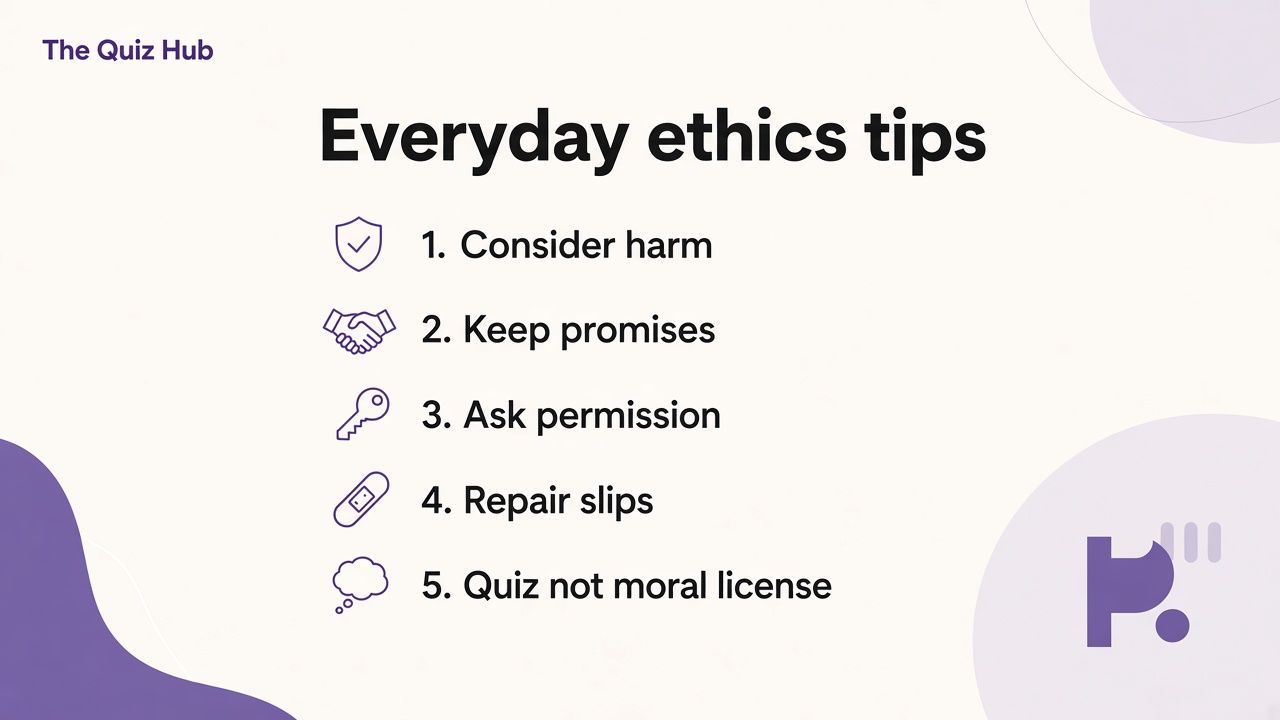
What this quiz can and cannot tell you
Can tell you
- Highlight harm, promise, and consent habits worth trying after the next group chat
- Separate unofficial literacy from degrees, policies, and formal ethics training
- Encourage permission checks and repair without moral rank dunking
- Spark better study questions without web score hiring or shame claims
Cannot tell you
- Replace philosophy coursework, legal advice, or professional ethics certification
- Prove workplace readiness or diagnose disorders from one agree screener
- Excuse gossip, fraud, or broken consent because harm bars scored high once
- Substitute for therapy when shame or rigidity disrupts safety and relationships
Everyday harm, consent, and quiz-not-moral-license limits
Students and workers search ethics quizzes when group chats blur consent and fan totals get mistaken for philosophy grades. Those goals help when bars stay reflection notes for harm and permission habits. They hurt when gossip spreads, nos get pressured, or screeners pose as moral licenses in public threads.
Dr. James Whitfield reviews IQ and cognitive literacy screeners with a simple split: reward honest agreement with widely taught harm-and-consent habits and honest limits on credential overclaim at the same time. Harm and care keeps pause-before-rumor language visible beside nobody-complained traps. Promises and honesty keeps follow-through and correction visible beside court-only ethics myths. Consent and permission keeps ask-first language visible beside closeness-equals-yes-forever traps. Ethics quiz limits keeps degree and policy language honest so readers know formal training differs from fan pages.
Real readers mix bars. You might score high on harm while consent items wobble in busy group chats, which often describes care language atop old assume-consent habits. You might score high on promises with moderate limits, which can mean solid follow-through yet little experience captioning unofficial shares. Reverse items catch sloppy answers: no harm without complaints, white lies never matter, friends consented forever, perfect bars replace permission, or web totals grant shame rank should not inflate bars meant to track layered literacy habits.
Pair results with siblings on this hub instead of forcing one moral story. Our business ethics quiz stays on corporate duty recall when workplace bribery and whistleblowing topics help. Our ethical position questionnaire (EPQ) sibling angles toward idealism and situational judgment literacy on the personality hub. Browse the IQ and cognitive hub for more study screeners. Caption shares as reflection notes, not degree badges.
Terms shift faster than one screenshot. New classes, jobs, and friend groups change which consent lines feel obvious. When you share results, say instructors and policies beat unofficial bars for formal ethics training. When you borrow tips, credit people who modeled ask-first repair. Retake after one month and watch whether limit bars stay high even when harm bars rise, which often means you separated performative virtue from actual permission habits.
| Test | Focus |
|---|---|
| Business ethics quiz | Corporate duty recall rather than everyday harm and consent habits here |
| Ethical position questionnaire (EPQ) | Idealism and situational judgment literacy rather than promise and permission framing here |
| Law quiz | Legal rule literacy rather than everyday consent and repair habits here |
Ethics Quiz FAQ
What does this ethics quiz measure?
It measures how much you agree with statements about harm and care, promises and honesty, consent and permission, and ethics quiz limits. You get an index from 0 to 100 plus four bars. It describes self-rated everyday ethics literacy on this screener, not philosophy grades.
Is this a philosophy degree or professional ethics exam?
No. This is unofficial study literacy inspired by common everyday ethics themes. It does not replace coursework, licensed ethics board training, or employer policies.
How is this different from the business ethics quiz?
The business ethics sibling emphasizes corporate duty recall such as gifts, whistleblowing, and conflicts of interest. This page emphasizes everyday harm, promises, and consent habits in chats, friendships, and school life.
Why include reverse-worded myth statements?
Myth items catch overconfidence. Agreeing that harm needs no complaints, white lies never matter, friends consented forever, or perfect bars grant moral rank should not inflate your literacy index.
Who reviewed this quiz?
Dr. James Whitfield, PhD reviewed the everyday ethics literacy framing, consent and harm limits, and result explanations. See our editorial policy for review standards.
Reviewed by