What the Endocrine Histology Quiz measures
This quiz does not sign out biopsies, authorize clinical diagnoses, or grade your worth as a histology student. It measures how much you agree with introductory endocrine histology study literacy grouped four ways: microscope and slide prep about focus, thickness, orientation, magnification, and dust that fakes structures; gland regions on slides about adrenal cortex versus medulla, pituitary anterior versus posterior cues, thyroid versus parathyroid teaching images, and pancreatic islets beside acini at intro depth; stain and structure literacy about H and E and PAS-style teaching stains as architecture clues rather than automatic malignancy labels; and study not path diagnosis about screeners versus unknown slide boxes, refusing JPEG verdicts on real people, and deferring symptoms to clinicians and pathologists. You rate 22 statements from strongly disagree to strongly agree, with reverse-worded myths so one cram night cannot inflate every bar. Your answers also feed a second chart on closeness and trust habits, because lab stress sometimes chases scores over honest study partners. The total becomes an index from 0 to 100 where higher means more reported slide study literacy on this screener, not proof you may skip pathologist training or clinical workups.
Microscope and slide prep
Focus, thickness, orientation, magnification, and clean optics before naming glands.
Gland regions on slides
Adrenal zones, pituitary regions, thyroid follicles, parathyroid nests, and pancreatic islets at lab depth.
Stain and structure literacy
H and E and teaching stains as architecture cues, not instant disease names.
Study not path diagnosis
Class prep, instructor unknowns, and refusal to treat screeners like sign-out credentials.
How it works
Answer 22 agreement items
Rate each statement from Strongly disagree to Strongly agree. Tap Next after each answer.
Answers sort into four domains
Each answer feeds one of four histology study groups, and every item also feeds a closeness and trust layer.
See your index and charts
You get a 0 to 100 index, a band, and two bar charts you can compare after an endocrine lab week.
Take the Endocrine Histology Quiz
Answer 22 short statements to see your endocrine histology study literacy index, four domain bars, and a closeness and trust chart.
What your result means
Your index is the average of all 22 answers, scaled from 0 to 100, with reverse-worded items flipped first. Read study-not-diagnosis with gland region bars before you treat a high stain score as permission to label unknown biopsies. Literacy supports better questions in lab; real patients deserve pathologists and clinicians more than scoreboard wins.
| Band | Index range | Typical reading |
|---|---|---|
| Building histology study literacy | 0 to 35 | Fewer agreed facts on microscope prep, gland zoning, stain structure cues, or path diagnosis limits on this screener. |
| Mixed histology study literacy | 36 to 65 | Solid habits in some domains with zoning traps, stain myths, or diagnosis fantasies in others. |
| Strong histology study literacy | 66 to 100 | Frequent agreement with prep, zoning, stain structure, and diagnosis-limit habits; still not licensing. |
Tips at a glance
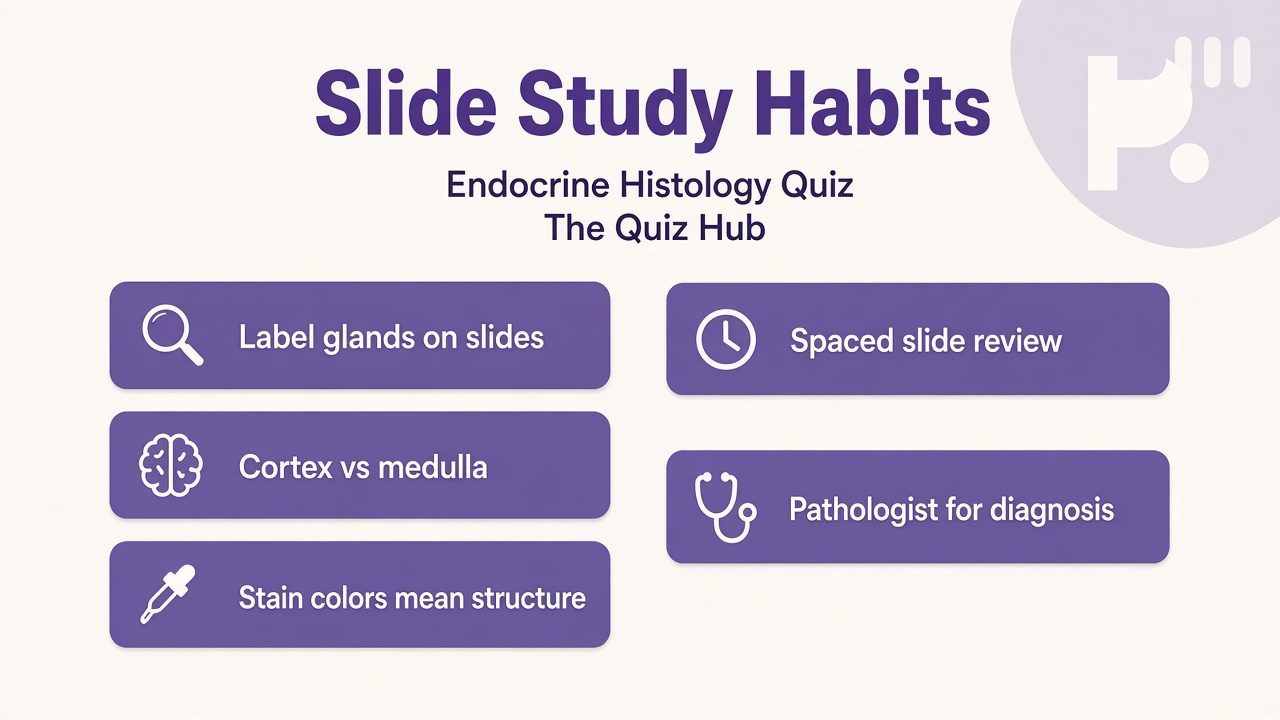
A quick takeaway graphic with topic tips (not your personal quiz scores). Start the quiz for your index, bands, and charts.
What this quiz can and cannot tell you
Can tell you
- Highlight microscope prep, zoning, and stain habits worth revisiting before lab practicals
- Separate slide vocabulary from pathology licensing fantasies without merging them into one trick lane
- Encourage atlas tracing and instructor questions before diagnosis bragging in group chats
- Spark better study talk about cortex versus medulla and islet landmarks
Cannot tell you
- Issue pathology board credentials or sign-out authority from one online screener
- Diagnose endocrine disease from teaching slides, social photos, or quiz bars alone
- Replace histology instructors, unknown slide sets, or licensed pathologist reads
- Turn study scores into harassment, fake tumor labels, or clinical advice for strangers online
Endocrine histology study before sign-out fantasies
Students search endocrine histology quizzes when adrenal zones, pituitary cords, and pancreatic islets blur under the microscope and every stain color feels like a secret diagnosis code. Those goals help when readers treat bars as a study map for atlas landmarks, not as pathology passes or social media verdicts on cropped slides. They hurt when people label friends from JPEGs, skip unknown boxes because trivia felt easy, or debate classmates with pink-equals-cancer myths.
Dr. James Whitfield reviews iq cognitive study screeners with a simple split: reward honest agreement with widely taught slide prep and zoning facts and honest limits on sign-out hype at the same time. Microscope prep keeps focus, thickness, orientation, and magnification visible before naming glands. Gland regions on slides keep cortex versus medulla, pituitary zones, thyroid follicles, and islet clusters visible beside trap items about identical shapes everywhere. Stain literacy keeps H and E and PAS-style teaching stains as architecture cues, not automatic malignancy labels. Study not path diagnosis keeps screeners, unknown sets, clinicians, and pathologists visible beside residency waiver jokes.
Real histology students mix bars. You might score high on stain recall while keeping gland zoning moderate, which often describes color memory before spatial tracing lands. You might score high on zoning with moderate microscope prep, which can mean atlas labels without bench reps. Reverse items catch sloppy answers: pink blobs equal tumors, cortex and medulla are always identical, stain hue replaces architecture, or high indices waive pathology training should not inflate bars meant to track layered study habits.
Pair results with siblings instead of forcing one study story. Our histology quiz spans broader tissue types when your course moves past endocrine blocks. The endocrine system quiz stays on hormone loops and feedback language without repeating every slide stem here. The cartilage histology quiz offers another zoning and stain habit lens when connective tissue weeks stack. Browse the IQ and cognitive test hub for more low stakes study screeners. Caption shares as slide practice and skip diagnosis dunking on friends who never asked for a tumor label.
Syllabus stacks move faster than one atlas highlight. New unknown sets, clinical correlations, and hormone labs shift while old phone photos still sit in group chats. When you share results, say spaced slide review and instructor corrections beat scoreboard. When you borrow study tips, credit faculty who enforce unknown boxes and defer real cases to pathologists. Retake after one endocrine lab cycle and watch whether microscope prep bars rise even if stain trivia lags, which often means you separated performative scoring from actual bench time.
| Test | Focus |
|---|---|
| Endocrine system quiz | Hormone feedback and gland roles in physiology language rather than microscope zoning stems on this page |
| Histology quiz | General histology study literacy rather than endocrine gland slide landmarks here |
Endocrine Histology Quiz FAQ
What does this quiz measure?
It measures how much you agree with introductory endocrine histology slide study literacy across microscope prep, gland regions, stain structure cues, and study-not-diagnosis limits. You get an index from 0 to 100 and four bars. It reflects self-reported habits on this screener, not a pathology board exam or clinical diagnosis.
Can I diagnose disease from teaching slides after a high score?
No. Teaching atlases build landmarks. Real sign-out, unknown slide sets, and patient care belong with trained pathologists and clinicians. This page is study trivia, not sign-out authority.
How is this different from the endocrine system quiz?
This sibling focuses on microscope habits and gland regions on stained slides. The endocrine system quiz focuses on hormone feedback loops and physiology study language with a distinct question bank and zero stem overlap.
Why are some statements worded as myths?
Reverse-worded myths catch overconfidence. Agreeing that any pink blob is a tumor, that cortex and medulla are always identical, or that web scores waive pathology training should not inflate your literacy index.
Who reviewed this quiz?
Dr. James Whitfield, PhD reviewed the educational framing, slide study literacy limits, and result explanations. See our editorial policy for review standards.
Reviewed by