What this European rivers quiz measures
This page does not certify hydrologists, replace dam safety sign-off, or prove you should mock first-time map learners from one agree screener. It measures how much you agree with statements in four groups: major river mouths about Danube, Rhine, Thames, Seine, and Volga reaching correct seas or basins without Po-sharing-Danube delta myths; regional pairings about tying rivers to Austria-Hungary-Romania lanes, Rhine neighbors, Thames-Seine national drills, and Don-Dnieper eastern sheets without Loire-Thames estuary traps; flow direction about downhill Rhine cues, Danube west-to-east simplifications, Thames legend checks, Volga toward Caspian basins, and rejecting all-rivers-south-to-Med classroom fantasies; and quiz not hydrologist about study-only framing, rejecting classmate ridicule myths, refusing dam engineer dunk rights, and refusing fan totals as gauge replacements. You rate 22 statements from strongly disagree to strongly agree, with reverse-worded myths so autopilot responding cannot inflate every bar. Your answers also feed a second chart on closeness and trust habits, because river shame sometimes blocks asking classmates for legend help. The total becomes an index from 0 to 100 where higher means more endorsed river literacy on this screener, not water policy license or harassment permission.
Major river mouths
Danube, Rhine, Thames, Seine, and Volga mouths with Elbe-Oder northern cues.
Regional pairings
Rhine neighbors, Danube capitals corridor, Thames-Seine nations, Don and Dnieper east.
Flow direction
Downhill arrows, meme legend checks, and reject all-south-to-Med traps.
Quiz not hydrologist
Atlas practice, not field gauges, mockery, or dam substitutes from bars.
How it works
Answer 22 agreement items
Rate each statement from Strongly disagree to Strongly agree. Tap Next after each answer.
Answers sort into four domains
Each answer feeds one of four European rivers literacy groups, and every item also feeds a closeness and trust layer.
See your index and charts
You get a 0 to 100 index, a band, and two bar charts you can compare after one mouth-and-arrow outline week.
Take the European Rivers Quiz
Answer 22 short statements to see your European rivers literacy index, four domain bars, and a closeness and trust chart.
What your result means
Your index is the average of all 22 answers, scaled from 0 to 100, with reverse-worded myth items flipped first. Read quiz-not-hydrologist with flow bars before you treat any total as engineering proof or mockery license. Persistent shame about geography class deserves instructor help, not only meme reframes.
| Band | Index range | Typical reading |
|---|---|---|
| Building European rivers literacy | 0 to 35 | Fewer agreed facts on major mouths, regional pairings, flow direction, or quiz limit statements on this screener. |
| Mixed European rivers literacy | 36 to 65 | Solid mouth recall in some domains with pairing traps or flow-myth items snagging a bar. |
| Stronger European rivers literacy | 66 to 100 | Frequent agreement on mouths, pairings, flow cues, and quiz limits; still not hydrology certification. |
Tips at a glance
A quick takeaway graphic with topic tips (not your personal quiz scores). Start the quiz for your index, bands, and charts.
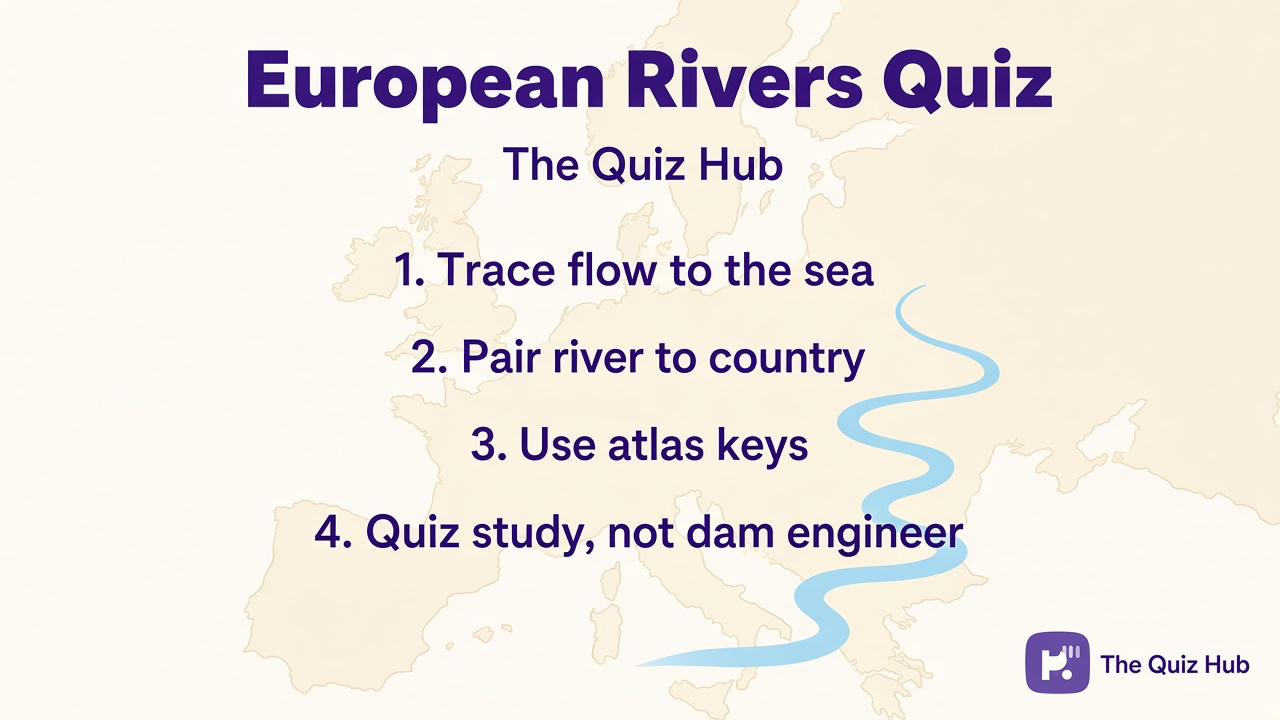
What this quiz can and cannot tell you
Can tell you
- Highlight mouth, pairing, and flow habits worth trying before the next river unit or map quiz night
- Separate unofficial literacy from licensed hydrology fieldwork and dam engineering sign-off
- Encourage atlas legend checks without classmate mockery or dam snob rank
- Spark better study questions without web score hiring or shame claims
Cannot tell you
- Replace hydrology exams, water treaty counsel, or formal geography credentials
- Prove you should comment on flood policy or dam safety from one agree screener
- Excuse mocking classmates because mouth bars scored high once
- Substitute for therapy when online rank arguments disrupt sleep and friendships
River mouths, flow arrows, and quiz-not-hydrologist limits
Students search European rivers quizzes when Danube and Rhine mouths blur, Thames arrows flip on memes, and travel threads treat map scores like dam engineering rank. Those goals help when bars stay reflection notes for mouth, pairing, and flow habits. They hurt when people mock classmates or sell expertise from fan totals alone.
Dr. James Whitfield reviews IQ and cognitive literacy screeners with a simple split: reward honest agreement with widely taught river facts and honest limits on credential overclaim at the same time. Major river mouths keeps Danube, Rhine, Thames, Seine, and Volga basin labels visible beside Po-equals-Danube delta myths. Regional pairings keeps Rhine neighbors and Danube corridor countries visible beside Loire-Thames shared estuary traps. Flow direction keeps downhill arrows and Volga-Caspian cues visible beside all-rivers-south fantasies. Quiz not hydrologist keeps gauge and dam language honest so readers know licensed fieldwork differs from fan pages.
Real readers mix bars. You might score high on major mouths while flow bars wobble, which often describes delta photo recall without arrow tracing. You might score high on flow direction with moderate pairings, which can mean solid downhill cues yet shaky Don-Dnieper country lists. Reverse items catch sloppy answers: Po sharing Danube mouth, Loire into Thames, every river south to Med, classmate ridicule licenses, or fan totals as gauge rank should not inflate bars meant to track layered literacy habits.
Pair results with siblings on this hub instead of forcing one river story. Our Europe bodies of water quiz stays on seas and mixed water frames with a separate stem bank from this river-only page. The Europe map quiz sibling stays on country outlines rather than mouth-and-arrow drills here. Browse the IQ and cognitive hub for more study screeners. Caption shares as atlas practice, not hydrologist badges.
Trips and semesters move faster than trivia apps. River units arrive once a year, but legend reading stays useful all year. When you share results, say mouths need direction cues. When you borrow tips, credit teachers who made you sketch arrows before naming capitals. Retake after one outline week and watch whether quiz-not-hydrologist bars stay high even when mouth bars rise, which often means you separated dam snob performance from actual atlas habits.
| Test | Focus |
|---|---|
| Europe bodies of water quiz | Seas plus mixed water literacy rather than river-only mouth and flow stems on this page |
| Europe map quiz | Country political outlines rather than Danube-Rhine mouth drills here |
| Europe physical map quiz | Relief and physical features rather than flow arrow literacy on this slug |
European Rivers Quiz FAQ
What does this European rivers quiz measure?
It measures how much you agree with statements about major river mouths, regional pairings, flow direction, and quiz not hydrologist limits. You get an index from 0 to 100 plus four bars. It describes self-rated river atlas literacy on this screener, not licensed hydrology credentials.
How is this different from the Europe bodies of water quiz?
The Europe bodies of water sibling blends southern and northern seas with river mouth items in one sea-heavy bank. This page focuses on river mouths, country pairings, and flow arrows with a separate stem bank written for zero shared sentences with that sibling.
Does a high score mean I should comment on dam safety or flood policy?
No. High bars mean you related to atlas literacy statements here. Gauges, dam sign-off, and treaty work still belong to trained professionals. Quiz not hydrologist items explicitly reject mockery and credential dunk rights.
Why include Danube, Rhine, Thames, Seine, and Volga together?
Intent brief readers asked for major mouth literacy across western, central, and eastern lanes. Split bars keep Caspian basin stories separate from North Sea and Black Sea mouths so results stay honest about which habits you endorse.
Who reviewed this quiz?
Dr. James Whitfield, PhD reviewed the river literacy framing, hydrology-limit language, and result explanations. See our editorial policy for review standards.
Reviewed by