What the Figurative Language Quiz measures
This quiz does not grade AP essays, certify English teaching licenses, or sort you into a publishing house. It measures how much you agree with figurative language study habits grouped four ways: simile spotting about like and as comparisons in stories, sports writing, and homework passages without every-like traps; metaphor framing about is and becomes comparisons, extended metaphor spans, plain-language rewrites, and roller-coaster week idioms in figurative dress; personification and imagery about human actions on weather or objects, sensory details beyond bare color words, and news features with picture-rich lines; and study not exam cert about class supplement framing, kind study-group questions, teachers owning grades, and refusing bar-height AP waivers. You rate 22 statements from strongly disagree to strongly agree, with reverse-worded items so sloppy like spotting cannot inflate every bar. Your answers also feed a second chart on closeness and trust habits, because workshop culture sometimes chases label dunking instead of curiosity. The total becomes an index from 0 to 100 where higher means more reported figurative study habits and kind limits on this screener, not proof an exam board endorsed your markup style.
Simile spotting
Like and as comparisons in prose, sports lines, and homework without every-like myths.
Metaphor framing
Is comparisons, extended spans, plain-language checks, and figurative week language.
Personification and imagery
Human traits on objects, named senses, and news detail beyond color words alone.
Study not exam cert
Class supplement reflection, kind questions, and no AP substitute from online bars.
How it works
Answer 22 agreement items
Rate each statement from Strongly disagree to Strongly agree. Tap Next after each answer.
Answers sort into four domains
Each answer feeds one of four figurative study groups, and every item also feeds a closeness and trust layer.
See your index and charts
You get a 0 to 100 index, a band, four domain bars, and a second chart for intimacy habits.
Take the Figurative Language Quiz
Answer 22 short statements to see your figurative language study habits index, four domain bars, and a closeness and trust chart.
What your result means
Your index is the average of all 22 answers, scaled from 0 to 100, with reverse-worded items flipped first. Higher means more reported figurative language study habits and kind limits on this screener. Read study-not-exam bars together with metaphor framing before you treat the total as AP readiness.
| Band | Index range | Typical reading |
|---|---|---|
| Building figurative study habits | 0 to 35 | Fewer agreed simile, metaphor, personification, imagery, or study-limit items on this screener. |
| Mixed figurative study habits | 36 to 65 | Some comparison facts mixed with every-like-is-simile myths or AP credential slips. |
| Strong figurative study habits | 66 to 100 | Frequent simile, metaphor, personification, imagery, and study-limit agreement with humble sharing. |
Tips at a glance
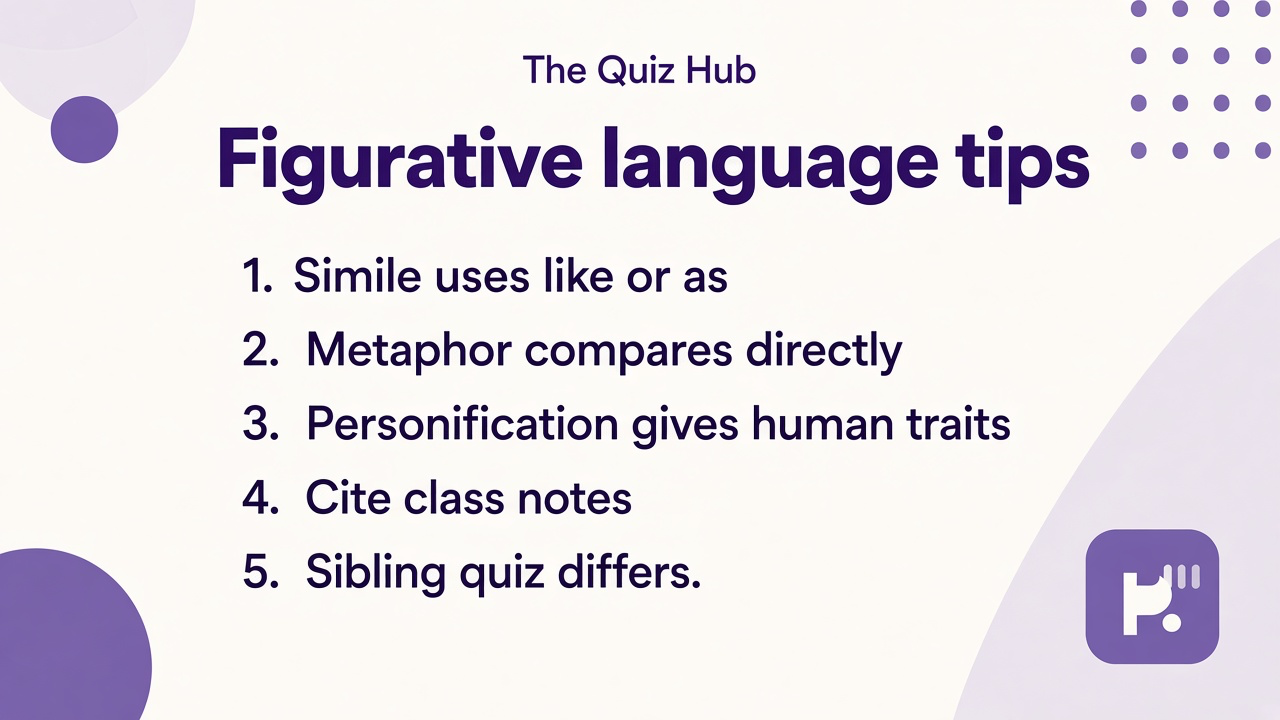
A quick takeaway graphic with topic tips (not your personal quiz scores). Start the quiz for your index, bands, and charts.
What this quiz can and cannot tell you
Can tell you
- Highlight simile, metaphor, and personification habits worth practicing in daily reading
- Separate self-study reflection from formal AP or state ELA prep in plain language
- Encourage kind study-group questions without public label shaming
- Spark better markup questions for teachers or writing partners
Cannot tell you
- Replace AP Literature exams, state ELA tests, or graded essays
- Prove poet rank or publishing readiness from one agree screener
- Certify affiliation with College Board, textbook publishers, or exam vendors
- Justify mocking classmates who read figurative lines literally on first pass
Figurative language study without AP cosplay
Search traffic around figurative language quizzes often mixes label drills with exam anxiety. Similes compare unlike things with like or as so readers picture a shared quality, whether the line lives in a novel, a sports recap, or homework. Not every like word is a simile; sometimes like only introduces an example list. That distinction keeps markup honest.
Metaphors carry meaning across domains when writers say one thing is another without like or as. Coaches call rookies spark plugs metaphorically. Difficult weeks become roller coasters without amusement parks on the page. Extended metaphors can run through paragraphs while nonfiction still returns to literal facts you can verify. Claiming is always literal is a myth screeners flag so students practice layered reading.
Personification gives human actions to wind, gates, or clocks for mood. Imagery names senses beyond bare color words: squealing metal, warm bread smell, or salt air on skin. News features use imagery without poetry unit headers. Treating every color adjective as automatic imagery hides which sense the writer targets.
Study limits keep scores humble. This screener supplements class; AP and state ELA exams own formal proof. Kind study-group questions beat public dunking when someone swaps simile and metaphor names. Teachers and tutors own rubrics; bars do not replace them or waive essay sections.
Pair results with siblings instead of one giant language bank. Our figures of speech quiz covers idiom, hyperbole, and oxymoron with stems written to avoid overlap with this simile and metaphor page. Our fiction and nonfiction quiz helps shelf genre habits when research sources need nonfiction blurbs. Browse the IQ and cognitive test hub for more study screeners. Retake after you mark one comparison per chapter; habits grow when you reread with a pencil, not when you win comment-section label fights.
| Test | Focus |
|---|---|
| Figures of speech quiz | Idiom, hyperbole, and oxymoron stems separate from this simile and metaphor bank |
| Fiction and nonfiction quiz | Library genre and blurb literacy rather than comparison markup in prose |
Figurative Language Quiz FAQ
What does the Figurative Language Quiz measure?
It measures how much you agree with figurative language study habits across simile spotting, metaphor framing, personification and imagery, and study-not-exam limits. You get an index from 0 to 100 and four bars. It reflects self-reported habits on this screener, not an AP exam score.
How is this different from the figures of speech quiz?
This page focuses on simile, metaphor, personification, and sensory imagery in prose study habits. The figures of speech sibling uses separate stems on idiom, hyperbole, oxymoron, and related expression habits without repeating this comparison bank.
Can I skip AP prep if my bars look high?
No. Formal exams, essays, and teachers own course credentials. This screener is reflection only and cannot waive AP or state ELA requirements.
Why are some items worded as myths?
Reverse-worded myths catch overconfidence. Agreeing that every like word is a simile, that is sentences are always literal, that any color word equals imagery, or that online bars waive AP essays should not inflate the study index.
Who reviewed this quiz?
Dr. James Whitfield reviewed the educational framing, study-not-exam limits, and result explanations. See our editorial policy for review standards.
Reviewed by