What the Frog Anatomy Quiz measures
This quiz does not diagnose patients, certify dissection skill for licensing boards, or grade your worth as a student. It measures how much you agree with introductory frog dissection organ literacy grouped four ways: lab orientation about dorsal and ventral surfaces, cranial and caudal habits, cavity separation, pinning that follows instructor diagrams, and rejecting face-pinning or label slang myths; organ system literacy about three-chamber heart compare charts, liver orientation, lung placement, digestive tract checklists, syllabus-safe language, and rejecting zero-overlap or patient-counseling fantasies from frog photos; frog body basics about cutaneous respiration, cloaca roles at approved depth, manual citations, and rejecting shock-photo or lecture-skipping myths; and lab kindness and med limits about study screeners, rejecting med-school and safety-skip myths from web scores, respect policies over prank threads, and kindness toward partners still learning terms. You rate 22 statements from strongly disagree to strongly agree, with reverse-worded myths so agreeing with eye pinning, med licensure from bars, or heart trivia dismissal cannot inflate every bar. Your answers also feed a second chart on closeness and trust habits, because lab anxiety sometimes chases organ scores over honest instructor questions. The total becomes an index from 0 to 100 where higher means more reported frog organ study literacy on this screener, not proof you aced wet lab or earned clinical credentials.
Lab orientation
Dorsal, ventral, pinning, and cavity intro habits.
Organ system literacy
Heart, liver, gut, and lungs on compare charts without human diagnosis claims.
Frog body basics
Skin respiration, cloaca, and syllabus-safe labels without prank photos.
Lab kindness and med limits
Respect, instructor citations, and no med-license myths from bars.
How it works
Answer 22 agreement items
Rate each statement from Strongly disagree to Strongly agree. Tap Next after each answer.
Answers sort into four domains
Each answer feeds one of four frog organ study literacy groups, and every item also feeds a closeness and trust layer.
See your index and charts
You get a 0 to 100 index, a band, four domain bars, and a second chart for intimacy habits.
Take the Frog Anatomy Quiz
Answer 22 short statements to see your frog anatomy study literacy index, four domain bars, and a closeness and trust chart.
What your result means
Your index is the average of all 22 answers, scaled from 0 to 100, with reverse-worded items flipped first. Higher means more reported frog organ study literacy on this screener. Read lab kindness limits with organ bars before you treat a high orientation score as lab immunity or human health advice.
| Band | Index range | Typical reading |
|---|---|---|
| Building frog anatomy literacy | 0 to 35 | Fewer agreed facts on lab orientation, organ systems, frog body basics, or lab kindness limits on this screener. |
| Mixed frog anatomy literacy | 36 to 65 | Solid facts in some domains with orientation traps, organ myths, cloaca shortcuts, or med-license gaps in others. |
| Strong frog anatomy literacy | 66 to 100 | Frequent agreement with accurate frog organ study trivia and healthy lab kindness limits; still not medical licensure. |
Tips at a glance
A quick takeaway graphic with topic tips (not your personal quiz scores). Start the quiz for your index, bands, and charts.
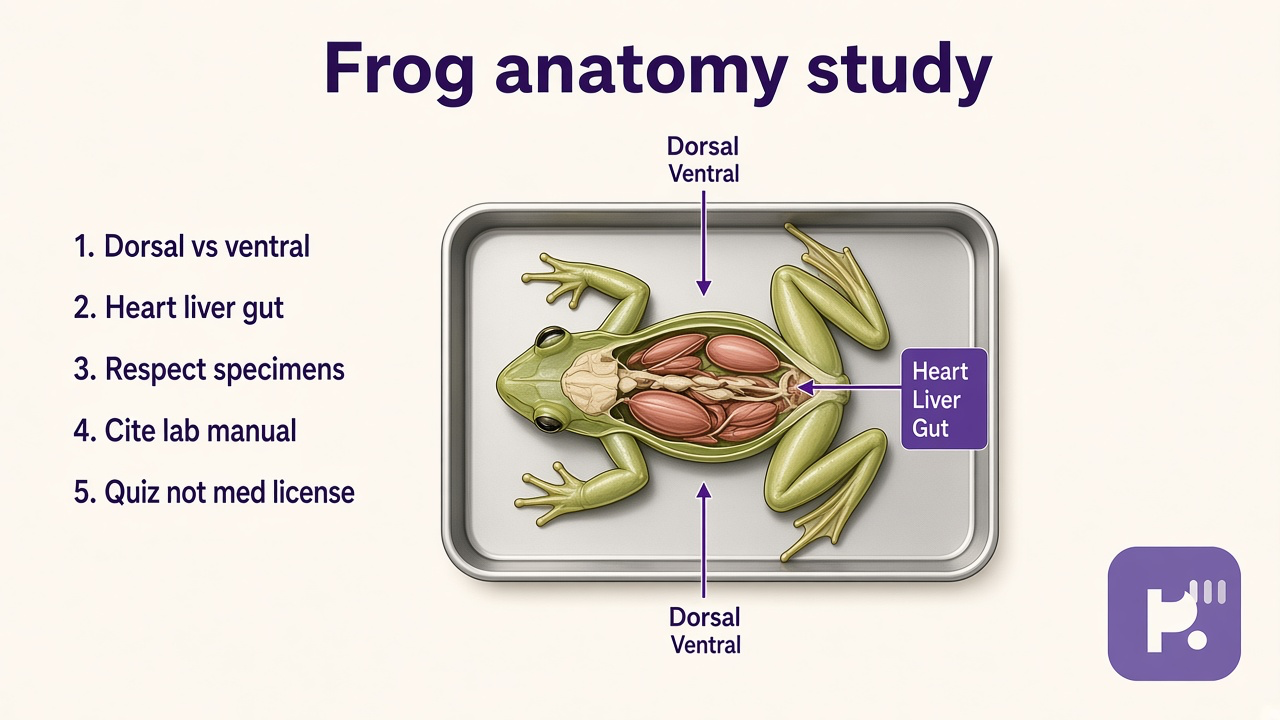
What this quiz can and cannot tell you
Can tell you
- Clarify dorsal versus ventral and major organ compare vocabulary in plain high school language
- Highlight cloaca, heart, and lung syllabus myths worth unlearning before labs
- Encourage manual tracing and instructor questions without shame
- Spark better questions during comparative anatomy lectures and study groups
Cannot tell you
- Diagnose human chest, abdominal, or reproductive conditions from one online screener
- Replace instructor supervision, safety rules, or alternative assignment policies
- Authorize disrespectful specimen photos or harassment in lab group chats
- Turn study scores into medical advice, dosing tips, or surgery readiness claims
Frog dissection organ study before med-license myth threads
Students search frog anatomy quizzes when pinning day approaches, three-chamber heart diagrams tangle with liver labs, and social feeds treat specimen photos like board exam passes. Those goals help when readers treat bars as a study map for orientation and organ charts, not as patient counseling or license proof. They hurt when people skip safety briefings because stomach labels felt easy, mock partners still learning dorsal terms, or post prank content that violates class ethics.
Dr. James Whitfield reviews iq-cognitive study screeners with a simple split: reward honest agreement with widely taught frog lab facts and honest limits on medical overclaim at the same time. Lab orientation keeps dorsal and ventral language, cavity separation, and respectful pinning visible beside trap items about face pins and cranial slang. Organ system literacy keeps heart, liver, lung, and intestine compare habits visible beside myths that frogs share zero human teaching overlap or that web bars authorize patient advice. Frog body basics keep cutaneous respiration, cloaca roles, and syllabus-safe reproductive labels visible beside shock-photo and manual-skipping jokes. Lab kindness and med limits keep instructors, respect policies, and kindness visible beside med-school and glove-skip fantasies.
Real students mix bars. You might score high on organ literacy while keeping orientation moderate, which often describes name memory before pinning habits land. You might score high on kindness limits with moderate cloaca bars, which can mean solid respect talk yet little heart tracing practice. Reverse items catch sloppy answers: eye pinning, med licensure from quizzes, heart trivia dismissal, or harassment passes should not inflate bars meant to track layered study habits.
Pair results with siblings instead of forcing one study story. Our frog muscle anatomy quiz covers hindlimb muscle labeling with wholly separate stems from organ pinning on this page. Our fetal pig anatomy quiz reinforces comparative dissection ethics when your course rotates specimens. Our human body quiz stays on broader organ warm-ups when frog parallels sit beside general body units. Browse the IQ and cognitive test hub for more low-stakes study screeners. Caption shares as class practice and skip specimen dunking on friends who never asked for a grade.
Units move faster than one lab photo. New instructor demos, opt-out policies, and comparative human charts shift while old pinning sketches still sit in camera rolls. When you share results, say manual tracing and teacher questions beat scoreboard. When you borrow study tips, credit instructors who enforce specimen respect. Retake after one lab cycle and watch whether orientation bars rise even if cloaca trivia lags, which often means you separated performative scoring from actual syllabus work.
| Test | Focus |
|---|---|
| Frog muscle anatomy quiz | Hindlimb muscle labeling and attachment habits rather than organ pinning and cloaca literacy on this page |
| Fetal pig anatomy quiz | Pig specimen orientation and urogenital compare units rather than frog organ stems here |
| Human body quiz | Broad organ trivia rather than four-domain frog dissection kindness limits on this screener |
Frog Anatomy Quiz FAQ
What does the Frog Anatomy Quiz measure?
It measures how much you agree with frog dissection organ study literacy across lab orientation, organ systems, frog body basics, and lab kindness with med limits. You get an index from 0 to 100 and four bars. It reflects self-reported knowledge on this screener, not a lab practical grade, medical license, or clinical workup.
Is this the same as my dissection lab practical?
No. This page builds study-habit and organ concept reflection aligned with common high school frog units. Official lab practicals, safety rules, and your instructor govern specimens, pinning, and graded work.
How is this different from the frog muscle anatomy quiz?
The frog muscle anatomy quiz tracks hindlimb muscle names, origins, and labeling habits with separate stems. This quiz tracks organ orientation, heart-liver-gut-lung literacy, cloaca basics, and lab kindness without muscle bundle vocabulary.
Does a high score mean I can give medical advice?
No. High bars mean you related to study statements here. Human health questions need licensed clinicians and appropriate evaluation, not agree-quiz bars from frog lab trivia.
Who reviewed this quiz?
Dr. James Whitfield reviewed the educational framing, dissection organ study literacy limits, and result explanations. See our editorial policy for review standards.
Reviewed by