What Electromagnetic Spectrum Quiz measures
This quiz does not interpret medical images, prescribe sun protection, or certify radiology staff. It measures how much you agree with beginner-friendly spectrum habits grouped four ways: spectrum order about radio through gamma sequence, visible between infrared and ultraviolet, and intro ionizing contrast without gamma-longer-than-radio myths; wavelength and frequency about inverse relationships, labeled chart axes, and hertz versus meter habits instead of color-only memory; UV and eye safety about sunburn and eye risk, sunglasses and welding shield norms, demo distance rules, and rejecting base-tan eye myths; and study not medical advice about teachers and librarians, licensed clinicians, and refusing to diagnose from photos or meme charts. You rate 22 statements from strongly disagree to strongly agree, with reverse-worded myths so one rainbow clipart cannot inflate every bar. Your answers also feed a second chart on closeness and trust habits, because study stress sometimes chases mnemonic perfection over honest I-will-see-an-eye-doctor limits. The total becomes an index from 0 to 100 where higher means more reported spectrum literacy on this screener, not proof you should comment on clinical scans.
Spectrum order
Radio through gamma placement, visible band, and intro ionizing contrast on charts.
Wavelength and frequency
Inverse habits, axis labels, and hertz versus meter reading at intro depth.
UV and eye safety
Sunburn caution, eyewear, lab demos, and rejecting tanning-bed eye myths.
Study not medical advice
Class prep separate from imaging pros, device manuals, and symptom care.
How it works
Answer 22 agreement items
Rate each statement from Strongly disagree to Strongly agree. Tap Next after each answer.
Answers sort into four domains
Each answer feeds one of four spectrum literacy groups, and every item also feeds a closeness and trust layer.
See your index and charts
You get a 0 to 100 index, a band, and two bar charts you can compare with a lab partner after waves review.
Take the Electromagnetic Spectrum Quiz
Answer 22 short statements to see your electromagnetic spectrum literacy index, four domain bars, and a closeness and trust chart.
What your result means
Your index is the average of all 22 answers, scaled from 0 to 100, with reverse-worded items flipped first. Read UV safety and study-not-medical together before you treat a high spectrum order bar as license for clinical opinions. Intro literacy supports safer study habits; clinicians still own diagnosis and treatment.
| Band | Index range | Typical reading |
|---|---|---|
| Building spectrum literacy | 0 to 35 | Fewer agreed facts on band order, wavelength habits, UV safety, or study-not-medical items on this screener. |
| Mixed spectrum literacy | 36 to 65 | Solid facts in some domains with gamma-radio traps, frequency myths, or medical-limit blind spots in others. |
| Strong spectrum literacy | 66 to 100 | Frequent agreement with order, wavelength, UV, and study-not-medical habits; still not clinical licensure. |
Tips at a glance
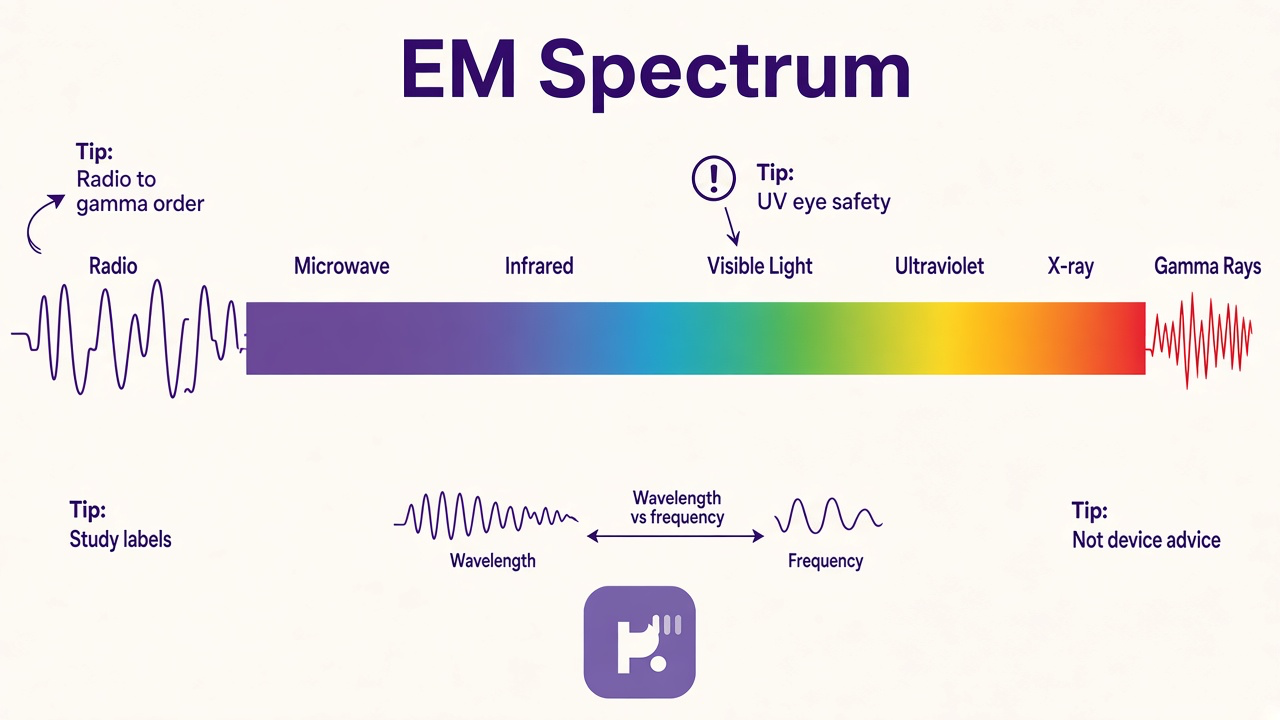
A quick takeaway graphic with topic tips (not your personal quiz scores). Start the quiz for your index, bands, and charts.
What this quiz can and cannot tell you
Can tell you
- Highlight band order and axis-reading habits worth revisiting before waves exams
- Separate classroom charts from medical authority without merging them into one trick lane
- Encourage UV shade and goggle language for lab and outdoor study groups
- Spark better questions for teachers when mnemonics disagree with labeled posters
Cannot tell you
- Read X-rays, MRIs, or pathology from one online agree screener
- Prescribe sunscreen regimens, tanning plans, or vision treatment online
- Replace ophthalmologists, dermatologists, radiologists, or emergency care
- Turn literacy scores into harassment, photo-diagnosis dares, or fake clinical badges online
Spectrum literacy without meme-clinic crossover
Search traffic around electromagnetic spectrum quizzes usually wants two things: memorize radio-through-gamma order without embarrassing gamma-longer-than-radio mistakes, and sound informed when friends debate tanning beds and sunglasses. Those goals help when readers notice that chart literacy starts safer study, not photo diagnosis in group chats. They hurt when people treat bars like radiology licenses, skip welding eye protection because they aced mnemonics, or shame classmates who still read axis labels slowly.
Dr. James Whitfield reviews iq cognitive study screeners with a simple split: reward honest agreement with widely taught band order and honest limits on medical hype at the same time. Spectrum order tracks radio through gamma placement, visible between infrared and ultraviolet, and intro ionizing contrast without word-size wavelength myths. Wavelength and frequency tracks inverse relationships and labeled axes beside color-only memory. UV and eye safety keeps sunburn, eyewear, demo distance, and anti-tanning-myth habits visible beside beach brag culture. Study not medical advice keeps teachers, librarians, and clinicians visible beside cropped chart screenshots that pretend to replace device manuals.
Real readers mix bars. You might score high on spectrum order while keeping UV safety moderate, which often describes poster memory with shade habits still building. You might score high on wavelength language with moderate study-not-medical items, which can mean strong axis reading yet little humility about clinical photos. Reverse items catch sloppy answers: gamma longer than radio by word size, doubling frequency always doubling wavelength, tanning beds preventing eye injury from trivia, or diagnosing moles from chat photos should not inflate bars meant to track layered literacy.
Pair results with siblings on this hub instead of cramming every electromagnetism topic into one share. Our electricity quiz leans voltage and outlet safety when circuits units precede waves. The electromagnetic induction quiz stays on changing flux and coil intuition when magnetism follows your chart work. Browse the IQ and cognitive test hub for more low-stakes study screeners. Caption shares as class prep and skip clinical dunking on friends who never asked for scan opinions.
Posters and devices change faster than one classroom mural. New phone spectrum marketing, old welding labs, and animation styles shift which band example sticks. When you share results, say shade and clinicians beat scoreboard. When you borrow chart tips, credit teachers who label axes kindly and respect people who ask humble questions. Retake after one labeled waves lab and watch whether UV bars rise even if order trivia bars lag, which often means you separated performative scoring from actual eye-protection limits.
| Test | Focus |
|---|---|
| Electricity quiz | Voltage and household safety rather than radio-through-gamma chart order |
| Electromagnetic induction quiz | Coil and flux intuition rather than UV and wavelength axis habits |
Electromagnetic Spectrum Quiz FAQ
What does Electromagnetic Spectrum Quiz measure?
It measures how much you agree with statements about spectrum order, wavelength and frequency habits, UV eye safety, and study-not-medical limits. You get an index from 0 to 100 plus four bars. It describes self-rated intro waves literacy on this screener, not medical credentials, imaging reads, or proof you should diagnose skin or eye conditions.
Is this medical or radiology advice?
No. This page builds general chart and safety literacy for class and curiosity. Licensed clinicians and device manuals own diagnosis, dosing, and treatment decisions this screener cannot replace.
Does a high score mean tanning beds are safe for my eyes?
No. UV safety items reject base-tan eye myths. Follow health authorities and eyewear rules regardless of online agree scores.
Why mix spectrum order with UV safety?
Waves search intent blends chart homework and sun-exposure habits. Safety items stay separate from band trivia so results show whether shade and goggle habits match mnemonic recall.
Who reviewed this quiz?
Dr. James Whitfield reviewed the educational framing, study-not-medical limits, and result explanations. See our editorial policy for review standards.
Reviewed by