What this quiz measures
This quiz does not certify fine-arts degrees, judge portfolio admissions, or rank whose museum outfit counts. It measures how much you agree with beginner-friendly art vocabulary grouped four ways: line and shape about marks, contour edges, geometric versus organic shape, positive and negative space, and implied texture without mood-blind line myths; color and value about hue versus lightness, warm and cool wheels, complementary pairs, contrast habits, and rejecting one-size gray mixing myths; space and depth about overlap, scale, foreground planes, sculptural form versus flat shape, and one-point perspective without treating margins as the only space story; and museum and study habits about slow looking, sketch practice without degree flexing, label curiosity, and refusing credential bullying. You rate 22 statements from strongly disagree to strongly agree, with reverse-worded myths so one color-filter meme cannot inflate every bar. Your answers also feed a second chart on closeness and trust habits, because creative study stress sometimes chases perfect terminology over honest sharing limits. The total becomes an index from 0 to 100 where higher means more reported vocabulary literacy on this screener, not proof you should lecture docents.
Line and shape
Contour marks, geometric versus organic shape, negative space, and texture cues at intro depth.
Color and value
Hue families, warm and cool wheels, complements, and contrast without universal mixing myths.
Space and depth
Overlap, planes, sculptural form, and beginner perspective on flat images.
Museum and study habits
Slow looking, sketchbooks, label reading, and humble sharing without credential dunking.
How it works
Answer 22 agreement items
Rate each statement from Strongly disagree to Strongly agree. Tap Next after each answer.
Answers sort into four domains
Each answer feeds one of four art vocabulary groups, and every item also feeds a closeness and trust layer.
See your index and charts
You get a 0 to 100 index, a band, and two bar charts you can compare with a studio partner after review.
Take the Elements of Art Quiz
Answer 22 short statements to see your elements-of-art literacy index, four domain bars, and a closeness and trust chart.
What your result means
Your index is the average of all 22 answers, scaled from 0 to 100, with reverse-worded items flipped first. Read museum study habits together with terminology bars before you treat a high color bar as license to mock casual visitors. Intro literacy supports kinder looking; credentialed teachers and historians still own deep scholarship.
| Band | Index range | Typical reading |
|---|---|---|
| Building art vocabulary literacy | 0 to 35 | Fewer agreed facts on line and shape, color and value, space cues, or museum study habits on this screener. |
| Mixed art vocabulary literacy | 36 to 65 | Solid facts in some domains with perspective traps, color myths, or sharing blind spots in others. |
| Strong art vocabulary literacy | 66 to 100 | Frequent agreement with line, color, space, and museum habits; still not degree or curator licensure. |
Tips at a glance
A quick takeaway graphic with topic tips (not your personal quiz scores). Start the quiz for your index, bands, and charts.
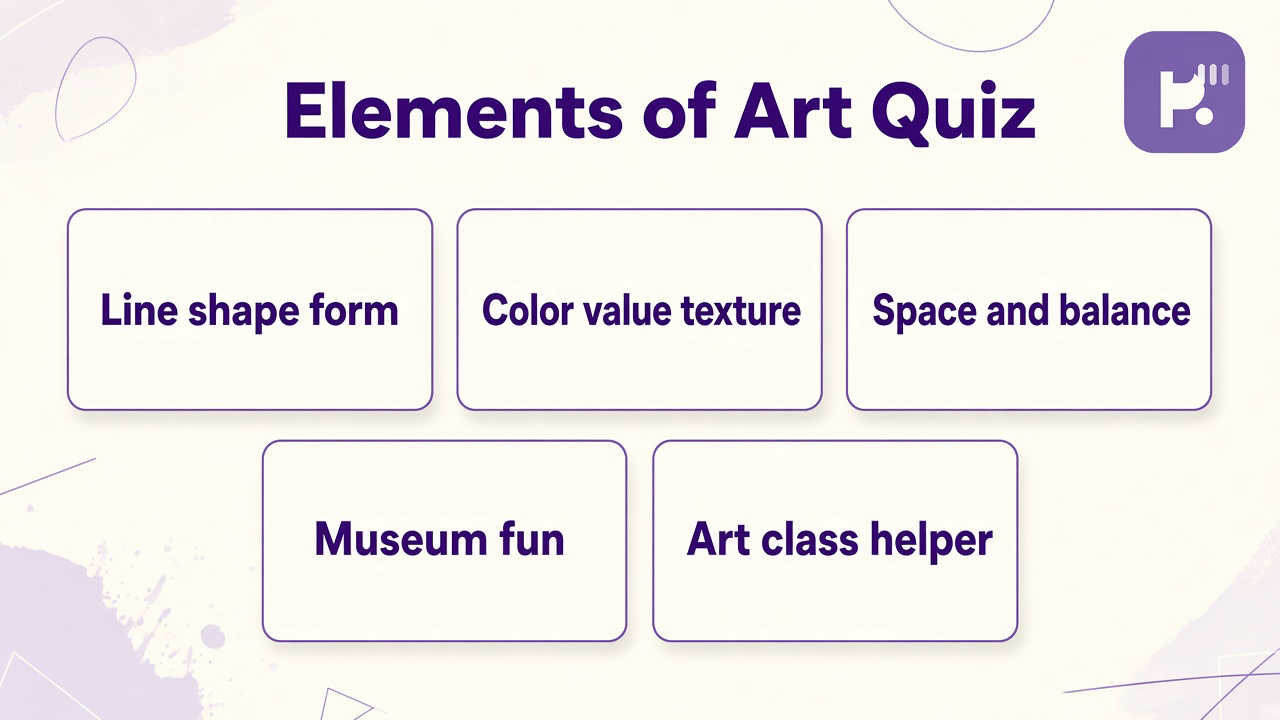
What this quiz can and cannot tell you
Can tell you
- Highlight line, shape, color, and space terms worth revisiting before studio exams
- Separate classroom posters from degree gatekeeping without merging them into one trick lane
- Encourage slow museum looking and sketch habits for study groups
- Spark better questions for teachers when mnemonics disagree with labeled charts
Cannot tell you
- Certify MFA admission, curator hiring, or appraisal values from one online screener
- Prove you should shame doodlers, tourists, or classmates based on bars
- Replace art instructors, conservators, licensed counselors, or credentialed historians
- Turn vocabulary scores into harassment, fake expertise badges, or gallery rank wars online
Art vocabulary as study mirror, not gallery rank law
Search traffic around elements-of-art quizzes usually wants two things: name line, shape, color, and space without embarrassing wheel mistakes, and sound informed when friends debate whether museum visits count as real study. Those goals help when readers notice that vocabulary starts kinder looking, not credential dunking in comment threads. They hurt when people treat bars like MFA proof, skip humble label reading because they aced mnemonics, or shame relatives who enjoy galleries without art school stories.
Dr. James Whitfield reviews iq cognitive study screeners with a simple split: reward honest agreement with widely taught intro terms and honest limits on degree hype at the same time. Line and shape tracks marks, contour edges, geometric versus organic shape, and negative space without line-mood denial myths. Color and value tracks hue versus value, warm and cool grouping, complements, and contrast beside universal gray mixing traps. Space and depth keeps overlap, planes, sculptural form, and one-point perspective visible beside margin-only space jokes. Museum and study habits keeps slow looking, sketchbooks, label curiosity, and anti-bullying sharing visible beside performative expertise posts.
Real readers mix bars. You might score high on color wheels while keeping space cues moderate, which often describes poster memory with perspective homework still building. You might score high on terminology with moderate museum habits, which can mean strong glossary recall yet little patience for unhurried galleries. Reverse items catch sloppy answers: claiming line direction never affects mood, insisting every pigment mix yields perfect gray, treating space as margins only, or mocking casual visitors should not inflate bars meant to track layered literacy.
Pair results with siblings on this hub instead of cramming every studio topic into one share. Our art quiz leans broader studio trivia when you want lighter lanes beyond vocabulary charts. The AP art history quiz stays on period and movement recall when history units follow design basics. Browse the IQ and cognitive test hub for more low-stakes study screeners. Caption shares as class prep and skip portfolio dunking on friends who never asked for critique.
Galleries and syllabi change faster than one childhood poster. New digital tools, traveling exhibits, and classroom chart styles shift which example sticks. When you share results, say slow looking beats scoreboard. When you borrow vocabulary tips, credit teachers who label charts kindly and respect people who sketch for joy without degrees. Retake after one museum afternoon and watch whether museum habit bars rise even if terminology bars lag, which often means you separated performative scoring from actual generous looking.
| Test | Focus |
|---|---|
| Art quiz | Broader studio trivia rather than line-shape-color-space chart depth |
| AP art history quiz | Period and movement recall rather than design vocabulary habits |
Elements of Art Quiz FAQ
What does this quiz measure?
It measures how much you agree with statements about line and shape, color and value, space and depth, and museum study habits. You get an index from 0 to 100 plus four bars. It describes self-rated intro art vocabulary on this screener, not fine-arts degrees, portfolio rank, or proof you should lecture gallery guests.
Is this an art school admissions test?
No. This page builds general vocabulary for class, sketchbooks, and curious museum visits. Admissions committees and credentialed instructors own portfolio standards this screener cannot replace.
Does a high score mean I should correct strangers in museums?
No. Museum habit items reject mocking casual visitors. Use curiosity to look and sketch, not to ambush guests or docents.
Why mix color wheels with museum looking habits?
Studio search intent blends chart homework and gallery confidence. Habit items stay separate from terminology so results show whether slow looking and humble sharing match glossary recall.
Who reviewed this quiz?
Dr. James Whitfield reviewed the educational framing, study-not-degree limits, and result explanations. See our editorial policy for review standards.
Reviewed by