
What Electrical Safety Quiz measures
This quiz does not license electricians, certify arc flash PPE programs, or replace 911 after shock. It measures how much you agree with beginner-friendly electrical safety habits grouped four ways: shock and arc awareness about current paths, water risk, downed lines, damaged cords, and blast hazards without sneaker rescue myths; grounding and GFCI habits about equipment grounding, leakage trips, test buttons, and breaker versus switch limits without ground-pin defeat tricks; cords wet and outdoor use about rated jackets, pinch damage, overload daisy chains, kid teaching, and rejecting soaked window cord fantasies; and training not license about qualified workers, lockout respect, emergency response, and refusing to treat online bars like inspector clearance. You rate 22 statements from strongly disagree to strongly agree, with reverse-worded myths so one childhood rule cannot inflate every bar. Your answers also feed a second chart on closeness and trust habits, because DIY pride sometimes chases speed over calling a pro. The total becomes an index from 0 to 100 where higher means more reported safety literacy on this screener, not proof you should open energized panels.
Shock and arc awareness
Current paths, water risk, downed lines, damaged cords, and arc blast respect.
Grounding and GFCI habits
Ground paths, leakage trips, test resets, and breaker thinking before fixture work.
Cords, wet, and outdoor use
Outdoor ratings, pinch damage, overload chains, and kid outlet rules.
Training not license
Electricians, lockout, emergency calls, and limits on quiz credential fantasies.
How it works
Answer 22 agreement items
Rate each statement from Strongly disagree to Strongly agree. Tap Next after each answer.
Answers sort into four domains
Each answer feeds one of four electrical safety literacy groups, and every item also feeds a closeness and trust layer.
See your index and charts
You get a 0 to 100 index, a band, and two bar charts you can compare with a roommate after a breaker-label night.
Take the Electrical Safety Quiz
Answer 22 short statements to see your electrical safety literacy index, four domain bars, and a closeness and trust chart.
What your result means
Your index is the average of all 22 answers, scaled from 0 to 100, with reverse-worded items flipped first. Read training-not-license with grounding bars before you treat a high shock awareness score as panel permission. Safety literacy supports better pro referrals; injured people deserve emergency care more than scoreboard wins.
| Band | Index range | Typical reading |
|---|---|---|
| Building electrical safety literacy | 0 to 35 | Fewer agreed habits on shock awareness, grounding, cord rules, or training-limit items on this screener. |
| Mixed electrical safety literacy | 36 to 65 | Solid habits in some domains with sneaker myths, ground-pin tricks, or inspection fantasies in others. |
| Strong electrical safety literacy | 66 to 100 | Frequent agreement with shock, grounding, cord, and training-limit habits; still not licensing. |
Tips at a glance
A quick takeaway graphic with topic tips (not your personal quiz scores). Start the quiz for your index, bands, and charts.
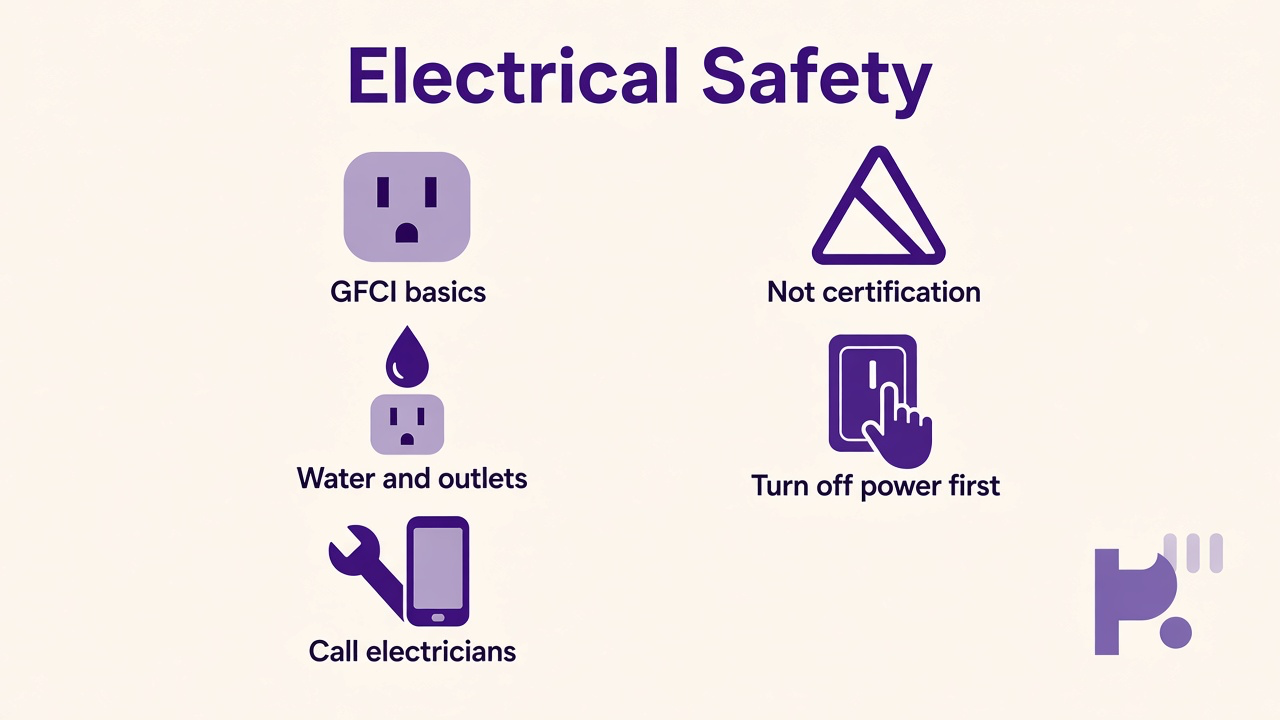
What this quiz can and cannot tell you
Can tell you
- Highlight shock, GFCI, and cord habits worth revisiting before DIY season
- Separate general awareness from licensing fantasies without merging them into one trick lane
- Encourage breaker maps, GFCI tests, and downed-line distance talk at home
- Spark better questions for electricians, landlords, and employer safety contacts
Cannot tell you
- Issue electrician licenses or NFPA 70E qualification cards from one online screener
- Prove home or workplace wiring passed inspection or code review
- Replace utility emergency response, burn care, CPR courses, or legal counsel
- Turn literacy scores into harassment, unsafe DIY bravado, or fake credential badges online
Electrical safety literacy before DIY bravado
Search traffic around electrical safety quizzes usually wants two things: sound informed before a home project without sitting through a full code class, and check whether GFCI and cord habits match what insurers and fire departments repeat. Those goals help when readers treat bars as a habit map, not a license. They hurt when people defeat grounds to silence trips, trust sneaker myths for rescue, or treat scores like inspector approval.
Dr. James Whitfield reviews iq cognitive study screeners with a simple split: reward honest agreement with widely taught shock paths and honest limits on credential hype at the same time. Shock and arc awareness tracks current paths, water risk, downed lines, damaged cords, and blast respect without cartoon rescue guarantees. Grounding and GFCI habits tracks equipment grounding, leakage trips, test buttons, and breaker thinking without ground-pin cheat stories. Cords wet and outdoor use keeps rated jackets, pinch damage, overload chains, and kid teaching visible beside soaked extension cord jokes. Training not license keeps electricians, lockout, emergency calls, and refusal to treat quiz bars like federal clearance visible beside weekend warrior pride.
Real readers mix bars. You might score high on shock awareness while keeping grounding moderate, which often describes caution without a labeled panel map yet. You might score high on GFCI habits with moderate training limits, which can mean good bathroom outlets yet little lockout exposure at work. Reverse items catch sloppy answers: sneaker guarantees, defeating grounds, rain-soaked window cords as fine, or high indices like automatic OSHA home clearance should not inflate bars meant to track layered safety habits.
Pair results with siblings on this hub instead of forcing one safety story. Our electrical engineering quiz leans circuit study vocabulary when you want classroom phasors without panel work. The EHS quiz stays on pictograms and PPE floor culture when chemical and electrical hazards overlap. Browse the IQ and cognitive test hub for more low stakes screeners. Caption shares as literacy practice and skip license dunking on relatives who never asked for a pop quiz.
Seasons change faster than breaker maps. Holiday lights, sump pumps, and new appliances shift which outlets deserve GFCI attention. When you share results, say pros beat scoreboard for panel tasks. When you borrow cord tips, credit electricians who teach kindly and respect neighbors who report flickering service. Retake after one labeling weekend and watch whether grounding bars rise even if arc trivia lags, which often means you separated performative scoring from actual GFCI test habits.
| Test | Focus |
|---|---|
| Electrical engineering quiz | Intro circuit study literacy rather than home shock and GFCI habits |
| EHS quiz | General workplace pictograms and PPE rather than outlet grounding detail |
Electrical Safety Quiz FAQ
What does Electrical Safety Quiz measure?
It measures how much you agree with statements about shock and arc awareness, grounding and GFCI habits, cords and wet outdoor rules, and training-not-license limits. You get an index from 0 to 100 plus four bars. It describes self-rated safety literacy on this screener, not electrician licenses, inspections, or proof you may open panels.
Is this an electrician licensing or NFPA 70E exam?
No. This page builds general literacy habits for reflection and family safety talks. Licensing boards, qualified-person programs, and employer energization training issue credentials this screener cannot replace.
Does a high score mean my home wiring is code compliant?
No. High bars mean you related to habit statements here. Inspectors, insurers, and qualified electricians evaluate real installations, permits, and records beyond any online agree quiz.
Why include GFCI and cord items with shock awareness?
Home electrical safety search intent blends outlet trips, extension cords, and rescue myths. Split bars keep shock path literacy separate from grounding habits and outdoor cord rules so results stay honest about which lanes you endorse.
Who reviewed this quiz?
Dr. James Whitfield, PhD reviewed the educational framing, training-not-license limits, and result explanations. See our editorial policy for review standards.
Reviewed by
