What the GED Math Quiz measures
This quiz does not score the official GED, replace testing centers, or mail diplomas from one couch session. It measures how much you agree with GED math prep statements grouped four ways: algebra refresh curiosity about fractions, negatives, and basic equations with honest scratch work; word problem patience about units, restated questions, and reasonableness checks; calculator integrity about permitted tool use paired with manual learning; and quiz not official diploma limits about playful captions, joy without Pearson substitution myths, and refusing to treat bar height as pass letters. You rate 22 statements from strongly disagree to strongly agree, with reverse-worded traps so one lucky guess cannot inflate every bar. Your answers also feed a second chart on closeness and trust habits, because study stress sometimes spills into shame when groups compare scores. The total becomes an index from 0 to 100 where higher means more reported GED math prep literacy on this screener, not proof you should skip proctor rules.
Algebra refresh curiosity
Fractions and equations with honest steps.
Word problem patience
Units, restated questions, sanity checks.
Calculator integrity
Permitted tools plus manual learning.
Quiz not official diploma
Prep mirror only; exams live elsewhere.
How it works
Answer 22 agreement items
Rate each statement from Strongly disagree to Strongly agree. Tap Next after each answer.
Answers sort into four domains
Each answer feeds one of four GED math prep groups, and every item also feeds a closeness and trust layer.
See your index and charts
You get a 0 to 100 index, a band, four domain bars, and a second chart for intimacy habits.
Take the GED Math Quiz
Answer 22 short statements to see your GED math prep habits index, four domain bars, and a closeness and trust chart.
What your result means
Your index is the average of all 22 answers, scaled from 0 to 100, with reverse-worded items flipped first. Read quiz-not-official-diploma bars together with calculator integrity before you treat a high score as pass proof. Cozy reflection supports kinder study groups; testing centers still own official gates.
| Band | Index range | Typical reading |
|---|---|---|
| Building prep habits | 0 to 35 | Fewer agreed habits on algebra refresh, word problem patience, calculator integrity, or unofficial diploma limits. |
| Mixed prep habits | 36 to 65 | Solid algebra curiosity with guess-heavy word problems, calculator cheat myths, or diploma cosplay slips. |
| Strong prep habits | 66 to 100 | Frequent agreement with algebra refresh, word patience, calculator integrity, and unofficial limits; still prep play only. |
Tips at a glance
A quick takeaway graphic with topic tips (not your personal quiz scores). Start the quiz for your index, bands, and charts.
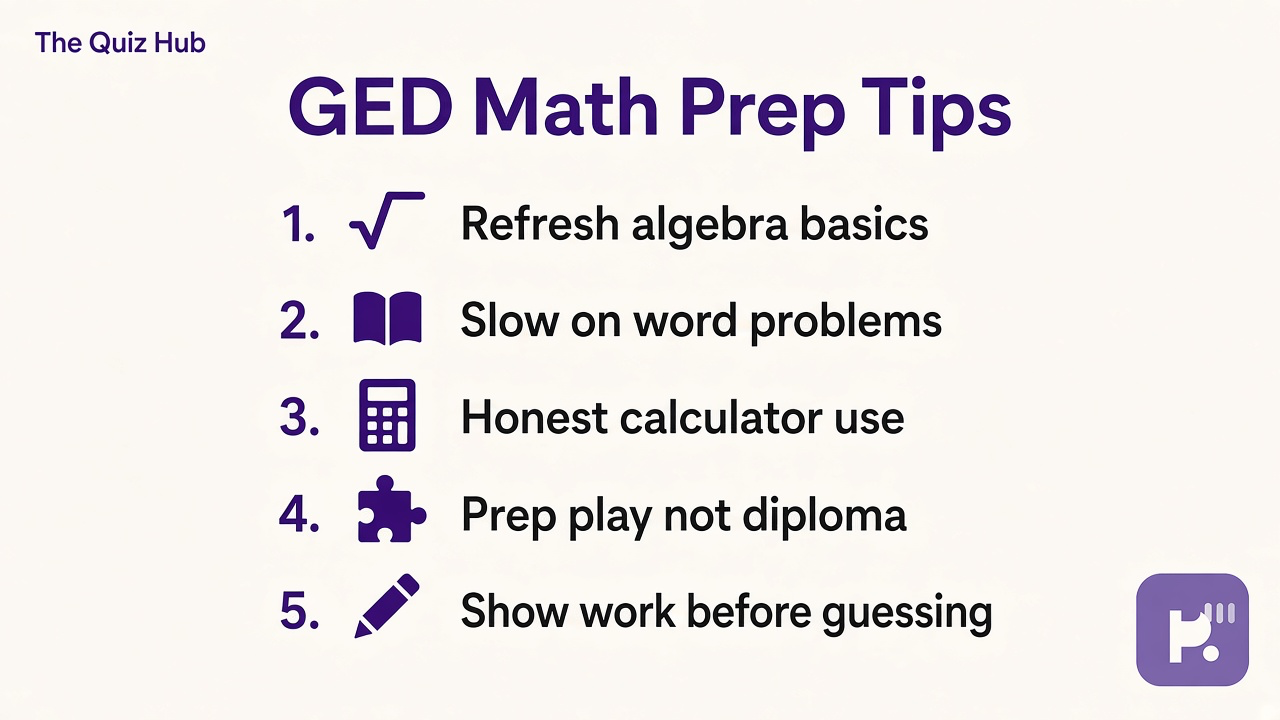
What this quiz can and cannot tell you
Can tell you
- Highlight algebra, word problem, and calculator habits worth revisiting before the next practice set
- Separate unofficial prep reflection from diploma substitution and Pearson cosplay myths
- Encourage unit checks and scratch work without public shame spirals in study chats
- Spark better tutor questions about prep humility without claiming testing authority
Cannot tell you
- Replace official GED registration, proctor rules, or accommodation decisions
- Prove diploma pass, college placement, or employer math clearance from one couch screener
- Give permission to share banned calculator programs or mock classmates from bar height
- Predict exact exam item lists or declare who should skip testing centers from trivia bars alone
Why GED math quizzes need steps, story patience, and exam separation
Search traffic around GED math quizzes usually wants a light mirror after a prep book chapter, adult ed class, or late-night fraction panic, not a mailed diploma or Pearson clearance letter. Those goals help when readers refresh algebra, slow down word problems, and keep party scores away from testing center cosplay. They hurt when prep bars become proof you may skip registration, or when calculator jokes ignore proctor rules because a couch screener looked tall. GED math literacy works best when it names study habits and unofficial limits together while staying distinct from general GED siblings.
Dr. James Whitfield reviews cognitive study screeners with a simple split: reward honest algebra curiosity and honest limits on diploma substitution myths at the same time. Algebra refresh curiosity tracks fractions and equations with scratch work. Word problem patience tracks units and restated questions. Calculator integrity tracks permitted tools paired with manual learning. Quiz not official diploma keeps screeners separate from Pearson myths, pass-letter ads, and automatic diploma fantasies.
Real learners mix bars. You might score high on algebra refresh while keeping word problem patience moderate, which often describes strong fraction drills yet rushed story reads. You might score high prep with softer diploma-limit items, which can mean you avoid pass boasts yet still treat quiz totals like registration substitutes. Reverse items catch overconfidence: skipping work, ignoring units, banned programs, shortcut dunk threads, or automatic diploma myths should not inflate bars meant to track layered prep manners.
Pair results with siblings instead of forcing one genius dropout story. Our GED quiz sibling stays on broader subject humility with stems separate from math-only prep here. Our gcf and lcm quiz explores factor drills rather than full story problem etiquette on this page. Our am I good at math quiz angles toward math anxiety reflection when feelings fit better than GED item wording here. Browse the IQ and cognitive hub for more study play screeners. Caption shares as prep play, show work before you guess, and skip ranking classmates who never asked for your proctor cosplay.
Adult ed semesters and holiday study breaks rotate faster than calculator stickers on binders. A word problem bar might dip after one rushed week while algebra curiosity stays high until you retake calmly. When you share results, say unofficial GED math prep habits. When you borrow tips, credit tutors who taught unit underlines and classmates who asked consent before score posts. Retake after one honest practice month and watch whether diploma-limit bars stay high even if enthusiasm rises, which often means you separated cozy prep joy from pass substitution pressure.
| Test | Focus |
|---|---|
| GED quiz | Broader GED study humility rather than math-only prep stems on this page |
| GCF and LCM quiz | Factor drills rather than full GED story problem habits here |
| Am I good at math quiz | Math anxiety reflection rather than GED item prep wording here |
GED Math Quiz FAQ
What does the GED Math Quiz measure?
It measures how much you agree with statements about algebra refresh curiosity, word problem patience, calculator integrity, and quiz-not-official-diploma limits. You get an index from 0 to 100 plus four bars. It reflects self-rated prep habits on this screener, not official exam scores.
Is this the official GED math test?
No. This page focuses on playful prep reflection. Official GED exams use separate registration, proctors, and scoring through authorized testing centers.
How is this different from the GED quiz?
This quiz centers math prep stems. The GED quiz sibling uses separate stems aimed at broader subject study humility rather than algebra and story problem habits here.
Can I skip the testing center if my score is high?
No. Diploma limit items reject automatic pass myths. High bars describe habits you endorsed here, not permission to skip official registration.
Who reviewed this quiz?
Dr. James Whitfield reviewed the prep play framing, math not diploma separation, calculator integrity norms, and result explanations. See our editorial policy for review standards.
Reviewed by