What Famous Paintings Quiz measures
This quiz does not grade your AP portfolio, certify museum hires, or replace instructors on art history syllabi. It measures how much you agree with study statements grouped four ways: title and artist recall about labels, image decks, and skipping public humiliation; museum visit habits about quiet rooms, photo rules, placards, and patience for first-timers; spaced study routines about short repeat sessions, mixed flashcards, and reopening notes when recall slips; and unofficial art trivia about humble captions, study prompts, and refusing substitute-instructor cosplay from bar height. You rate 22 statements from strongly disagree to strongly agree, with reverse-worded traps so one lucky guess cannot inflate every bar. Your answers also feed a second chart on closeness and trust habits, because study groups sometimes turn into argument nights when trivia scores spike. The total becomes an index from 0 to 100 where higher means more reported painting study literacy on this screener, not proof you should grade strangers at the gallery.
Title and artist recall
Wall labels, image decks, and no public humiliation for wrong names.
Museum visit habits
Quiet rooms, photo rules, placards, and patience for new visitors.
Spaced study routines
Short repeat sessions beat one-night cram fantasies.
Unofficial art trivia
Study fun only; museum hiring exams and AP credentials live elsewhere.
How it works
Answer 22 agreement items
Rate each statement from Strongly disagree to Strongly agree. Tap Next after each answer.
Answers sort into four domains
Each answer feeds one of four famous paintings groups, and every item also feeds a closeness and trust layer.
See your index and charts
You get a 0 to 100 index, a band, four domain bars, and a second chart for intimacy habits.
Take the Famous Paintings Quiz
Answer 22 short statements to see your famous paintings study literacy index, four domain bars, and a closeness and trust chart.
What your result means
Your index is the average of all 22 answers, scaled from 0 to 100, with reverse-worded items flipped first. Read unofficial art trivia bars together with museum visit habits before you treat a high score as curator expertise. Cozy study supports kinder gallery trips; instructors still own graded work and museum staff still own room rules.
| Band | Index range | Typical reading |
|---|---|---|
| Building famous paintings study literacy | 0 to 35 | Fewer agreed habits on title recall, museum manners, spaced study, or unofficial trivia limits on this screener. |
| Mixed famous paintings study literacy | 36 to 65 | Solid recall with public shaming, flash myths, cram fantasies, loud wing corrections, or instructor cosplay in others. |
| Strong famous paintings study literacy | 66 to 100 | Frequent agreement with title recall, museum habits, spaced study, and unofficial trivia limits; still study fun only. |
Tips at a glance
A quick takeaway graphic with topic tips (not your personal quiz scores). Start the quiz for your index, bands, and charts.
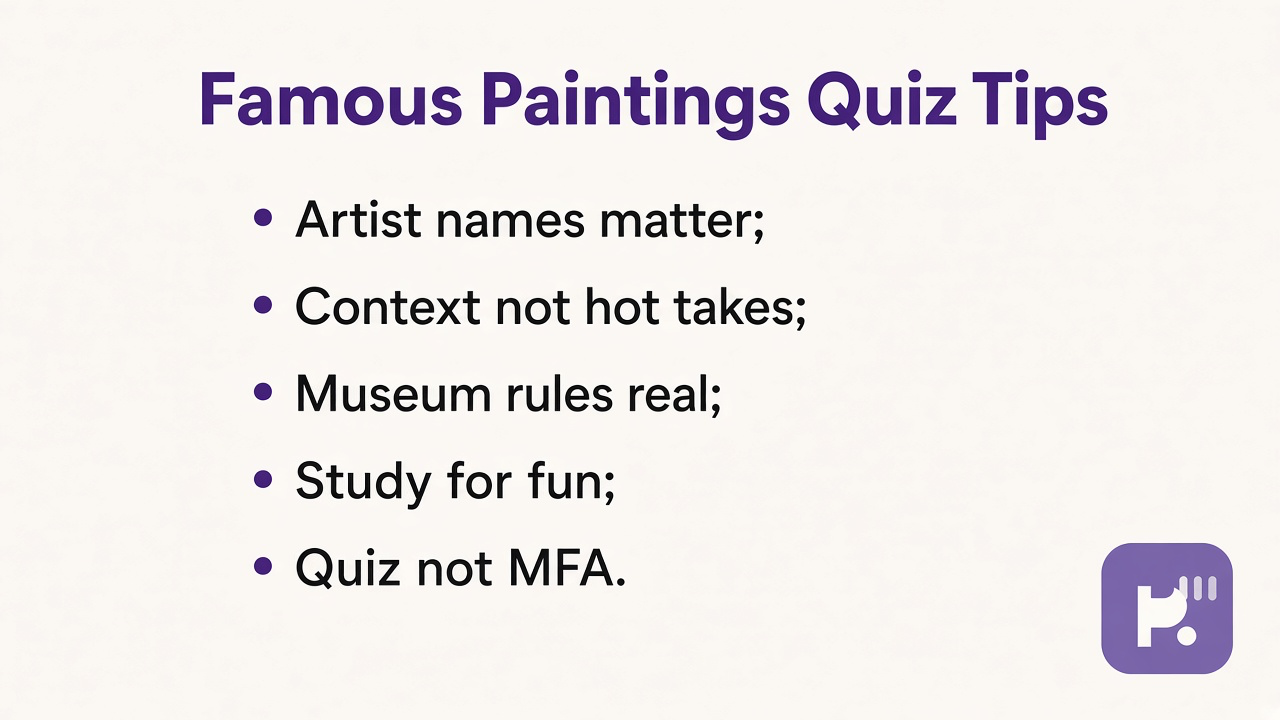
What this quiz can and cannot tell you
Can tell you
- Highlight label reading, museum manners, and spaced review habits worth revisiting before the next visit
- Separate unofficial trivia from museum hiring or AP credential fantasies
- Encourage study prompts and humble shares without public shame
- Spark better trivia night questions about painters without claiming instructor authority
Cannot tell you
- Replace classroom instruction, museum training programs, or licensed curator hiring processes
- Prove AP scores, job readiness, or gallery employment from one couch screener
- Give permission to mock classmates, tourists, or friends after one missed movement fact
- Predict real museum job outcomes from trivia bars alone without portfolios and site interviews
Why painting trivia needs unofficial study framing
Search traffic around famous paintings quizzes usually wants two things: title and artist bragging rights, and shareable scores for study group chats. Those goals help when readers check wall labels, practice spaced decks, and keep museum manners visible. They hurt when trivia bars become substitute instructor grading, or when poster memory outruns placard facts. Art recognition literacy works best when it names study kindness and unofficial limits together.
Dr. James Whitfield reviews iq-cognitive study screeners with a simple split: reward honest recognition habits and honest limits on credential cosplay at the same time. Title and artist recall tracks labels and image decks without public humiliation for wrong names. Museum visit habits tracks quiet rooms, photo rules, and placard reading without optional security myths. Spaced study routines tracks short repeat sessions without one-hour cram permanence fantasies. Unofficial art trivia keeps screeners separate from museum hiring exams and AP flexing.
Real players mix bars. You might score high on title recall while keeping museum habits moderate, which often describes strong flashcard users who still talk too loud in quiet wings. You might score high spaced study with softer unofficial trivia items, which can mean you review well yet still dunk on tourists online. Reverse items catch overconfidence: poster expertise forever, public humiliation for wrong names, flash photo myths, ignoring staff signs, cram permanence, documentary AP credit, loud corrections from high bars, or perfect scores mocking tourists should not inflate bars meant to track layered painting knowledge.
Pair results with siblings on this hub instead of forcing one genius painter story. Our AP art history quiz stays on course-style framing with stems written for syllabus depth separate from museum manner habits on this page. Our close up picture quiz trains detail spotting when crop games fit better than full-canvas title recall here. Our guess the picture quiz covers broader visual ID play when friends want mixed media rounds beside painter trivia. Browse the IQ and cognitive hub for more study-style screeners. Caption shares as study fun and skip grading strangers who never asked for a quiz.
Exhibitions rotate faster than semester schedules. A title recall bar might spike after one blockbuster show while museum manners sleep until you retake calmly. When you share results, say unofficial study trivia. When you borrow tips, credit docents who answered kindly and friends who shared deck routines without mockery. Retake after one gallery month and watch whether unofficial trivia bars stay high even if recall rises, which often means you separated cozy facts from actual credential boundaries.
| Test | Focus |
|---|---|
| AP art history quiz | Course-style art history depth rather than museum manner and spaced study stems on this page |
| Close up picture quiz | Detail crop spotting rather than full painting title recall habits here |
| Guess the picture quiz | Broader visual ID rounds rather than painter study routines on this page |
Famous Paintings Quiz FAQ
What does Famous Paintings Quiz measure?
It measures how much you agree with statements about title and artist recall, museum visit habits, spaced study routines, and unofficial art trivia. You get an index from 0 to 100 plus four bars. It describes self-reported study habits on this screener, not museum job offers or AP exam scores.
Is this a museum hiring exam or AP test?
No. Unofficial art trivia items keep the page playful. Museums and schools own graded credentials; this screener is couch study reflection only.
Does a high score mean I should correct strangers in galleries?
No. Museum visit habit items reject loud dunking and ignored photo rules. High bars mean you related to study statements here, not that you hold a curator badge.
Why include spaced study with trivia items?
Recognition games mix with real study weeks. Spaced routines keep short repeat sessions visible beside title games so results stay honest about how you actually learn painters.
Who reviewed this quiz?
Dr. James Whitfield reviewed the study fun framing, unofficial trivia limits, and museum manner tone. See our editorial policy for review standards.
Reviewed by