What EKG Strip Quiz measures
This quiz does not read your monitor, certify telemetry, or diagnose arrhythmia from a photo. It measures how much you agree with introductory EKG strip practice literacy grouped four ways: strip grid and rate about paper speed, box counting, R-R intervals, and calm rate estimates; regularity before labels about checking QRS timing, study-level sinus language, and refusing panic labels before context; labeled practice habits about answer keys, strip folders, retakes, and keeping drills offline from strangers; and class not diagnosis about supplementing lectures, escalating unsure moments, and seeking clinicians for alarming symptoms. You rate 22 statements from strongly disagree to strongly agree, with reverse-worded myths so agreeing with every shortcut cannot inflate every bar. Your answers also feed a second chart on closeness and trust habits, because health worry sometimes pushes quick internet certainty over preceptor coaching. The total becomes an index from 0 to 100 where higher means more reported strip practice literacy on this screener, not proof you should skip care when symptoms scare you.
Strip grid and rate
Paper speed, small squares, R-R intervals, six-second tricks, and rate math before naming rhythms on drills.
Regularity before labels
Regular versus irregular checks, narrow complex context in study language, and calm steps before dramatic names.
Labeled practice habits
Answer keys, strip folders, post-lecture retakes, and vocabulary prep instead of live monitor heroics.
Class not diagnosis
Supplement skills lab, escalate unsure alarms, and leave clinical reads to trained staff when patients look unwell.
How it works
Answer 22 agreement items
Rate each statement from Strongly disagree to Strongly agree. Tap Next after each answer.
Answers sort into four domains
Each answer feeds one of four strip practice groups, and every item also feeds a closeness and trust layer.
See your index and charts
You get a 0 to 100 index, a band, and two bar charts you can compare before a rhythm unit or skills-lab quiz.
Take the EKG Strip Quiz
Answer 22 short statements to see your strip practice index, four domain bars, and a closeness and trust chart.
What your result means
Your index is the average of all 22 answers, scaled from 0 to 100, with reverse-worded items flipped first. Higher means more reported EKG strip practice literacy on this screener. Read class-not-diagnosis and regularity bars together before you treat the total as a clinical readout.
| Band | Index range | Typical reading |
|---|---|---|
| Building strip practice literacy | 0 to 35 | Fewer agreed facts on grid rate habits, regularity steps, labeled practice, or class-not-diagnosis limits on this screener. |
| Mixed strip practice literacy | 36 to 65 | Solid habits in some domains with myths about grid speed, rhythm panic, or quiz-based credentialing. |
| Strong strip practice literacy | 66 to 100 | Frequent agreement with accurate strip study habits and healthy class-not-diagnosis limits. |
Tips at a glance
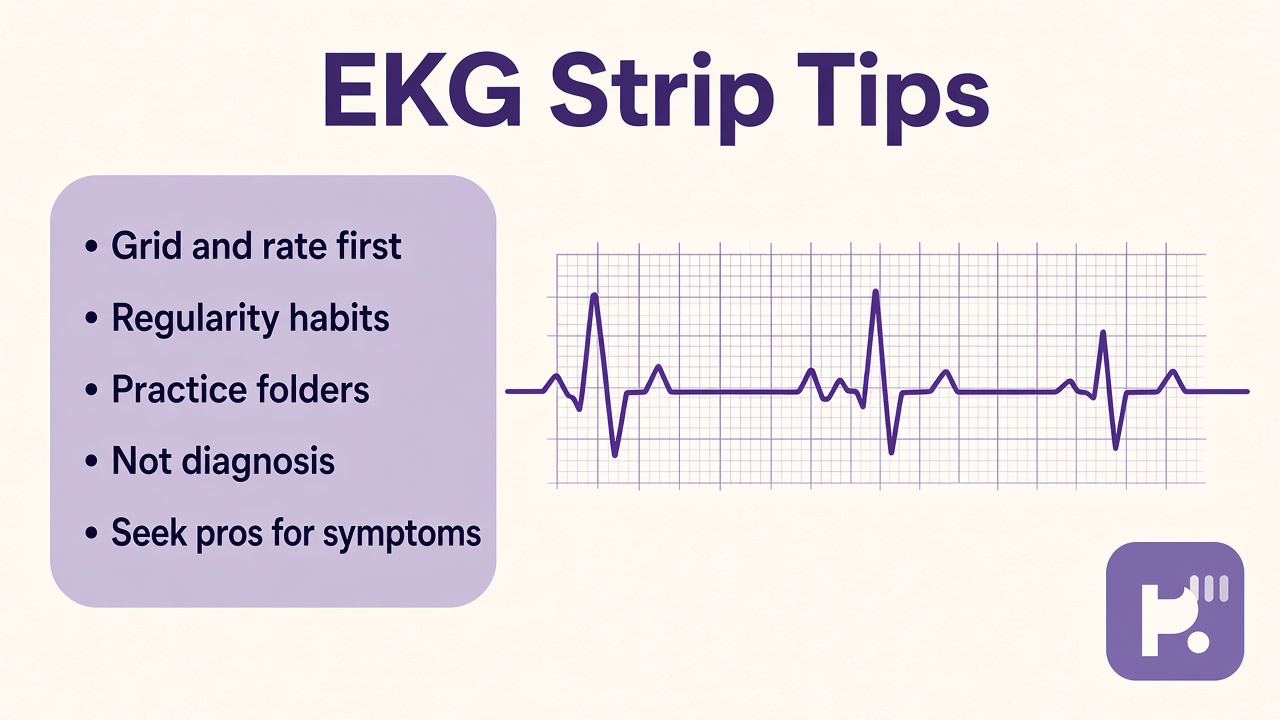
A quick takeaway graphic with topic tips (not your personal quiz scores). Start the quiz for your index, bands, and charts.
What this quiz can and cannot tell you
Can tell you
- Clarify grid counting, rate-first habits, and regularity checks on teaching strips
- Highlight labeled folder study and retake routines without shame
- Separate drill vocabulary from live monitor escalation expectations
- Spark better questions during nursing, paramedic, or anatomy rhythm units
Cannot tell you
- Diagnose arrhythmia, ischemia, or electrolyte crisis from trivia answers or photos
- Replace ACLS courses, telemetry training, or preceptor sign-off on monitored units
- Certify you for hospital credentialing, dosing, or independent patient monitoring
- Prove your heart is healthy when chest pain, syncope, or sustained palpitations appear
Rhythm strip practice without playing cardiologist online
Students search EKG strip quizzes when a skills-lab folder lands and every monitor thumbnail looks like spaghetti. A rhythm strip is still a time graph: paper speed turns grid squares into seconds, calibration relates height to voltage, and R-R intervals give you rate before you audition dramatic rhythm names for exam credit. Skipping the grid to guess from ink density is a trap this screener flags on purpose.
Dr. James Whitfield reviews IQ and cognitive study quizzes with a simple split: reward rate-first discipline and labeled practice, and refuse diagnosis theater from screenshots. Strip grid and rate tracks box counting, six-second tricks, and interval math instructors expect on drills. Regularity before labels tracks whether complexes look steady, whether sinus study language includes P-before-QRS examples, and whether irregular strips still deserve rate math instead of one panic label. Labeled practice habits keeps answer keys, retakes, and offline drills visible beside threads that treat online scores like telemetry hiring packets. Class not diagnosis keeps escalation, ACLS humility, and symptom care visible beside brag posts that withhold EMS follow-up.
Real readers mix bars. You might score high on labeled folders while regularity-before-label stays moderate, which often means memorized examples outran calm steps on fresh strips. You might score high on grid math with moderate class-not-diagnosis, which can mean strong counting yet shaky escalation language before clinical rotations. Reverse items catch sloppy confidence: insisting paper speed ignores the grid, calling every wavy drill fibrillation, skipping rate on irregular strips, withholding care after trivia wins, or replacing hospital policies with perfect agreement here should not inflate bars meant to track study habits.
Pair results with siblings on this hub instead of forcing one strip story. Our ECG anatomy and physiology quiz leans electrodes, leads, and P-QRS-T intro when you want structure before rhythm folders. The cardiac axis quiz stays on axis recall when you want adjacent ECG vocabulary without full strip drills on one page. Browse the IQ and cognitive test hub for more low-stakes study games. Caption shares as class prep and skip diagnosing strangers from cropped monitor photos.
Practice strips grow when layers stay in order: count, check regularity, compare to labeled keys, then ask preceptors when a live alarm disagrees with your homework. Retake after one instructor folder and notice whether escalation bars rise even when pattern vocabulary lags, which often means you separated performative scoring from actual unit manners.
| Test | Focus |
|---|---|
| ECG anatomy and physiology quiz | Electrodes, leads, and wave intro rather than rhythm strip drill workflow on one page |
| Cardiac axis quiz | Axis and vector recall rather than rate-first strip folder habits |
EKG Strip Quiz FAQ
What does EKG Strip Quiz measure?
It measures how much you agree with introductory rhythm strip practice literacy across grid and rate habits, regularity before labels, labeled practice routines, and class-not-diagnosis limits. You get an index from 0 to 100 plus four bars. It reflects self-reported study habits on this screener, not a clinical skills exam, telemetry readout, or IQ score.
Can this quiz diagnose arrhythmia from a strip photo?
No. It is study trivia about habits and vocabulary. Real monitors, symptoms, and patients need trained staff, protocols, and clinical evaluation. Chest pain, fainting, or sustained palpitations with dizziness deserve professional care, not a high score here.
Why rate before naming the rhythm?
Instructors often want interval math and regularity checks before pattern labels on drills. That order reduces panic naming on teaching strips and mirrors how many skills-lab checklists frame homework, even though live units add alarms, history, and preceptor oversight this quiz cannot simulate.
Why are some statements worded as myths?
Reverse-worded myths catch overconfidence. Agreeing that paper speed ignores the grid, that every wavy drill is fibrillation, that irregular strips need no rate math, that trivia replaces ACLS sign-off, or that online scores license withholding follow-up should not inflate your literacy index.
Who reviewed this quiz?
Dr. James Whitfield, PhD reviewed the educational framing, strip practice limits, and result explanations. See our editorial policy for review standards.
Reviewed by