What Epidermis Layers Quiz measures
This quiz does not diagnose rashes, read dermatoscopy, or certify dermatologists. It measures how much you agree with study statements grouped four ways: stratum order and names about basale through corneum stacks and histology cues; barrier role and lipids about water loss, corneum shielding, and intro lipid barrier teaching; melanocytes and shedding about pigment transfer basics, normal turnover, respectful tone on skin tone biology, and myths that every flake equals disease; and epidermis quiz limits about study screeners, refusing self-treatment from bar height, and separating learning from dunk culture. You rate 22 statements from strongly disagree to strongly agree, with reverse-worded myths so one lucky guess cannot inflate every bar. Your answers also feed a second chart on closeness and trust habits, because appearance scoreboard talk sometimes chases belonging over honest study. The total becomes an index from 0 to 100 where higher means more reported epidermis literacy on this screener, not proof you passed a dermatology board. Item banks avoid epithelial-tissue sibling stems on simple versus stratified classification, gland types, basement membrane focus, and avascular tissue generalities so the two quizzes can ship side by side.
Stratum order and names
Basale through corneum stacks with histology cues, not reversed-name myths.
Barrier role and lipids
Water loss control, corneum shield, and intro lipid barrier ideas.
Melanocytes and shedding
Pigment transfer basics, normal turnover, respectful tone on skin biology.
Epidermis quiz limits
Study screener only; clinicians and dermatology training stay primary.
How it works
Answer 22 agreement items
Rate each statement from Strongly disagree to Strongly agree. Tap Next after each answer.
Answers sort into four domains
Each answer feeds one of four epidermis literacy groups, and every item also feeds a closeness and trust layer.
See your index and charts
You get a 0 to 100 index, a band, four domain bars, and a second chart for intimacy habits.
Take the Epidermis Layers Quiz
Answer 22 short statements to see your epidermis literacy index, four domain bars, and a closeness and trust chart.
What your result means
Your index is the average of all 22 answers, scaled from 0 to 100, with reverse-worded items flipped first. Read epidermis limits with barrier bars before you treat a high stratum score as permission to self-treat rashes. Literacy supports better study talk; changing moles and wounds still need licensed clinicians.
| Band | Index range | Typical reading |
|---|---|---|
| Building epidermis literacy | 0 to 35 | Fewer agreed facts on stratum order, barrier, melanocyte shedding, or epidermis limit items on this screener. |
| Mixed epidermis literacy | 36 to 65 | Solid recall in some domains with order myths, barrier traps, or dermatology fantasy slips in others. |
| Strong epidermis literacy | 66 to 100 | Frequent agreement with stratum order, barrier, melanocyte shedding, and limit habits; still not licensing. |
Tips at a glance
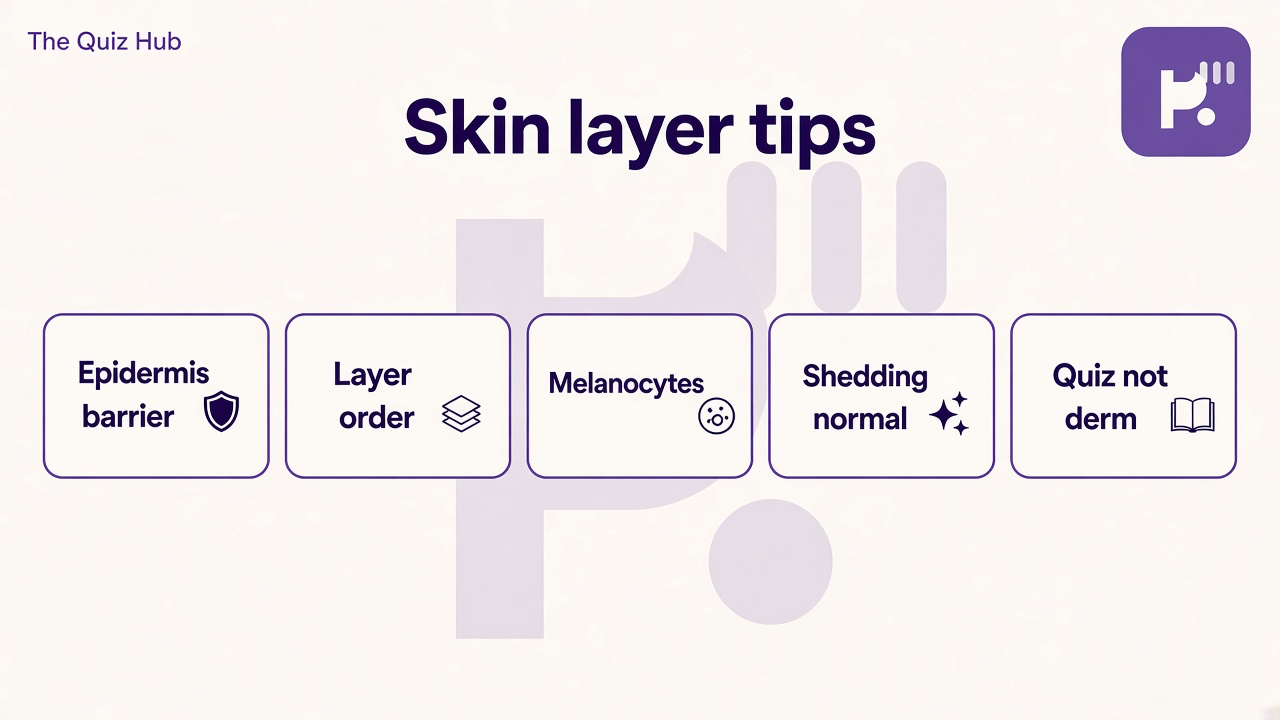
A quick takeaway graphic with topic tips (not your personal quiz scores). Start the quiz for your index, bands, and charts.
What this quiz can and cannot tell you
Can tell you
- Highlight stratum order, barrier, and melanocyte habits worth revisiting before histology tests
- Separate class study literacy from dermatology licensing fantasies
- Encourage clinician visits for changing lesions instead of online guessing
- Spark better study group talk about turnover without appearance dunking
Cannot tell you
- Issue dermatology board credentials from one online screener
- Diagnose eczema, psoriasis, melanoma, or infection without exam
- Replace dermatoscopy, biopsy, or treatment plans from licensed clinicians
- Turn literacy scores into skin-tone rank games or harassment
Epidermis layers before dermatology cosplay
Epidermis search intent often blends two needs: memorize stratum order before lab, and sound confident in barrier language without mixing skin layers with whole-tissue classification quizzes. Those goals help when readers treat bars as a study map. They hurt when people treat scores like dermatology boards, self-treat rashes from trivia, or dunk classmates on skin tone while reviewing melanocyte facts.
Dr. James Whitfield reviews iq cognitive study screeners with a simple split: reward honest agreement with widely taught stratum and barrier facts and honest limits on clinical pretense at the same time. Stratum order and names tracks basale-through-corneum stacks without reversed-name myths. Barrier role and lipids keeps water loss and corneum shield language separate from no-barrier folklore. Melanocytes and shedding keeps pigment transfer and normal turnover visible without flake panic or tone rank games. Epidermis quiz limits keeps screeners and clinic pathways visible beside thread-war stress.
Real readers mix bars. You might score high on stratum order while keeping melanocyte facts moderate, which often describes strong flashcard memory before pigment lectures land. You might score high on barrier talk with softer limit items, which can mean good lipid vocabulary yet occasional self-diagnosis jokes. Reverse items catch sloppy answers: reversed layers, no barrier role, identical cell-type myths, or melanoma guesses from quiz scores should not inflate bars meant to track layered study habits.
Pair results with siblings on this hub instead of forcing one skin story. Our epithelial tissue quiz leans simple versus stratified epithelium, glands, and basement membrane themes with stems written for zero overlap with this stratum stack page. The dermatology quiz stays on clinical skin topics at intro depth rather than histology order drills. Browse the IQ and cognitive test hub for more study screeners. Caption shares as study practice and see clinicians for changing lesions.
Syllabi shift faster than one histology lab. When you share results, say stratum clarity beats scoreboard. When you borrow study tips, credit lab partners who label micrographs and instructors who separate turnover from disease panic. Retake after skin unit tests and watch whether barrier bars rise even if corneum trivia felt easy, which often means you separated performative appearance talk from actual atlas habits.
| Test | Focus |
|---|---|
| Epithelial tissue quiz | Simple versus stratified epithelium and gland themes rather than epidermal stratum order stacks |
| Dermatology quiz | Clinical skin topic warm-ups rather than corneum-to-basale histology literacy drills |
Epidermis Layers Quiz FAQ
What does Epidermis Layers Quiz measure?
It measures how much you agree with statements about stratum order and names, barrier role and lipids, melanocytes and shedding, and epidermis quiz limits. You get an index from 0 to 100 plus four bars. It describes self-rated study literacy on this screener, not dermatology credentials or rash diagnosis.
How is this different from the epithelial tissue quiz?
This page focuses on epidermal stratum stacks, barrier turnover, and melanocyte basics. The epithelial tissue sibling focuses on epithelium classification, glands, and basement membrane themes. Stem banks are written to avoid shared wording.
Does a high score mean I can skip a dermatologist for a new mole?
No. High bars mean you related to study statements here. Changing, bleeding, or asymmetric lesions still need licensed skin exams regardless of quiz totals.
Why include shedding and melanocyte items?
Intro skin units connect turnover with pigment biology. Those lanes stay separate from clinical diagnosis language and from appearance harassment in study chat.
Who reviewed this quiz?
Dr. James Whitfield, PhD reviewed the educational framing, clinical-not-diagnosis limits, and result explanations. See our editorial policy for review standards.
Reviewed by