What EMT Quiz measures
This quiz does not certify registry passes, authorize independent patient care beyond your program scope, or grade your psychomotor portfolio. It measures how much you agree with beginner-friendly EMT prehospital literacy grouped four ways: scene safety habits about standard precautions, hazard awareness, team roles, and size-up before patient contact; assessment language about SAMPLE-style history prompts, primary survey vocabulary at intro depth, reporting findings versus guessing diagnoses, and preceptor escalation; ops and comms about dispatch respect, radio etiquette, ambulance operations basics, handoff structure, and professional comms under stress; and literacy not NREMT about online screeners, training scope, protocol deferral, refusing registry waiver fantasies, and treating coursework as the real path. You rate 22 statements from strongly disagree to strongly agree, with reverse-worded myths so one lucky streak cannot inflate every bar. Your answers also feed a second chart on closeness and trust habits, because class stress sometimes chases scores over honest study partners. The total becomes an index from 0 to 100 where higher means more reported literacy on this screener, not proof you may skip NREMT prep or preceptor sign-off.
Scene safety habits
Standard precautions, hazard scans, team scope, and size-up before patient contact.
Assessment language
SAMPLE prompts, primary survey words, findings versus guesses, and preceptor questions.
Ops and comms
Dispatch updates, radio etiquette, rig basics, and structured handoffs.
Literacy not NREMT
Class prep, scope limits, and refusal to treat screeners like registry passes.
How it works
Answer 22 agreement items
Rate each statement from Strongly disagree to Strongly agree. Tap Next after each answer.
Answers sort into four domains
Each answer feeds one of four EMT literacy groups, and every item also feeds a closeness and trust layer.
See your index and charts
You get a 0 to 100 index, a band, and two bar charts you can compare with a classmate after an operations exam.
Take the EMT Quiz
Answer 22 short statements to see your EMT prehospital literacy index, four domain bars, and a closeness and trust chart.
What your result means
Your index is the average of all 22 answers, scaled from 0 to 100, with reverse-worded items flipped first. Read literacy-not-NREMT with scene safety bars before you treat a high comms score as registry clearance. Literacy supports better questions in lab; real patients deserve protocols and preceptors more than scoreboard wins.
| Band | Index range | Typical reading |
|---|---|---|
| Building EMT literacy | 0 to 35 | Fewer agreed facts on scene safety, assessment language, ops and comms, or NREMT limit items on this screener. |
| Mixed EMT literacy | 36 to 65 | Solid habits in some domains with scene traps, radio myths, or NREMT fantasies in others. |
| Strong EMT literacy | 66 to 100 | Frequent agreement with scene, assessment, comms, and NREMT-limit habits; still not licensing. |
Tips at a glance
A quick takeaway graphic with topic tips (not your personal quiz scores). Start the quiz for your index, bands, and charts.
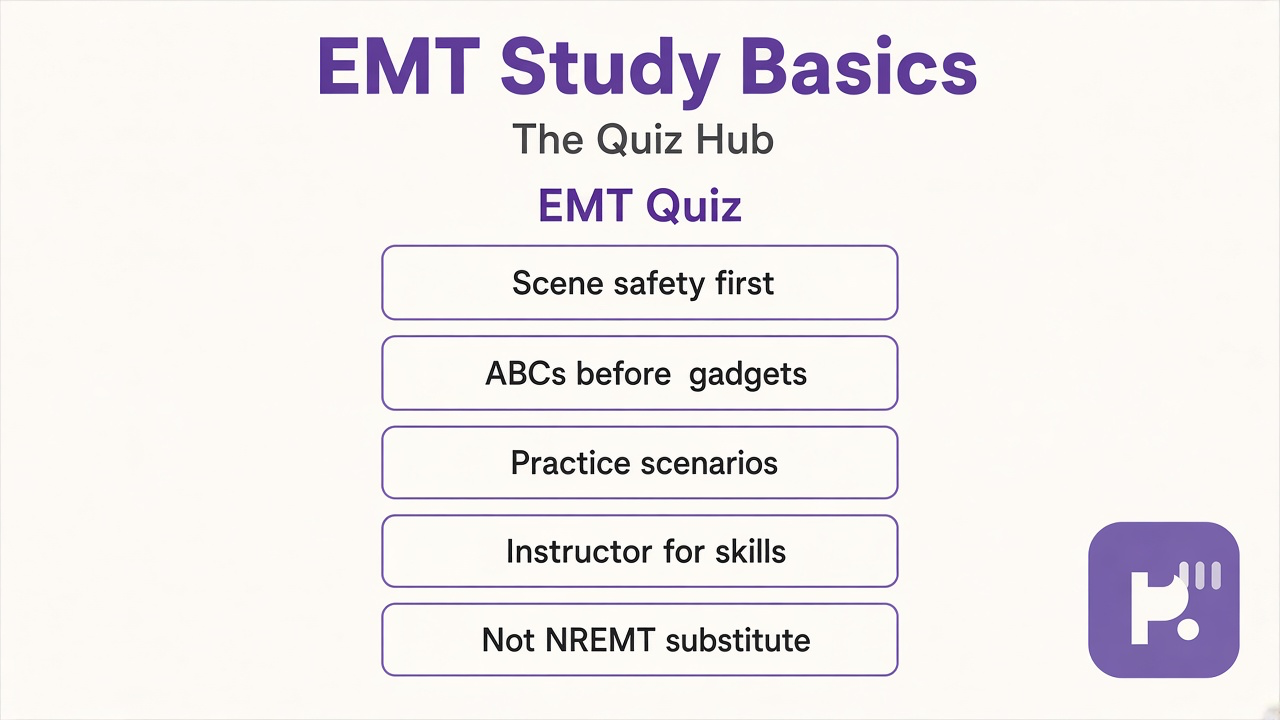
What this quiz can and cannot tell you
Can tell you
- Highlight scene safety, assessment language, and comms habits worth revisiting before ride-alongs
- Separate prehospital vocabulary from NREMT licensing fantasies without merging them into one trick lane
- Encourage preceptor questions and structured handoffs before bragging in group chats
- Spark better study talk about size-up order and professional radio habits
Cannot tell you
- Issue NREMT credentials or state EMS licenses from one online screener
- Authorize independent patient treatment beyond your training level and medical direction
- Replace accredited coursework, psychomotor sign-offs, or protocol updates from your agency
- Turn literacy scores into harassment, unsafe field bravado, or fake registry badges online
EMT prehospital literacy before registry fantasies
Search traffic around EMT quizzes usually wants two things: feel oriented before ride-alongs without rereading every operations slide blind, and check whether scene safety language and handoff scripts still line up after a busy clinical week. Those goals help when readers treat bars as a study map, not a registry pass or field authority verdict. They hurt when people treat scores like NREMT stamps, skip PPE because trivia felt easy, or debate classmates with radio bravado that ignores medical direction.
Dr. James Whitfield reviews iq cognitive study screeners with a simple split: reward honest agreement with widely taught scene and comms facts and honest limits on registry credential hype at the same time. Scene safety habits tracks precautions, hazard awareness, and team scope without optional scene safety jokes. Assessment language keeps SAMPLE and primary survey words visible beside dispatch-as-diagnosis myths. Ops and comms keeps dispatch respect, radio structure, rig basics, and handoffs visible beside yelling wins every time traps. Literacy not NREMT keeps screeners, coursework, scope limits, and refusal to treat quiz bars like registry approval visible beside influencer stress.
Real EMT students mix bars. You might score high on scene safety while keeping assessment language moderate, which often describes strong lab memory before ride-along reps land. You might score high on ops with moderate scene items, which can mean solid radio scripts yet rushed size-up at night. Reverse items catch sloppy answers: claiming scene safety is optional theater, insisting dispatch replaces history, approving radio yelling over structure, or treating high indices like automatic registry waivers should not inflate bars meant to track layered literacy habits.
Pair results with siblings on this hub instead of forcing one study story. Our EMT anatomy and physiology quiz leans organ and airway study maps when your class stacks A and P units. The anatomy and physiology quiz stays broader when science chapters overlap. Browse the IQ and cognitive test hub for more low stakes study screeners. Caption shares as study practice and skip registry dunking on friends who never asked for a cram pop quiz.
Syllabus stacks move faster than one highlight packet. New protocols, skills sheets, and rotation sites shift while old flashcards still sit in bags. When you share results, say preceptor questions beat scoreboard. When you borrow study tips, credit instructors who enforce PPE and respect medical direction on scene. Retake after one exam cycle and watch whether comms bars rise even if scene trivia lags, which often means you separated performative scoring from actual ride-along reps.
| Test | Focus |
|---|---|
| EMT anatomy and physiology quiz | Organ systems and airway study maps rather than scene safety and comms literacy on this page |
| Anatomy and physiology quiz | General A and P study literacy rather than prehospital ops habits here |
EMT Quiz FAQ
What does EMT Quiz measure?
It measures how much you agree with statements about scene safety habits, assessment language, ops and comms, and literacy-not-NREMT limits. You get an index from 0 to 100 plus four bars. It describes self-rated prehospital literacy on this screener, not registry certification, field scope, or proof you may treat patients alone.
Is this an NREMT exam or registry prep substitute?
No. This page builds introductory literacy habits for reflection and class review. Accredited programs, registry exams, and state rules issue credentials this screener cannot replace.
Does a high score mean I can skip ride-alongs or instructor debriefs?
No. High bars mean you related to literacy statements here. Psychomotor skills, medical direction, and agency protocols govern real calls beyond any online agree quiz.
Why mix scene safety with assessment language items?
EMT study intent blends safe approach habits and intro survey vocabulary. Split bars keep scene wins separate from SAMPLE gaps and comms myths so results stay honest about which lanes you endorse.
Who reviewed this quiz?
Dr. James Whitfield, PhD reviewed the educational framing, literacy-not-NREMT limits, and result explanations. See our editorial policy for review standards.
Reviewed by