
What this learning flow screener measures
This page does not administer the published Wolf WOLF-S or other licensed flow batteries, and it cannot measure IQ, predict grades, or certify research participation from one score. It measures how often you noticed study habits discussed in flow research language, organized four ways: absorption in learning when curiosity, recall after blocks, and engagement conditions showed up without dread-equals-flow myths; challenge skill balance when tasks felt stretchy not hopeless, hints were sought, boredom signaled easy lanes, and quit-forever panic stayed in check; time awareness in study when focused blocks surprised you gently, timers included breaks, sleep was not sacrificed for grind memes, and scrolling was not confused with studying; and unofficial Wolf scale limits when licensed-instrument myths, tutor outreach, and sleep-aware flow language beat screenshot IQ cosplay. You answer 22 how-often statements about the past month during study or skill practice, with reverse-worded items so one good block, hint ask, timer use, or tutor visit cannot hide frequent mismatch or grind myths on other days. Your responses also feed a second chart on closeness and trust habits, because shame about focus sometimes blocks asking for help. The total becomes an index from 0 to 100 where higher means more frequent reported learning-flow-friendly habits on this screener, not proof of giftedness or official Wolf scores.
Absorption in learning
Curiosity and recall during practice without dread-as-flow traps.
Challenge skill balance
Stretchy tasks, hints, and boredom signals without panic quit.
Time awareness in study
Focused blocks with breaks and sleep, not all-nighter cosplay.
Unofficial Wolf limits
Reflection only; licensed WOLF-S belongs with published forms.
How it works
Answer 22 frequency items
Rate each statement from Never to Very often for the past month. Tap Next after each answer.
Answers sort into four domains
Each answer feeds one of four learning-flow groups, and every item also feeds a closeness and trust layer.
See your index and charts
You get a 0 to 100 index, a band, and two bar charts you can bring to a tutor or advisor.
Take the Flow Scale in Learning WOLF-S
Answer 22 short statements to see your learning flow habits index, four domain bars, and a closeness and trust chart.
What your result means
Your index is the average of all 22 answers, scaled from 0 to 100, with reverse-worded items flipped first. Higher means more frequent reported flow-friendly study habits on this screener. Read unofficial Wolf limits with time awareness before you treat any total as IQ proof or licensed certification. Persistent sleep loss or safety worries deserve support, not only another retake.
| Band | Index range | Typical reading |
|---|---|---|
| Lower reported learning flow habits | 0 to 35 | Fewer frequent absorption, balance, time-awareness, or unofficial-limit habits during study in the past month. |
| Mixed reported learning flow habits | 36 to 65 | Some focused stretches alongside distraction spikes, mismatch panic, grind myths, or licensed-Wolf cosplay on other days. |
| Higher reported learning flow habits | 66 to 100 | Frequent absorption, balance, time awareness, and unofficial-limit habits; still not licensed Wolf certification. |
Tips at a glance
A quick takeaway graphic with topic tips (not your personal quiz scores). Start the quiz for your index, bands, and charts.
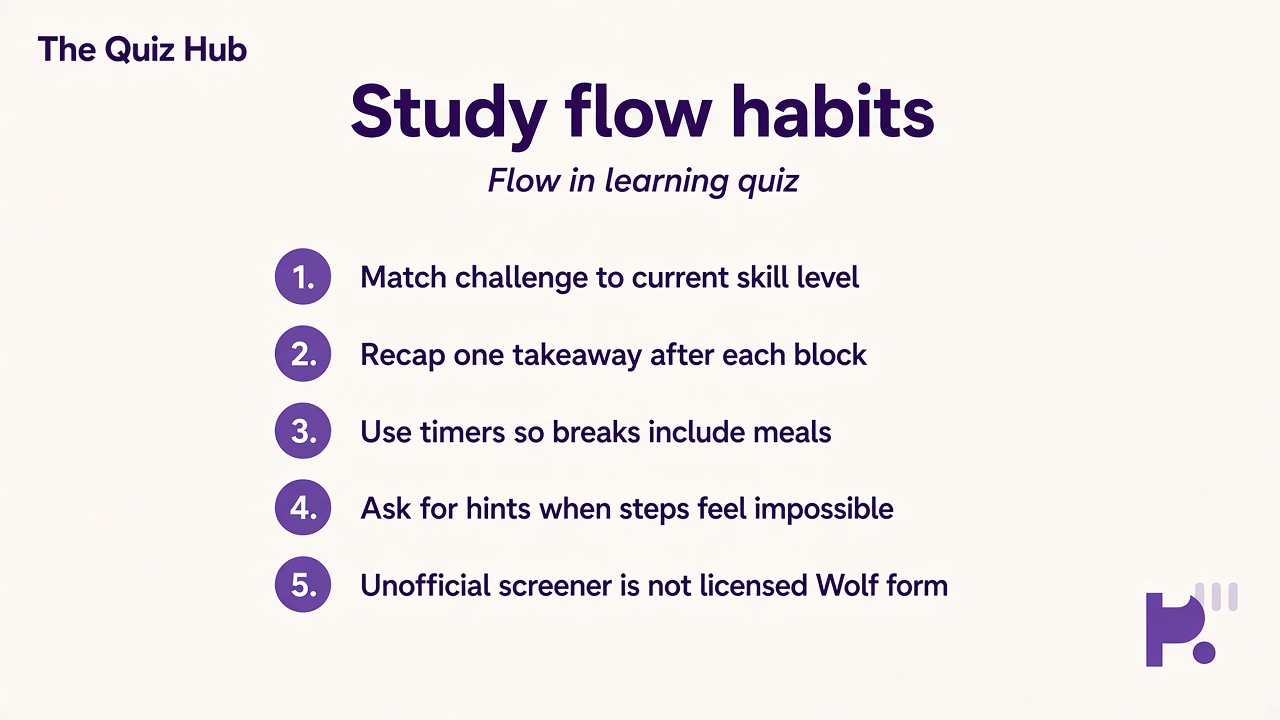
What this quiz can and cannot tell you
Can tell you
- Name absorption, mismatch, and break habits in plain language for tutoring intake
- Highlight when hint-seeking, timers, or advisor outreach habits are missing
- Separate unofficial reflection from licensed Wolf WOLF-S cosplay or IQ dunking
- Offer a baseline if you retake after one week of one focus-and-break experiment
Cannot tell you
- Certify Wolf WOLF-S scores or research study eligibility from one web total
- Measure IQ, working memory capacity, or neurological profiles from one score
- Replace disability accommodations, ADHD evaluation, or course placement tests
- Prove you should skip sleep, meals, or medical care because bars looked high
Study flow habits without licensed Wolf cosplay
People search flow scale pages when focus feels mythical during exam season or when influencers sell grind as genius. Flow research discusses absorption, challenge-skill fit, and clear goals in structured tasks; everyday study adds noise, deadlines, and life load this screener tracks unofficially. It cannot replace published Wolf administration or tell you which accommodations fit without your full context.
Absorption in learning covers curiosity during practice, recall after blocks, and naming conditions that help—not equating dread with deep work. Challenge skill balance covers stretchy chunks, hints, boredom as too-easy signal, and resisting quit-forever panic. Time awareness covers gentle time surprise, timers with breaks, and refusing all-nighter brags as flow.
Real students mix bars. You might score high absorption with softer break habits, which often means deep work yet sleep debt during finals. You might score high balance with strong limit habits, which can mean struggle yet you still ask tutors instead of posting IQ screenshots. Reverse items catch overconfidence: dread-as-flow, impossible perfection gates, grind-only sleep sacrifice, scroll-at-desk confusion, licensed-Wolf cosplay, and bar-height IQ dunking should not inflate a habits index meant to track frequency of helpful study patterns.
Pair results with siblings on this hub instead of forcing one cognitive story. Our financial literacy quiz for high school students sibling tracks money study habits with separate stems. Browse the IQ and cognitive hub for more low-stakes screeners with unofficial framing. Caption shares as study fun and skip classmates who never opted into scoreboard posts.
Higher scores mean more frequent self-reported flow-friendly habits on this tool, not proof you outrank peers. Bring domain bars to tutoring so sessions start with examples, not shame. Retake after one week of one timer-and-break experiment when safe and compare bars, not only the total.
| Test | Focus |
|---|---|
| IQ and cognitive hub | More literacy and study screeners when you want separate banks from this flow habits page |
| Financial literacy quiz for high school students | Money study habits rather than absorption and challenge-skill frequency here |
Flow Scale in Learning WOLF-S FAQ
What does the Flow Scale in Learning WOLF-S measure?
It measures how often you noticed absorption, challenge-skill balance, time awareness, and unofficial Wolf limit habits during study in the past month. You get an index from 0 to 100 plus four domain bars. Your responses suggest self-reported study habits for reflection, not licensed WOLF-S certification or IQ scores.
Is this the official Wolf WOLF-S instrument?
No. Published Wolf forms use validated item banks and trained scoring. This page is an unofficial learning-flow screener with its own stems for reflection only, not licensed WOLF-S administration.
Does a high score mean I am gifted or have a high IQ?
No. Flow-friendly habits describe focus conditions on this screener, not IQ tests or innate worth. Many factors—including sleep, noise, ADHD, and support—affect study focus.
Why mention breaks and sleep on a flow quiz?
Intent brief readers asked for anti-grind honesty. All-nighter cosplay hurts learning; time-awareness items treat breaks and sleep as part of sustainable focus, not weakness.
Who reviewed this screener?
Dr. James Whitfield, PhD reviewed the educational framing, unofficial Wolf limits, anti-IQ-dunking tone, and result explanations. See our editorial policy for review standards.
Reviewed by
