What this trauma bond quiz measures
This trauma bond quiz estimates how often attachment patterns linked to harm-and-relief cycles show up in your relationship experience. Twenty-four original frequency items group into four domains drawn from trauma bonding and coercive control research: cycle intensity, withdrawal attachment, hope pendulum, and loyalty isolation. Each item also maps to a fear-of-intimacy stack layer so you can see whether vulnerability pull-back, trust hesitation, disclosure limits, or closeness anxiety rides alongside bond cycles. Your trauma bond index averages these patterns into a 0 to 100 score with plain-language bands.
Cycle intensity
Relief after apologies, eggshell walking, makeup closeness, and tracking mood before you speak.
Withdrawal attachment
Craving reunion, chasing contact, ignoring red flags, and anxiety when they pull away.
Hope pendulum
Believing they will change, minimizing harm, clinging to good memories, and fearing no one else will love you.
Loyalty isolation
Defending them, doubting outside advice, hiding the relationship, and cutting support when criticized.
How it works
Three steps from first question to your trauma bond report with fear-of-intimacy stack. Click Start Quiz to open the interactive quiz in a full-screen modal.
Answer 24 frequency items
Rate how often each bond pattern shows up in your relationship, from Never to Almost always. You click Next after each answer; nothing auto-advances.
Items map to bond domains and intimacy stack
Your answers accumulate percentages for cycle intensity, withdrawal attachment, hope pendulum, and loyalty isolation, plus four fear-of-intimacy stack layers.
View band and dual charts
Results show Lower, Mixed, or Higher Trauma Bond Signals with domain bars, intimacy stack chart, and reflection prompts. Higher bands include crisis resources.
Take the trauma bond quiz
Rate 24 statements about bond-after-harm patterns in your relationship. Your answers produce a trauma bond index from 0 to 100, four domain scores, a fear-of-intimacy stack chart, and a band label for reflection or therapy conversation.
Opens in a focused modal. No account required. Results stay on screen.
What your result means
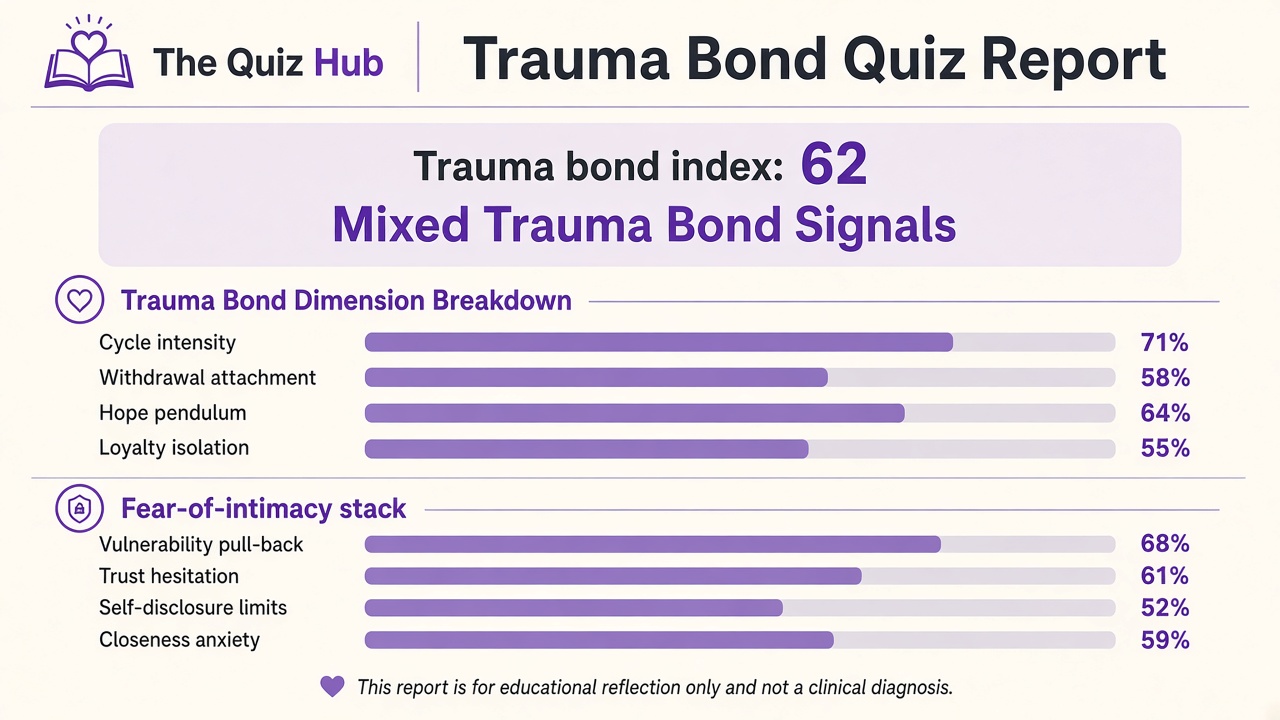
Your trauma bond index is the normalized total across all 24 items on a 0 to 100 scale. Higher scores mean more frequent endorsement of cycle intensity, withdrawal attachment, hope pendulum, or loyalty isolation items on this screener. Domain bars show endorsement rates so you can see whether hot-cold relief, reunion craving, hope they will change, or loyalty isolation drives your result most. The fear-of-intimacy stack chart shows parallel layers for vulnerability pull-back, trust hesitation, self-disclosure limits, and closeness anxiety when bond cycles include guarded closeness.
| Band | Index range | Typical reading |
|---|---|---|
| Lower Trauma Bond Signals | 0 to 35 | Fewer bond-after-harm pattern signals; normal attachment stress may still appear |
| Mixed Trauma Bond Signals | 36 to 65 | Blend of ordinary stress and bond cycle patterns; worth tracking if persistent |
| Higher Trauma Bond Signals | 66 to 100 | Frequent cycle intensity, withdrawal craving, or loyalty isolation; advocate or therapist support may help |
What your trauma bond report looks like
After all 24 items, you get a trauma bond index from 0 to 100, a band label, four trauma bond domain bars, and a fear-of-intimacy stack chart. Percentages reflect bond patterns you notice, not a clinical verdict about abuse or your partner's character.
What this quiz can and cannot tell you
Can tell you
- How often trauma bond pattern signals showed up for you in this relationship
- A trauma bond index and four domain bars for cycle, withdrawal, hope, and loyalty patterns
- A fear-of-intimacy stack showing which closeness-guarding layer feels strongest
- A starting point for therapy, advocacy, or retaking after a safety plan step
Cannot tell you
- Whether your partner is abusive, narcissistic, or mentally ill
- Whether you are trapped or whether leaving is the right next step for you
- Whether your relationship can heal without honest dialogue and professional help
- What treatment or safety plan you need without a licensed clinician or advocate
Trauma bonds, intermittent reinforcement, and attachment loops
Clinician Patrick Carnes described trauma bonding as an attachment that forms through cycles of harm and intermittent kindness, not only through steady care. Domestic violence researchers such as Dutton and Goodman note that relief after conflict can feel as intense as the conflict itself, training the nervous system to crave reunion. Psychologist Judith Herman's work on trauma recovery also describes how loyalty and shame can keep survivors connected to people who hurt them. In everyday language, trauma bonding often maps to relief after apologies, craving contact when they pull away, believing the next cycle will be different, and defending them against outside concern.
The Quiz Hub built this trauma bond quiz as an original self-report screener inspired by those themes, not a reproduction of any single published clinical instrument. Readers often compare it to sibling tools on this site. Our gaslighting quiz screens reality distortion and blame reversal during conflict. The love-bombed quiz measures early intensity and boundary erosion rather than bond-after-harm cycles. The fear of intimacy quiz maps closeness-limiting habits without bond cycle framing.
| The Quiz Hub test | What it adds |
|---|---|
| Gaslighting quiz | Reality distortion and blame reversal during conflict, not relief-after-harm bond cycles |
| Love-bombed quiz | Early intensity pace and future faking, not withdrawal attachment after harm |
| Narcissist quiz | Partner grandiosity and empathy gap patterns, not your bond response after cycles |
| Codependency level test | Caretaking overload and approval seeking, not hot-cold relief loops |
| Fear of intimacy quiz | Four-domain intimacy avoidance index without trauma bond cycle items |
| This trauma bond quiz | Trauma bond index plus fear-of-intimacy stack for cycle, withdrawal, hope, and loyalty patterns |
Sample item types include frequency ratings such as whether you feel a rush of relief when they apologize after a blow-up, or whether you defend them when friends raise concerns. High cycle intensity with high withdrawal attachment often lands in Mixed or Higher Trauma Bond Signals. Grief, anxious attachment, or new relationship intensity can spike scores temporarily. Read how we review quizzes in our editorial policy or browse more tools on our relationships and dating hub.
Trauma bond quiz FAQ
What is a trauma bond?
A trauma bond describes an attachment that strengthens through cycles of harm and relief, not only through steady care. Clinicians such as Patrick Carnes and domestic violence researchers note that intermittent reinforcement can train your nervous system to crave reunion after conflict. This trauma bond quiz measures how often cycle intensity, withdrawal attachment, hope pendulum, and loyalty isolation patterns show up in your relationship experience. It is not proof of abuse and it is not a clinical diagnosis.
What does this trauma bond quiz measure?
Twenty-four original frequency items ask how often you notice hot-cold relief cycles, craving reunion when they pull away, believing they will change, or defending them against outside concern. Scores map to four trauma bond domains plus a parallel fear-of-intimacy stack with vulnerability pull-back, trust hesitation, self-disclosure limits, and closeness anxiety layers. You receive a trauma bond index from 0 to 100 where higher scores mean more bond-after-harm pattern signals, plus a band from Lower through Higher Trauma Bond Signals.
What is the fear-of-intimacy stack on this quiz?
The fear-of-intimacy stack is a second results chart inspired by FOIS-style intimacy avoidance themes, adapted to trauma bond framing. Each of the 24 items also maps to one of four stack layers: vulnerability pull-back, trust hesitation, self-disclosure limits, and closeness anxiety. The stack index summarizes how often you hide fight fallout, doubt outside advice, minimize harm, or panic about being unlovable alongside bond cycle patterns.
How is this different from the gaslighting quiz?
The am I being gaslighted quiz screens reality distortion, blame reversal, memory doubt, and isolation tactics during conflict. This trauma bond quiz focuses on attachment loops after harm: relief after apologies, craving reunion, hope they will change, and loyalty that cuts off support. It adds a fear-of-intimacy stack chart that the gaslighting quiz does not include.
Can this quiz prove I am in an abusive relationship?
No. The trauma bond index describes self-reported pattern signals on this abbreviated screener. Intense chemistry, grief, or anxious attachment can raise scores without abuse. Only you plus honest dialogue, safety planning, and professional evaluation can define whether a relationship is safe. Higher bands include crisis resources for support.
Who reviewed this content?
Dr. Elena Vasquez, PhD, reviewed the test framing and result explanations. See our editorial policy for review standards.
Reviewed by